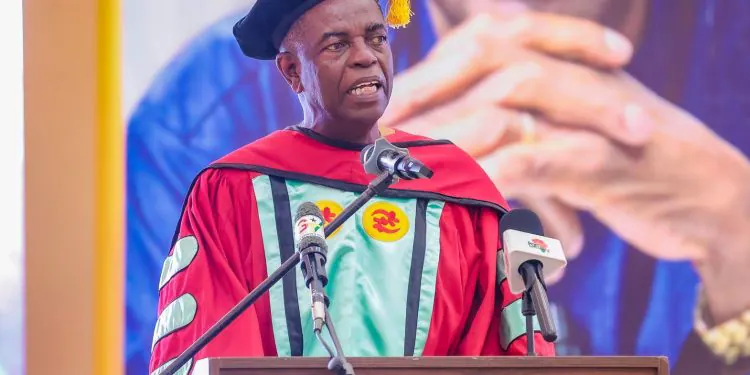
Veteran journalist and Pan-Africanist, Kwesi Pratt Jnr, has called on Ghana to revisit Dr Kwame Nkrumah's Seven-Year Development Plan to address the country's persistent economic challenges. The plan, which covered 1963 to 1970, offered a long-term development vision and deliberately invested in infrastructure, education, energy, industry, and social services. This created national assets that continued to serve generations. Mr Pratt made the call in Cape Coast at the 15th Kwame Nkrumah Memorial Lecture organised by the University of Cape Coast.
The lecture, held on the theme "Kwame Nkrumah yesterday, today and tomorrow: Perspectives on constitutionalism, development and Pan-Africanism," brought together experts and stakeholders to discuss Nkrumah's legacy. Mr Pratt described the Seven-Year Development Plan as one of the most comprehensive attempts by a post-independence government to transform Ghana's colonial economic structure and lay the foundation for economic independence. Despite encountering challenges, the plan remains a significant milestone in Ghana's development history.
Mr Pratt said the plan was built around six key areas: state-led industrialisation, economic diversification, agricultural modernisation, infrastructure development, human capacity development, and an African economic purpose. Nkrumah recognised that political independence without transforming the colonial economic structure would remain incomplete, given Ghana's dependence on exports of cocoa, gold, timber, and other raw materials and the importation of manufactured goods. This pattern of economic dependence persists today, according to Mr Pratt.
To address this, Nkrumah pursued state-led industrialisation, establishing state enterprises in manufacturing, agriculture, transportation, hospitality, and other sectors. On economic diversification, Mr Pratt said Ghana's heavy dependence on cocoa exposed the country to fluctuations in world commodity prices. Industrialisation was intended to reduce that vulnerability, create employment, and retain more value within the national economy.
Mr Pratt highlighted Nkrumah's investment in infrastructure, citing the Akosombo Dam and Volta River Project, Tema Harbour, roads, electricity, Tema Township, and industrial estates as major investments intended to provide the foundation for productive economic activity. These investments aimed to drive economic growth and development. The Akosombo Dam, for instance, has had a lasting impact on Ghana's energy sector.
Nkrumah also invested in education and human capacity, with the expansion of primary, secondary, technical, and university education aimed at producing the skilled workforce required for national development. The establishment of the University of Cape Coast was linked to this broader development vision, demonstrating that Nkrumah's development strategy extended beyond factories and dams to investment in the human resources needed to operate and sustain a modern society.
Mr Pratt's call to revisit the Seven-Year Development Plan comes as Ghana continues to grapple with economic challenges. The plan's focus on long-term development, infrastructure investment, and human capacity development offers valuable lessons for Ghana's current development efforts. As the country seeks to address its economic challenges, revisiting Nkrumah's vision and strategies may provide a pathway to sustainable economic growth and development.
Key points
- Veteran journalist Kwesi Pratt Jnr urges Ghana to draw lessons from Dr Kwame Nkrumah's Seven-Year Development Plan.
- The plan focused on state-led industrialisation, economic diversification, and infrastructure development.
- Mr Pratt's call comes as Ghana continues to grapple with economic challenges.