The Same–Mwanga–Korogwe Water Supply Project, launched in March last year, aims to supply 103 million litres of water per day, up from the current 51.5 million litres. Phase One currently serves approximately 100,000 people in Kilimanjaro and Tanga regions. The project has brought relief to residents of Ishinde Stand and Kibaoni Igingo hamlets, who have seen improvements in access to clean and safe water. However, residents in three other hamlets continue to face shortages.
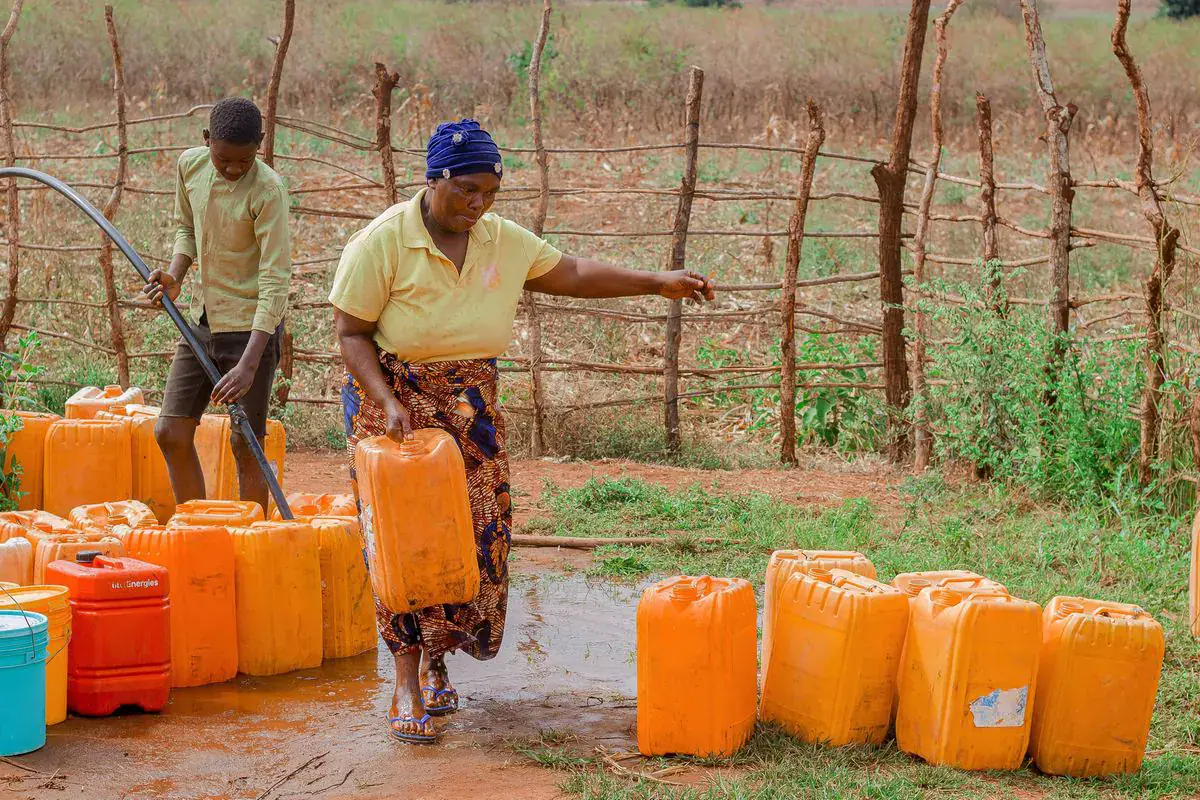
Ishinde has five hamlets: Ishinde Stand, Kibaoni Igingo, Kigogo, Kisakeni, and Morondwe. While some residents have benefited from the project, others, like those in Morondwe Hamlet, still struggle with water shortages. The hamlet's residents partly depend on a government-provided solar-powered water system, which struggles to meet demand when sunshine is insufficient. In such cases, residents may spend Sh6,000 to buy five jerrycans of water. For 75-year-old Mariam Mshana, fetching water remains a physical challenge.
The shortage of water affects not only household needs but also children's education, farming, family budgets, and the time available for income-generating activities. Some children attend school in dirty clothes because their families lack enough water, while others miss classes altogether. Mariam Mshana added that previous water initiatives had sometimes collapsed after infrastructure fell into disrepair, forcing residents to resume long journeys in search of water.
In Morondwe, unreliable water supplies have undermined farming. Hamlet chairperson Juma Mshana said residents had previously cultivated more crops when a water project sponsored by the Rotary Club was operational. The project ended when the new project kicked off, leaving residents with only one well to serve the entire hamlet. Without reliable water, residents spend more time searching for supplies and less on farming and other economic activities.
In Kisakeni Hamlet, residents face similar difficulties. Chairperson Sesilia Mgala said the government had provided a community water tank outside the main Same–Mwanga–Korogwe project, but supplies sometimes stopped for three or four consecutive days. Residents, including 62-year-old Mgala, have to walk for about an hour to fetch a bucket of water. The shortage also affects farmers and livestock keepers, who struggle to irrigate crops and provide water for their animals.
The water shortage has placed an additional burden on household budgets in Kigogo Hamlet. Residents, like Flomina Mgonja, have been without water since April 26 and are paying Sh3,000 to transport five buckets on a motorcycle. The shortage has also affected small-scale farming, with some residents abandoning vegetable production because they can no longer irrigate their crops. A pump breakdown caused the disruption in Kigogo, and the government spent Sh10 million to restore supplies.
Despite the challenges, not all residents of Ishinde have experienced the same difficulties. Some, like Godfrey Mbwambo, a resident of Ishinde Stand, said access to clean and safe water had improved, although some households still had to walk to collect it. The government had initially excluded Ishinde from the project's first phase but later directed officials to extend services to villages along the central area between Same and Mwanga districts. The project's second phase, which includes areas like Morondwe, is awaiting government funding, and its start and completion dates remain unknown.
Key points
- The Same–Mwanga–Korogwe Water Supply Project has improved access to water for approximately 100,000 people in Kilimanjaro and Tanga regions.
- The project aims to supply 103 million litres of water per day, up from the current 51.5 million litres.
- Once completed, the project is expected to serve approximately 450,000 people by 2038.