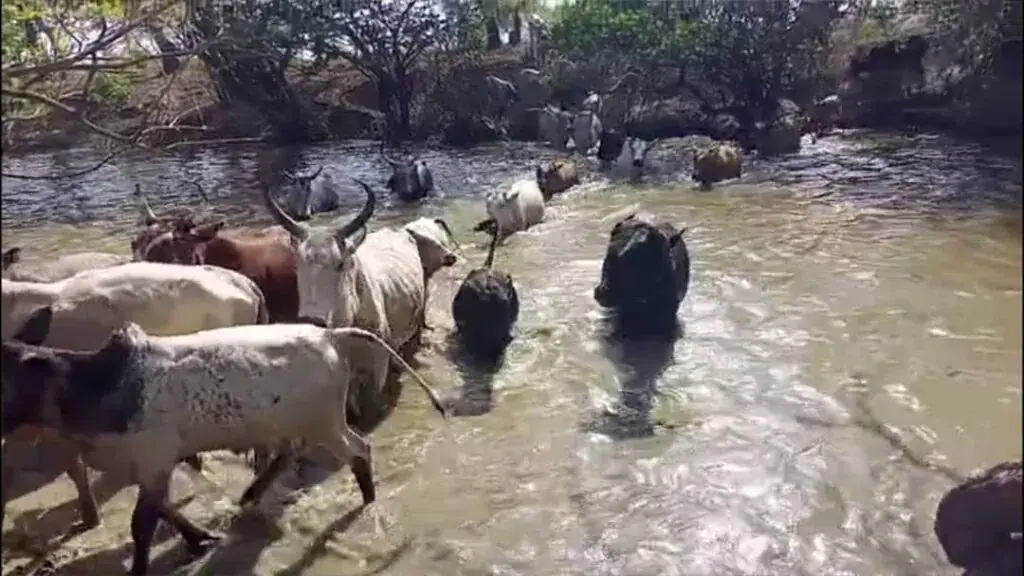
In the farming community of Yankazia, located in the Saboba District of Ghana's Northern Region, more than 1,000 residents are facing a daily struggle to access safe drinking water. The community's water crisis has led to households drawing water from sources shared with animals, sparking fears of waterborne disease outbreaks. This situation has taken a toll on residents, particularly children, who frequently fall ill due to the unsafe water.
Resident Leticia Jijir expressed the community's plight, stating that the water situation is severely affecting children's health. When alternative water sources are unavailable, families are forced to give their children the same unsafe water, exacerbating health issues. The burden of fetching water primarily falls on women, who trek long distances to find any water at all. This responsibility adds to the community's overall hardship.
According to Njom Susanna, another resident, women in the community bear the brunt of water collection. They often walk long distances, sometimes over nine miles, in search of water, only to find sources that are unfit for drinking. The representative of the Chief of Yankazia, Abraham Mamkrom, has appealed for government and non-governmental organisations' intervention to provide a reliable supply of potable water for the community.
Efforts have been made to address the water shortage, including the drilling of boreholes by the Member of Parliament for the Saboba Constituency. However, Andrews Mawie Kusan, the Assemblyman for the Yankazia Electoral Area, noted that challenges with underground water have limited the effectiveness of these efforts. Some boreholes have not produced water as expected, leaving the community to rely on unsafe sources.
The District Chief Executive for Saboba, George Wumbei, declined to comment on the situation when approached. The lack of a reliable solution to the water shortage has left residents and health officials concerned about the increased risk of waterborne illnesses, particularly among women and children who are most affected by the water collection process.
The community's reliance on shared water sources has significant health implications. With no clear solution in sight, residents continue to suffer from the water crisis. Health officials and residents alike fear that the situation may worsen if a lasting solution is not implemented soon. The community's appeal for urgent intervention highlights the need for a comprehensive approach to address the water shortage.
The water crisis in Yankazia underscores the challenges faced by many rural communities in accessing safe drinking water. The situation calls for collaborative efforts from government agencies, non-governmental organisations, and other stakeholders to provide sustainable solutions to the community's water needs. Until then, residents will continue to rely on unsafe water sources, exacerbating health risks and perpetuating the cycle of hardship.
Key points
- Over 1,000 residents in Yankazia rely on water sources shared with animals.
- The community's water crisis has significant health implications, particularly for women and children.
- Efforts to address the water shortage, including borehole drilling, have been limited by challenges with underground water.