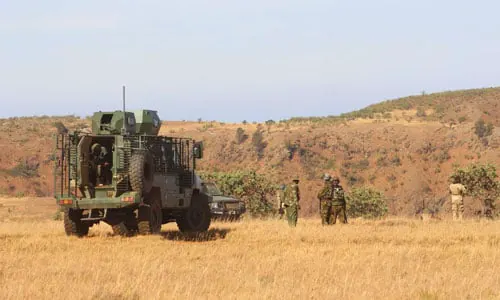
Residents of Samburu, Kenya, have expressed concern over the significant loss of livestock during a recent anti-poaching operation. The operation, launched in response to attacks by poachers in the Samburu and Isiolo border areas, resulted in the deaths of multiple individuals, including two Anti-Stock Theft Unit (ASTU) officials, one reserve police officer, and two civilians. According to local leaders, the operation caused substantial damage to the livelihoods of residents who rely heavily on livestock.
The operation's impact has been disputed, with varying reports on the number of animals killed. According to Senate data, 415 goats and 102 cattle were killed in the Waso Ward within three days. However, Samburu East Member of Parliament Jackson Lekumontare stated that his assessment indicated over 700 goats, 500 cattle, and several donkeys were killed. The Samburu Professionals Association reported at least 717 animals killed, including 415 goats, 352 cattle, and 50 donkeys.
The loss of livestock has significant implications for the local community, which relies on the animals for food, children's education, healthcare, and daily income. The Samburu Professionals Association emphasized that the damage extends beyond property to the very livelihoods of many families. The incident sparked protests in Samburu East, with residents demanding an independent investigation and compensation for affected families.
Local leaders, including Samburu Governor Lati Lelelit, have expressed concern over the operation's implementation, citing human rights abuses and destruction of property. Lelelit stated that while the county supports efforts to enhance security, the operation's execution was flawed. The governor's sentiments were echoed by Senator Edwin Sifuna and Samburu Senator Lelegwe Ltumbesi, who called for an explanation from the government.
The incident has also raised questions about the balance between anti-poaching efforts and the protection of local livelihoods. Residents acknowledge the importance of combating poaching but argue that this should not be done at the expense of innocent citizens' lives and economies. An investigation into the circumstances surrounding the livestock killings has been demanded by various stakeholders.
The Samburu Professionals Association and other stakeholders have called for an investigation into the incident, focusing on the number of animals killed, the officials involved, and those who authorized the operation. Secretary General of the Samburu University Students Association, Meshack Ramati, emphasized the government's responsibility to protect citizens, their property, and dignity.
The aftermath of the incident has seen increased tensions between local residents and authorities. With demands for compensation and an independent investigation growing, the situation in Samburu remains sensitive. As stakeholders await the outcome of the promised investigations, residents are left to grapple with the significant economic and emotional impact of the livestock losses.
Key points
- The anti-poaching operation in Samburu resulted in significant livestock losses, affecting the livelihoods of local residents.
- The incident has sparked protests and demands for an independent investigation and compensation for affected families.
- Local leaders have expressed concern over the operation's implementation, citing human rights abuses and destruction of property.