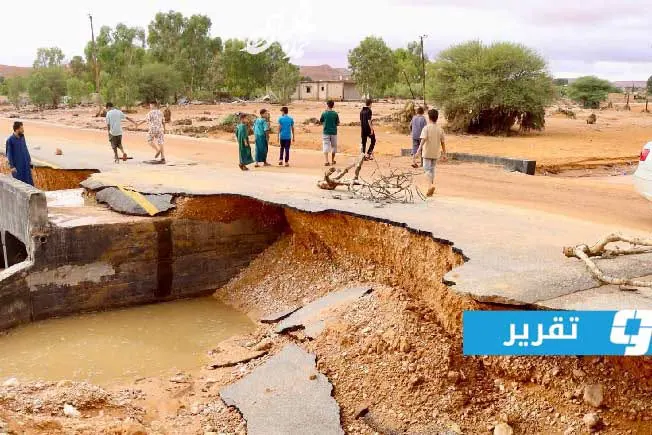
Residents of Mizda, a city located 180 kilometers south of Tripoli, Libya, have reported that they have not received any compensation or humanitarian aid following the devastating floods that swept through the city in late September. The floods, caused by heavy rainfall, resulted in widespread damage to homes, public facilities, and infrastructure, leaving many residents without access to basic necessities. Despite government announcements of relief efforts, many residents claim they have yet to receive any assistance.
The floods hit Mizda on September 25, causing widespread destruction and displacement. Many residents, including Mohamed Meshay, reported that their homes were severely damaged or destroyed, leaving them without a place to live. Meshay stated that his family is still waiting for assistance to deal with the damage caused by the floods, but so far, no one has visited their home to assess the damage or provide aid. Similar stories have been reported by other residents, including Hussein Mekari and Mohamed Balqasim.
The Libyan government has announced several initiatives to provide relief to those affected by the floods, including the dispatch of humanitarian aid and support to the affected areas. The Municipal Council of Mizda announced on September 25 that it was mobilizing efforts to provide emergency response and alleviate the suffering of residents. However, residents claim that these efforts have not reached them, and many are still waiting for assistance.
The floods have highlighted the vulnerability of Libya's infrastructure and the need for improved disaster preparedness and response. The country's authorities have faced criticism for their handling of the crisis, with many residents expressing frustration at the lack of support and communication from the government. The situation has also raised concerns about the criteria used to determine who receives aid and how damage is assessed.
The Municipal Council of Mizda has not provided an update on the number of homes damaged or destroyed in the floods, nor has it released information on the distribution of aid to affected residents. The Libyan government has also not provided a comprehensive report on the damage caused by the floods or the number of people affected. The lack of transparency and communication has exacerbated the frustration and anxiety felt by many residents.
Residents have reported that they have documented the damage caused by the floods, but many have not received any response or support from the authorities. Some residents have expressed concerns that the aid has not been distributed fairly, with some areas receiving more support than others. The situation has also raised concerns about the long-term impact of the floods on the city's infrastructure and economy.
The Libyan government has faced criticism for its handling of the crisis, with many residents calling for improved support and communication. The situation has also highlighted the need for improved disaster preparedness and response in Libya, as well as the importance of transparency and accountability in the distribution of aid. Residents of Mizda continue to wait for support and compensation for the damage caused by the floods.
Key points
- Many residents of Mizda claim they have not received any compensation or humanitarian aid despite government promises.
- The floods have highlighted the vulnerability of Libya's infrastructure and the need for improved disaster preparedness and response.
- The situation has raised concerns about the criteria used to determine who receives aid and how damage is assessed.