Researchers at the Federal Polytechnic, Ado Ekiti, have called for the recovery and recycling of precious metals from electronic waste to boost Nigeria's economy and reduce pressure on foreign exchange. Adeyẹmi Olamide Adeparusi and Abiodun Olaniyi Fatoye, in a research paper titled "Economic impact of extracted precious metals from electronic waste in South Western Nigeria: Review of extraction methods," highlighted the economic benefits of e-waste recycling. They noted that e-waste contains valuable precious metals that can turn around the national economy.
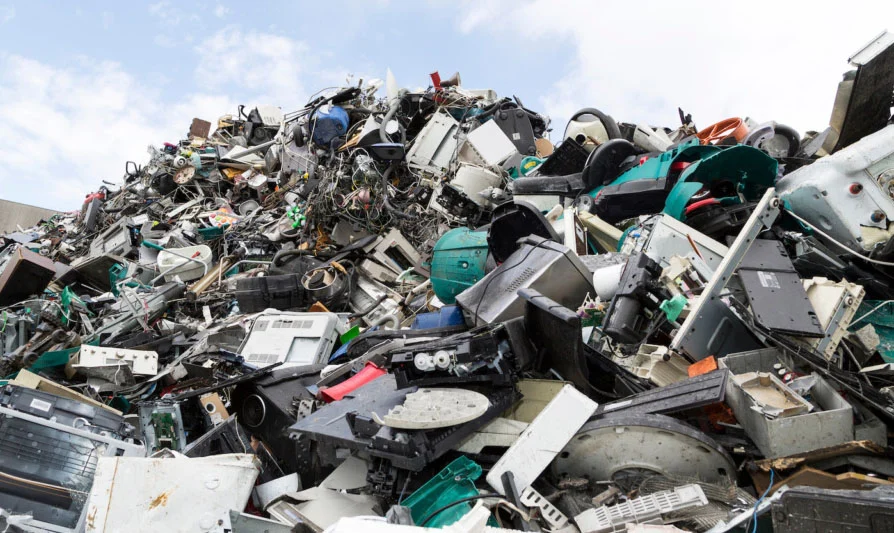
The increasing demand for newer electronic and electrical devices has contributed to the rapid accumulation of e-waste. According to the researchers, e-waste contains metals, ceramics, and plastics that can be recovered, recycled, and reused for economic benefits, rather than being discarded in landfills. They stated that e-waste is a generic name for discarded electronic devices and/or electronic components, with metals making up approximately 50 percent of the total e-waste.
The researchers noted that several metals, both base and precious metals, are used in making essential components of electronic devices. The properties of these metals make them ideal for recycling and reuse. However, studies have shown that only 15-20 percent of electronic devices are recycled, leaving a huge volume of untapped valuable metals that could be reused instead of sitting in landfills.
Effectively recovering metals from electronic devices could have multiple economic and ecological benefits, ranging from reducing the economic burden of electronics recycling to reducing the demand for ore mining. The researchers called for the adoption of a hybrid approach to e-waste extraction to enable Nigeria to benefit from the growing e-waste recovery industry.
An experimental analysis conducted on printed circuit boards indicated the abundance of precious metals in e-waste. The researchers proposed a hybrid methodology that incorporates chemical and biological extraction techniques, using safer chemicals and compatible microbes for better and more efficient extraction of metals from e-waste.
The global e-waste generation is estimated to be between 53.6 million tons and is increasing by 3-5 percent per year. The global precious metals e-waste recovery market was expected to grow from $9.22 billion in 2021 to $9.61 billion in 2022 at a compound annual growth rate of 4.28 percent. The market is expected to reach $11.51 billion in 2026 at a CAGR of 4.61 percent.
The researchers emphasized the need for a structured approach to address pollution arising from e-waste management. They noted that the extraction of precious metals from e-waste in developing nations occurs through manual scavenging, pyrometallurgy, and hydrometallurgy, which are hazardous to people and the environment. Recovering precious metals from e-waste in Nigeria presents a viable economic opportunity that supports job creation, resource security, and environmental security.
Key points
- Adoption of sustainable extraction methods is key to maximizing the benefits of e-waste recycling in Nigeria.
- E-waste recycling can reduce the economic burden of electronics recycling and the demand for ore mining.
- Nigeria can benefit from the growing e-waste recovery industry by adopting a hybrid approach to e-waste extraction.