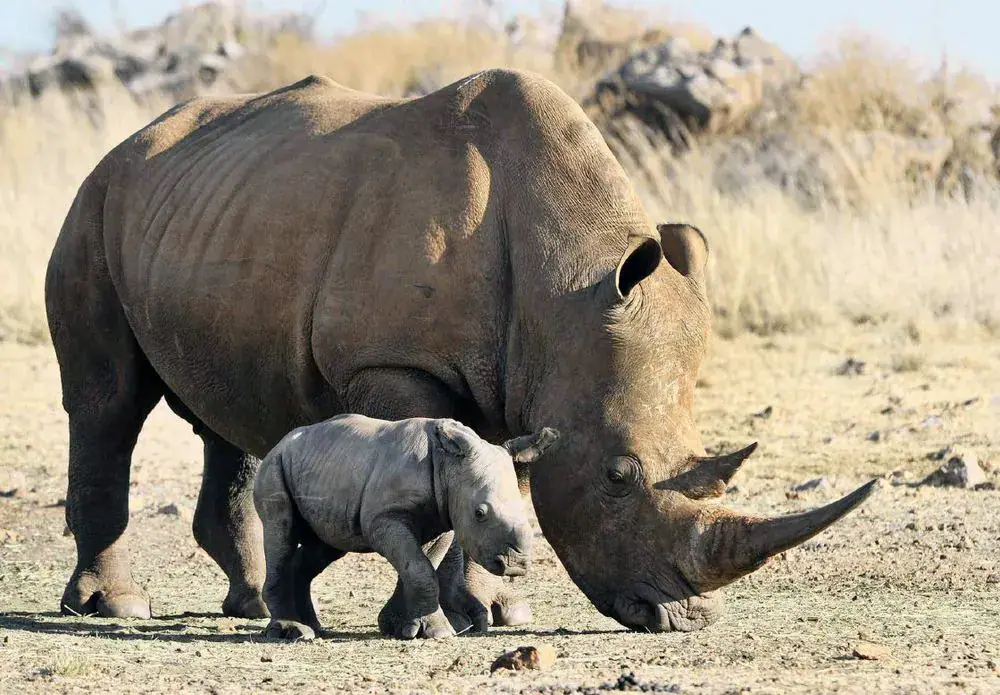
A researcher has raised concerns that South Africa's legal rhino horn supply chain could be exploited by criminal networks. Eliode Bakole, a PhD candidate at Utrecht University's Willem Pompe Institute for Criminal Law and Criminology, presented his research at the 24-hour Global Organised Crime Conference. He examined how legally obtained rhino horns could find their way into illegal markets, highlighting the risks of laundering and misconduct in the supply chain.
South Africa continues to face pressure from rhino poaching, with 230 rhinos poached nationally between January and August 2026, compared to 248 during the same period in 2025. The Kruger National Park lost 114 rhinos to poaching during the first eight months of 2026, compared to 123 during the corresponding period in 2025. Despite this, the country has an estimated minimum of 15,096 rhinos, including 2,565 black rhinos and 12,531 white rhinos, a 4.9% increase from 2024.
Bakole identified trophy hunting as a possible avenue for laundering, where people posing as professional hunters, known as "pseudo-hunters," could exploit the system. Trophy hunting is governed by annual quotas and permits, making oversight and verification crucial. Dehorning, or horn trimming, was another potential laundering avenue, as it exposes the supply chain to laundering and misconduct. While dehorning has reduced poaching, Bakole questioned whether it was for conservation or profit.
The practice of dehorning has resulted in a large stockpile of horns, raising concerns about their safety and potential for laundering. Bakole noted that in Southeast Asian consumer markets, a kilogram of rhino horn costs between $25,000 and $35,000. He highlighted that the intentions behind dehorning remained unclear, even to practitioners, due to a lack of clear evidence about the purpose of keeping detached horns.
Bakole identified five forms of laundering: policy laundering, legitimacy laundering, black laundering, purpose laundering, and prospective laundering. He also highlighted corruption as a way in which rhino horns could be taken, involving money, position, and threat. The researcher emphasized that rhinos remained under severe threat while criminal networks operated across legal, illegal, and intermediate spaces.
The issue of rhino horn trade and poaching is complex, with various stakeholders and interests involved. The South African government has implemented measures to combat rhino poaching, including increased security and law enforcement efforts. However, more needs to be done to address the root causes of poaching and ensure the effective conservation of rhino populations.
The concerns raised by Bakole highlight the need for greater transparency and accountability in the rhino horn supply chain. Effective regulation and monitoring of trophy hunting, dehorning, and stockpiling are crucial to preventing the exploitation of the system by criminal networks. The South African government, conservation organizations, and other stakeholders must work together to address these challenges and ensure the long-term conservation of rhino populations.
Key points
- The legal rhino horn supply chain in South Africa may be vulnerable to exploitation by criminal networks through trophy hunting, dehorning, stockpiling, and corruption.
- Effective regulation and monitoring of trophy hunting, dehorning, and stockpiling are crucial to preventing the exploitation of the system by criminal networks.
- The South African government, conservation organizations, and other stakeholders must work together to address the challenges and ensure the long-term conservation of rhino populations.