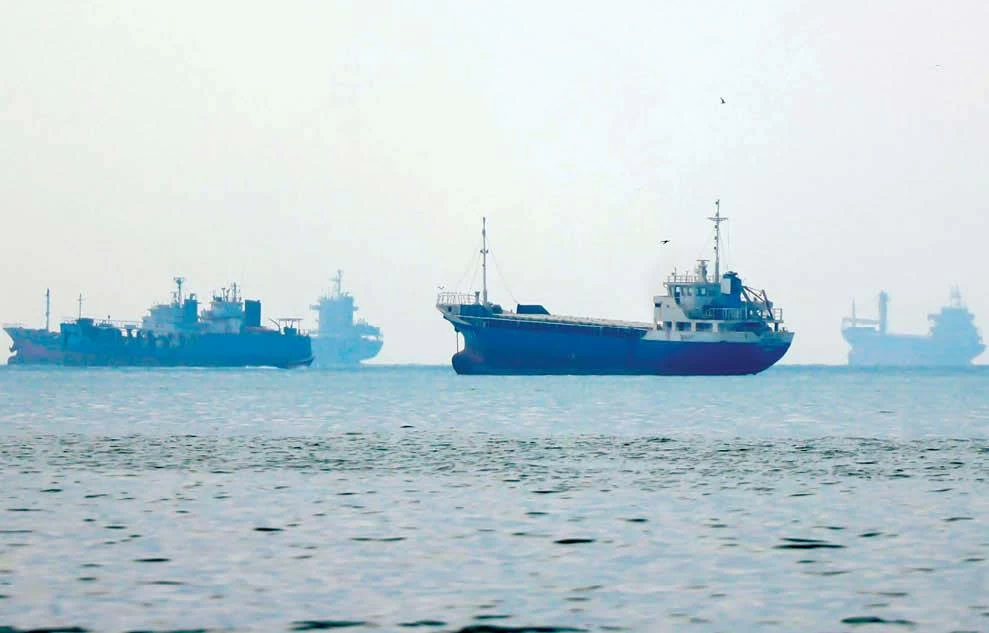
A researcher at the Arab Center for Political Studies has stated that the Gulf Arab states and the Arab region view the escalation between the US and Iran from two main perspectives: security and economic. The security aspect has witnessed direct threats between Iran and Gulf Cooperation Council countries, including the launch of drones and ballistic missiles. This has also involved targeting other countries such as Iraq and Jordan.
The researcher, Dr. Muhammad Sadiq Ismail, noted that the security path has been intense within the framework of the military confrontation between the US and Iran. He added that the economic path was used by Iran after the war, not at its beginning, through hints at the Strait of Hormuz. Iran then used this card fully by confirming that ships passing through the strait must be welcomed by Iran or seek to establish a positive relationship with it.
This development has led to a change in the war's path, with the war initially sparked by the nuclear path and preventing Iran from acquiring nuclear weapons. However, the nuclear issue has taken a backseat currently, in favor of the advancement of the Strait of Hormuz file. Dr. Ismail explained that the negotiation side is currently examining the issue of opening or closing the Strait of Hormuz, the global energy crisis, and navigation paths.
The researcher highlighted that the cost borne by the region due to the continued escalation is very high and extends to multiple dimensions. Around 20 million barrels of oil used to pass through the Strait of Hormuz, while current numbers indicate that between 3 and 4 million barrels pass through. This is in contrast to statements by US President Donald Trump, which claimed that the number had reached 15 million barrels.
Dr. Ismail also pointed out that the energy crisis is evident in Europe, the Arab world, and the US, with the price of a gallon of diesel rising from $1 to $2, then to $6.5. He believes that this reflects the scale of the economic repercussions of the escalation. The Strait of Hormuz has become a key pressure card in the path of escalation between the US and Iran.
The situation in the Strait of Hormuz has significant implications for the global economy, given its importance as a major oil shipping route. Any disruption to the flow of oil through the strait could have far-reaching consequences for energy markets and the global economy.
The current developments in the Strait of Hormuz have raised concerns about the potential for further escalation and its impact on regional and global stability.
Key points
- The Strait of Hormuz has become a crucial pressure point in the escalation between the US and Iran.
- The escalation has significant economic implications, including the potential disruption of oil supplies and increased energy costs.
- The situation in the Strait of Hormuz has major implications for regional and global stability.