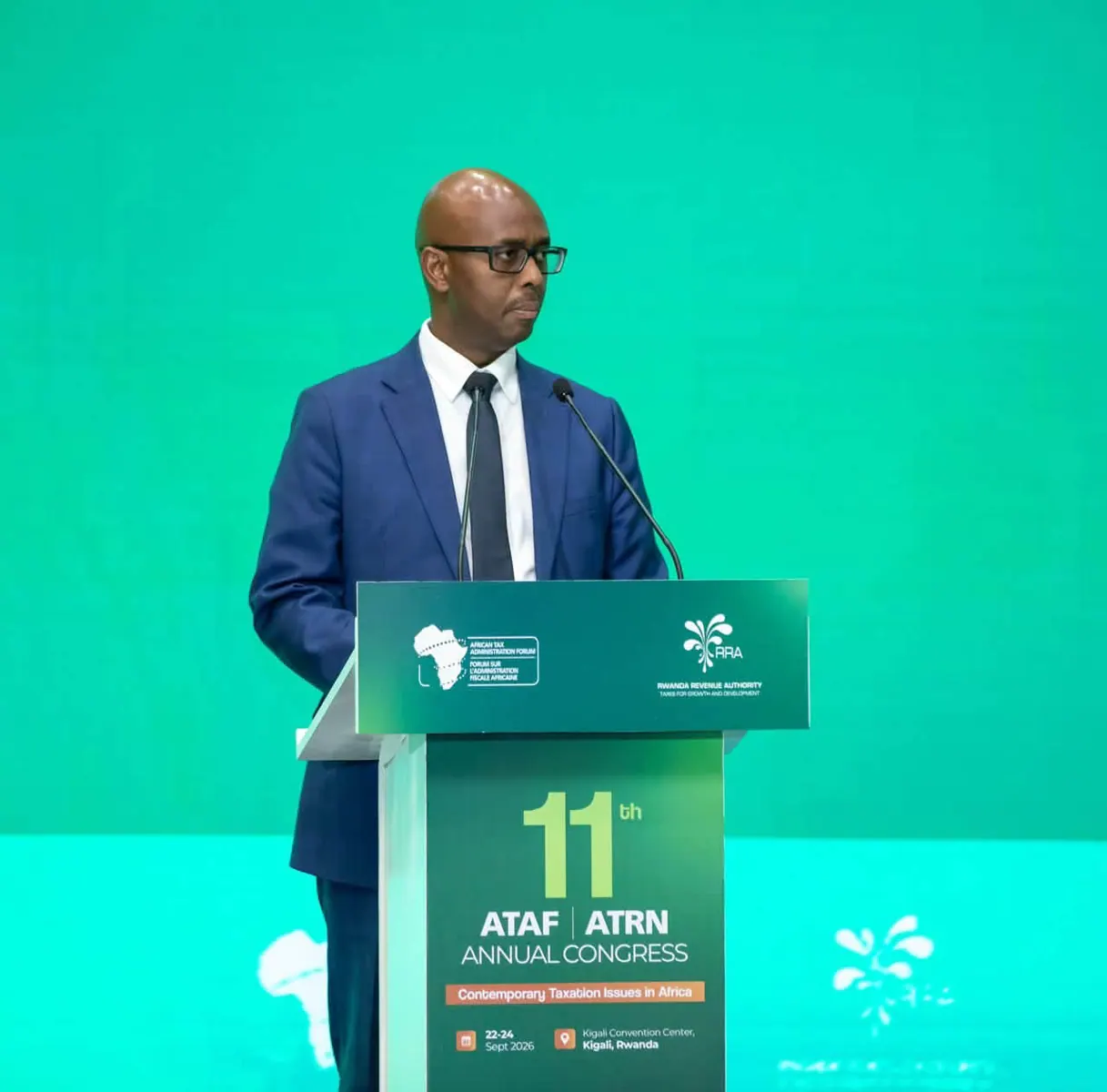
The Rwanda Revenue Authority (RRA) has highlighted the importance of research in refining the country's tax system, improving revenue mobilisation, and ensuring that taxation does not disproportionately affect small businesses. According to the RRA leadership, evidence-based research allows policymakers and tax administrators to assess the effectiveness of existing tax measures and identify areas for adjustment. This was stated during the 11th African Tax Research Network (ATRN) Congress in Kigali.
The ATRN Congress, taking place from September 22-24, 2026, brings together researchers, policymakers, tax administrators, and development partners to examine contemporary taxation challenges and ways to strengthen domestic revenue mobilisation. The 2026 congress received 190 research paper submissions, a 60% increase from 120 in 2024. The RRA leadership emphasized that research is crucial in determining how taxation can generate public revenue while allowing businesses, especially smaller enterprises, to grow.
Rwanda's tax framework provides different regimes depending on the size and circumstances of businesses. For example, small enterprises with annual turnover between Frw12 million and Frw20 million can fall under a lump-sum regime, paying 3% of annual turnover. Businesses can also opt for taxation based on actual profits under specified conditions. The RRA leadership noted that such differentiated treatment reflects efforts to make taxation more proportionate.
The RRA boss highlighted that smaller businesses have tax arrangements and support measures not available to larger enterprises. "We have a tax system where small businesses pay less, big businesses pay more according to their incomes. There are incentives to give. Small businesses have [benefits] that big businesses don't have, and many things have been done to make sure that taxation is fair." This approach aims to balance taxation and business growth.
Research published by RRA has previously examined the impact of simplified tax regimes on small and medium-sized enterprises. One study using RRA tax-declaration data from 2011 to 2023 found that simplified regimes improved accessibility and compliance among SMEs. The RRA leadership emphasized that research is necessary to determine which tax policy approaches are suitable for Rwanda's economic circumstances.
The RRA has developed its own research programme, covering issues including tax compliance, audits, technology, electronic services, and the digital economy. Its research portfolio includes studies on tax arrears, electronic billing machine adoption, tax audits, and the impact of digitalisation on compliance. The authority is also preparing its 4th Annual RRA Research Day, focusing on "Advancing Domestic Revenue Mobilization and National Development through Fair and Effective Taxation."
Professor Annet Oguttu, chairperson of ATRN, stressed the importance of African countries generating knowledge that responds to their own economic and social realities. The ATRN Congress is examining issues including regional tax harmonisation, trade policy, and domestic resource mobilisation under the African Continental Free Trade Area. The growing number of research submissions reflects increasing interest in African-led evidence to address the continent's tax challenges.
Key points
- Research is critical in refining Rwanda's tax system and ensuring fair taxation.
- Rwanda's tax framework provides different regimes for small and large businesses.
- The RRA is developing its research programme to inform tax policy and administration.