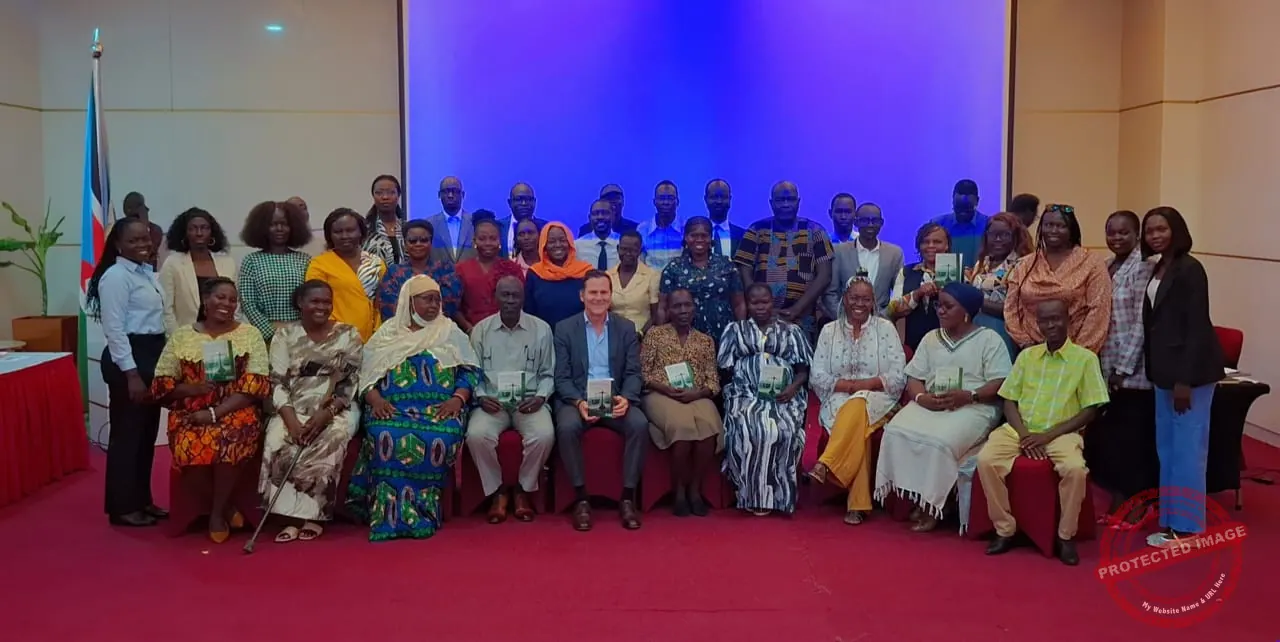
A recent report launched by the South Sudan Human Rights Defenders Network has highlighted the discrepancies between the country's constitutional protections for human rights defenders and journalists and the reality on the ground. The report examines the legal and policy environment for human rights defenders and journalists in South Sudan, identifying various challenges they face. These challenges include legal and administrative restrictions, registration difficulties, and the absence of a specific legal framework for protecting human rights defenders.
According to the report, one of the major challenges faced by human rights defenders and journalists is the restrictive accreditation, licensing, and registration process for civil society organizations. Additionally, organizations operating at the state level are subject to extra requirements and fees. Advocate Omara Joseph, facilitator of the program, noted that while the Constitution provides protections for freedom of expression, assembly, and association, the implementation of these protections remains a significant challenge.
The report also found that human rights defenders in South Sudan lack a specific legal framework that provides them with protection. This absence of a protective framework leaves defenders vulnerable to various forms of harassment and intimidation. Joseph emphasized that the review revealed a significant overlap between practice and the baseline provided by the Constitution, particularly regarding freedom of expression, assembly, and association.
Organizations operating in South Sudan face challenges related to accreditation, licensing, and registration, including double registration requirements and fees when conducting activities in the states. Joseph stated that when national organizations plan to conduct activities in the states, they are often imposed with restrictions. This complex regulatory environment can hinder the work of human rights defenders and journalists.
The report's findings were welcomed by various stakeholders, including Rosemary Kabaki, Head of Mission at Nonviolent Peaceforce South Sudan. Kabaki believes that the report can help identify gaps between existing laws and their implementation, which is crucial for addressing misunderstandings or gaps that need to be addressed. The report's recommendations will be submitted to relevant duty bearers to inform legal and policy reforms.
The work of human rights defenders and journalists in South Sudan is expected to be particularly important as the country approaches elections. Rudi Von Planta, Program Manager at the Swiss Agency for Development and Cooperation, emphasized that different voices will be essential during the pre- and post-election periods. The South Sudan Human Rights Defenders Network plays a vital role in promoting human rights and freedoms in the country.
The report's recommendations aim to address the challenges faced by human rights defenders and journalists in South Sudan. Key points include the need for a specific legal framework to protect human rights defenders, the simplification of accreditation and registration processes, and the importance of different voices during the electoral process.
Key points
- The report highlights the need for a specific legal framework to protect human rights defenders in South Sudan.
- The country's constitutional protections for human rights defenders and journalists are not being effectively implemented.
- The work of human rights defenders and journalists will be crucial during South Sudan's upcoming elections.