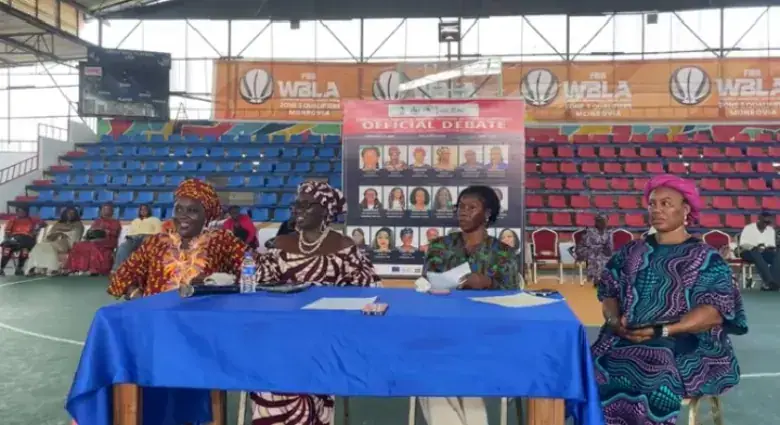
As the Coalition of Political Parties Women in Liberia (COPPWIL) prepares to elect new leaders, Bong County Electoral District #6 Representative Moima Briggs-Mensah has called on women from different political parties to put aside personal ambitions and demonstrate unity. This appeal was made at the COPPWIL Leadership Candidates Debate, organized by Sister Aid Liberia in collaboration with UN Women, the United Nations Development Programme (UNDP), and the National Elections Commission (NEC). The debate featured 19 women contesting eight positions ahead of COPPWIL's elections on November 20, 2026.
Briggs-Mensah emphasized that the contest should focus on showcasing leadership abilities, preparedness, and plans for improving COPPWIL, rather than competing for titles. She encouraged candidates to look beyond positions and focus on contributions to the coalition and the broader struggle for women's political representation. Briggs-Mensah stressed that leadership should be measured by the contribution a person makes, not by the position they hold. Her remarks placed responsibility on candidates to explain their intentions if elected, particularly in a time when women continue to demand greater participation in Liberia's political decision-making.
UN Women Liberia Representative Yemi Falayajo questioned political parties' commitment to giving women meaningful opportunities to win elected positions. She highlighted that women constitute over 50 percent of Liberia's voting population but remain underrepresented in elected positions. Falayajo cited figures showing that only two of Liberia's 31 political parties met the 30 percent gender quota during the 2023 elections. This imbalance exposes a gap between women's participation in choosing political leaders and their access to decision-making positions.
Falayajo challenged political parties to explain why women continue to play major roles in mobilizing voters and supporting campaigns but are not given comparable opportunities to become elected representatives. She argued that parties must create conditions that allow women to be voted for and elected, rather than just encouraging women to vote. Falayajo also warned against competition among women that limits opportunities for others, urging women leaders to support one another and work toward expanding political opportunities across party lines.
The UN Women representative outlined efforts to prepare women for political leadership, including training for aspiring female candidates from different political parties and COPPWIL members. However, she acknowledged that training alone cannot resolve the political barriers women face, including financial, institutional, cultural, and personal challenges. These challenges require changes within political parties and stronger coalitions to support women's political inclusion.
Briggs-Mensah and Falayajo's remarks highlight two significant challenges facing the women's political movement in Liberia: divisions and personal interests among women seeking leadership, and the failure of political parties to translate women's numerical strength into greater representation. Their appeals emphasize the need for unity among women and a more inclusive approach from political parties. The COPPWIL elections will determine the coalition's leadership and potentially shape the future of women's political representation in Liberia.
The debate and subsequent elections are crucial in the context of Liberia's political landscape, where women's participation is essential for a more representative government. As Briggs-Mensah and Falayajo noted, women's leadership can bring new perspectives and priorities to the country's decision-making processes. The outcome of the COPPWIL elections and the implementation of Falayajo's recommendations may influence the future of women's political inclusion in Liberia.
Key points
- UN Women Representative Yemi Falayajo challenged political parties to explain why women are underrepresented in elected positions despite making up over 50 percent of Liberia's voting population.