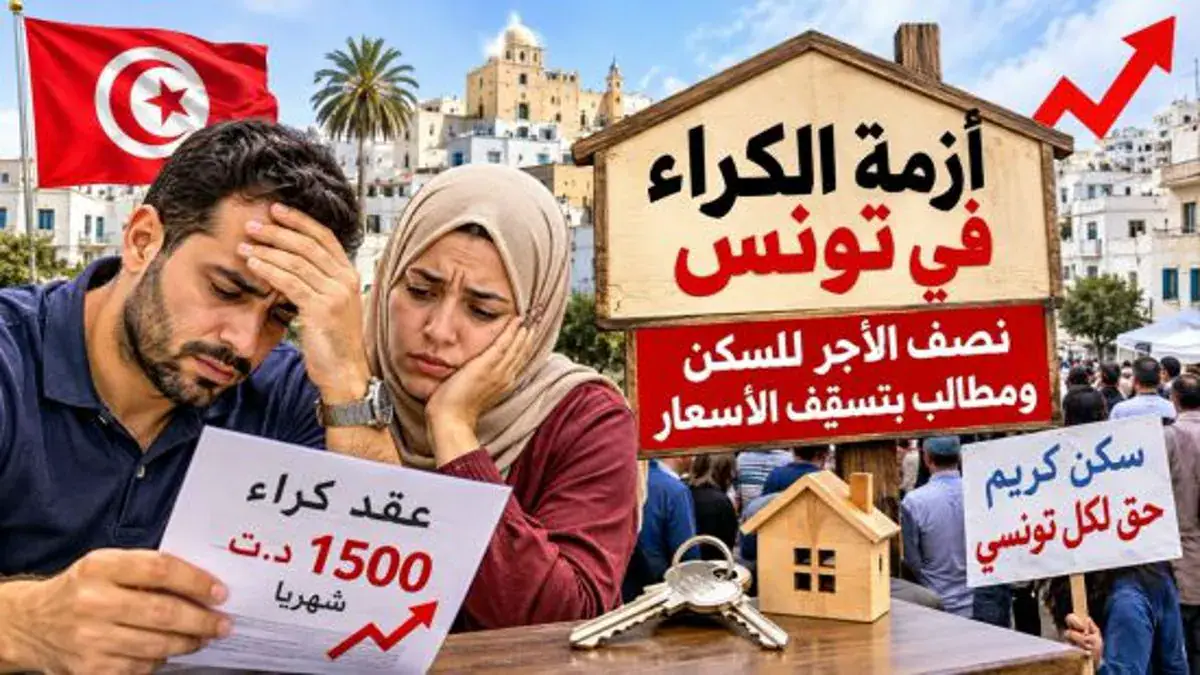
The rental crisis in Tunisia has reached alarming levels, with prices increasing steadily, even in popular neighborhoods. This has put a strain on families, workers, and employees, making it difficult for them to afford basic necessities. The crisis has also affected young people, who are struggling to find affordable housing, making it challenging for them to get married and start a family. Many are forced to accept unfavorable rental conditions, fearing they might lose their current accommodation or face a lengthy and costly search for a new one.
The issue of rental prices in Tunisia has sparked a heated debate, with many questioning the fairness of the current system. Some argue that rental income is not subject to sufficient taxation, while others claim that some landlords are not complying with their tax obligations. This has led to calls for greater transparency and regulation in the rental market, as well as stricter controls on short-term rentals and foreign real estate platforms. The government is under pressure to intervene and regulate the market to prevent further price hikes.
Short-term rentals have become increasingly popular in Tunisia, with many property owners turning to online platforms to rent out their properties. However, this has raised concerns about the impact on the traditional rental market and the potential for tax evasion. There are also worries about data protection, as personal information is often shared on these platforms. The government needs to ensure that short-term rentals are regulated and that property owners comply with tax laws and regulations.
To address the crisis, many are calling for the government to introduce measures to regulate rental prices and protect tenants. Some have suggested capping annual rent increases or introducing temporary freezes on rent hikes. However, any such measures would need to be carefully considered to avoid unintended consequences, such as reducing the supply of rental properties or driving the market underground. The government must balance the rights of property owners with the needs of tenants, ensuring that housing remains affordable and accessible.
The Tunisian government has been urged to establish a joint task force to monitor the rental market and enforce regulations. This would involve collaboration between the ministries of finance, interior, and housing to ensure that property owners comply with tax laws and regulations. The task force would also need to address the issue of short-term rentals and ensure that property owners protect tenants' personal data. By taking a proactive approach, the government can help to stabilize the rental market and provide relief to struggling families.
The rental crisis in Tunisia has far-reaching implications for the country's social and economic stability. It affects not only the well-being of families but also their ability to plan for the future. The government must prioritize the issue and work towards finding a solution that balances the needs of property owners and tenants. This will require a comprehensive approach that addresses the root causes of the crisis and provides support to those who need it most.
As the rental crisis continues to worsen, many are left wondering when the government will take decisive action to address the issue. The situation has become unsustainable, with many families struggling to make ends meet. It remains to be seen whether the government will introduce measures to regulate the rental market and provide relief to struggling families. One thing is certain, however: the issue of affordable housing is a pressing concern that requires urgent attention.
Key points
- The Tunisian government is under pressure to regulate the rental market and address the growing crisis of affordability.
- The crisis has affected not only families but also young people, who are struggling to find affordable housing and start a family.
- The government must balance the rights of property owners with the needs of tenants, ensuring that housing remains affordable and accessible.