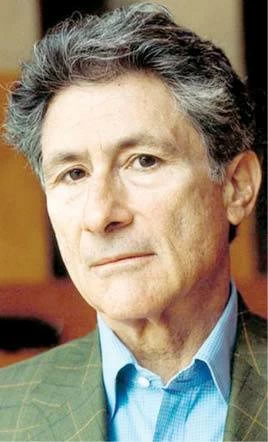
Edward Said was a prominent Palestinian scholar and intellectual who fearlessly challenged Western narratives and advocated for Palestinian rights throughout his life. Born on November 1, 1935, in Jerusalem, Said grew up in a complex cultural environment, with a Palestinian father and an American mother. This multifaceted background would later shape his unique perspective and inform his groundbreaking work. Said's early life was marked by movement and displacement, as he spent his formative years moving between Cairo and Jerusalem.
Said's academic journey began at prestigious institutions, including Princeton University and Harvard University, where he earned his undergraduate and graduate degrees. His academic prowess earned him a position at Columbia University, where he would spend most of his career as a professor of English and Comparative Literature. Said's work extended far beyond the confines of academia, as he became a vocal advocate for Palestinian rights and a fierce critic of Western imperialism. His influential book, "Orientalism," published in 1978, critiqued the Western world's romanticized and distorted views of the Middle East.
Throughout his career, Said was driven by a passion for social justice and a commitment to challenging dominant narratives. His work spanned multiple disciplines, including literature, music, and politics. Said was a talented pianist and music critic, and his love of music informed his writing and teaching. He was also a prolific author, publishing over 30 books that were translated into more than 35 languages. His writing often explored the intersection of culture, politics, and identity, and he was unafraid to challenge prevailing wisdom and conventional thinking.
Said's commitment to Palestinian rights and his critique of Western imperialism often put him at odds with those in power. Despite facing personal and professional challenges, Said remained a powerful voice for justice and human rights. His work inspired a generation of scholars and activists, and his legacy continues to be felt today. Said's impact extended far beyond the academic world, as he became a public intellectual and a vocal advocate for social justice.
Said's personal life was marked by both triumph and tragedy. He was diagnosed with leukemia in 1999 and passed away on September 25, 2003, at the age of 67. Despite his untimely death, Said's work continues to inspire and challenge readers around the world. His memoir, "Out of Place," published in 1999, offered a candid and introspective look at his life, exploring themes of identity, culture, and belonging.
Said's intellectual contributions have had a lasting impact on various fields, including postcolonial studies, literary theory, and cultural criticism. His work continues to be widely read and studied, and his ideas about the importance of challenging dominant narratives and promoting cultural understanding remain as relevant today as ever. Said's legacy serves as a powerful reminder of the importance of intellectual courage and the need for scholars and activists to engage with the world around them.
In the years following his death, Said's work has continued to inspire new generations of scholars and activists. His commitment to social justice and his critique of Western imperialism remain a powerful influence on contemporary thought and politics. As the world continues to grapple with issues of identity, culture, and power, Said's work offers a powerful reminder of the importance of critical thinking, intellectual courage, and a commitment to justice and human rights.
Key points
- Edward Said was a prominent Palestinian scholar and intellectual who challenged Western narratives and advocated for Palestinian rights throughout his life.
- Said's work had a lasting impact on various fields, including postcolonial studies, literary theory, and cultural criticism.
- His legacy serves as a powerful reminder of the importance of intellectual courage and the need for scholars and activists to engage with the world around them.