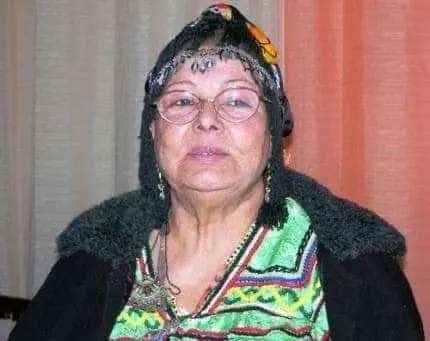
Algerian singer Djamila, born Djohar Bachène on May 2, 1930, in Aït Bouhouni, Azazga, Tizi-Ouzou, has passed away at the age of 89. She died in Algiers after a prolonged illness. Djamila was a prominent figure in Algerian music, particularly in the Kabyle genre. Her passing was marked by a large funeral procession at the Dely Brahim cemetery in Algiers.
Djamila began her career at a young age, introduced to radio by Mme Lafage, the founder of Kabyle radio. At 16, she moved between Ben Aknoun, Bouzaréah, and Algiers, participating in various radio programs. She eventually became a presenter on radio chain II, using her platform to educate listeners on important topics. Her early experiences in radio laid the groundwork for her future success as a singer and artist.
As a singer, Djamila achieved significant popularity with songs like "Abahri," "Sioutass sllam," "Arnu yas aman a xali," and "Awid afus ih." Her music often conveyed messages to Algerian emigrants and addressed social issues. She also joined the Ourar el khalath female choir on radio chain II, further solidifying her position in the Algerian music scene.
Djamila expanded her artistic repertoire by participating in various films, including "Le colonel Si Belaid," "Le bus des rêves," "Le vent des Aurès," and "Les hors la loi." Her acting career allowed her to showcase her versatility as an artist. She also made history by participating in the first Kabyle language film, "Tawrirt i tswatsun," directed by Bouguermouh.
Throughout her nearly five-decade career, Djamila demonstrated her dedication to her craft, continually seeking self-improvement. She learned to write in French and studied Arabic through evening classes, also obtaining her driver's license. Her hard work earned her recognition as a talented artist in the Algerian radio scene.
Djamila's impact on Algerian society extends beyond her artistic contributions. She was a trailblazer for women's liberation, defying societal norms and expectations. Her legacy serves as an inspiration to future generations of Algerian women, promoting freedom and self-expression.
The Algerian public has come to terms with the loss of this iconic artist, who leaves behind a rich legacy of music, film, and radio contributions. Tributes have been pouring in, celebrating Djamila's life and career. Her memory will live on through her body of work, continuing to inspire and entertain audiences across Algeria.
Key points
- Djamila was a pioneering Algerian singer, actress, and radio presenter who broke societal norms and inspired women's liberation.
- She was known for her popular Kabyle songs and film appearances, including the first Kabyle language film.
- Djamila's nearly five-decade career earned her widespread recognition and admiration in Algeria.