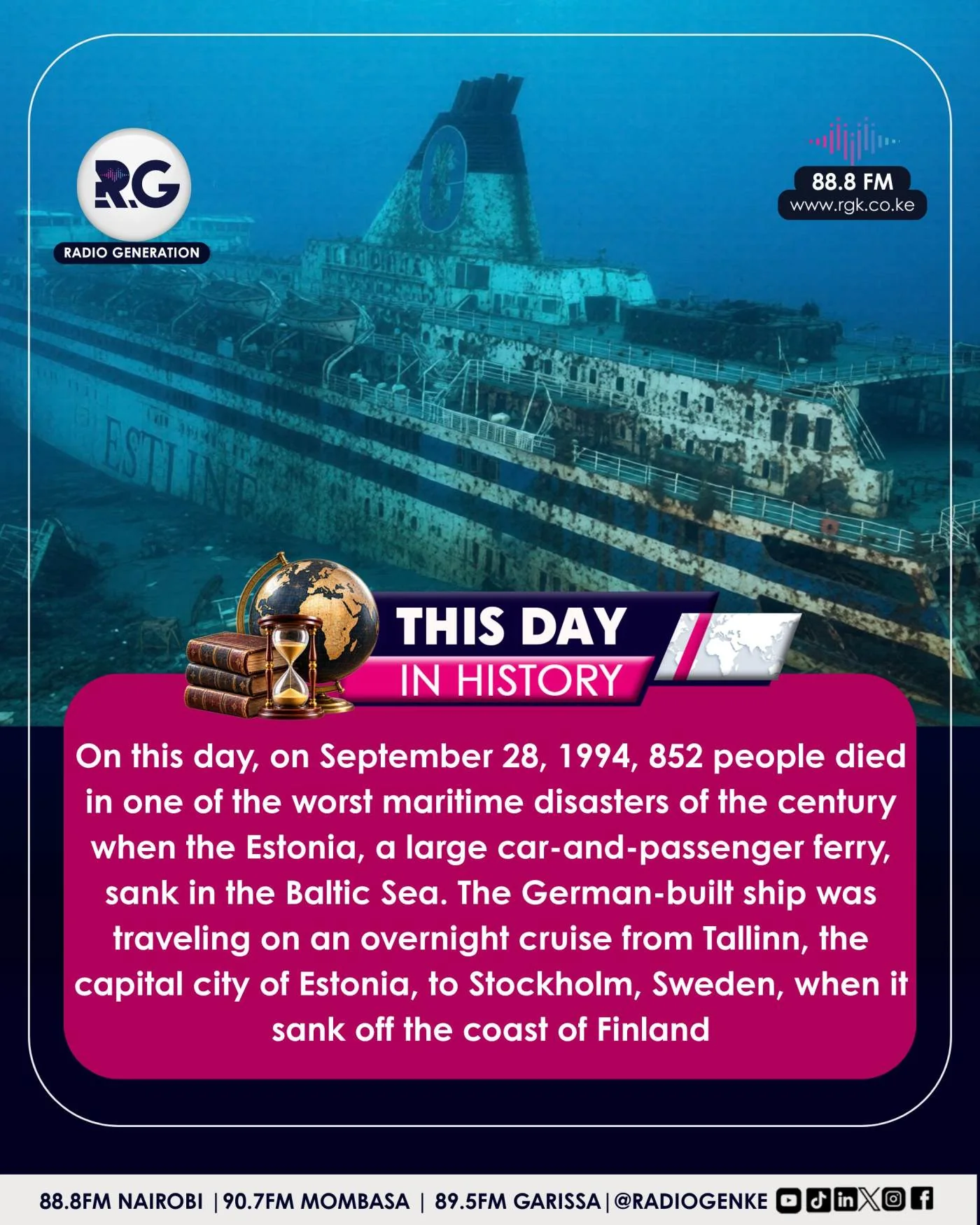
On September 28, 1994, one of Europe's deadliest maritime disasters occurred when the MS Estonia, a large passenger and car ferry, sank in the Baltic Sea. The German-built ferry was on an overnight journey from Tallinn, Estonia, to Stockholm, Sweden, carrying hundreds of passengers and crew. This route was popular, especially among Swedes traveling to Estonia, which had regained its independence from the Soviet Union in 1991. The Estonia was designed for roll-on, roll-off operations, allowing passengers to drive their vehicles directly onto the vessel. The ship also featured restaurants, live music, and entertainment, making the overnight journey a common form of travel across the Baltic Sea.
The Estonia ferry disaster resulted in the loss of 852 lives. In the early hours of September 28, the ferry encountered rough seas with waves estimated at up to 20 feet. Water entered the ship through the bow door and flooded the car deck. The vessel rapidly lost stability and sank in less than an hour. Many passengers were trapped inside, while others who escaped into the freezing Baltic waters died from drowning or hypothermia. Rescue helicopters later saved 137 survivors. The tragedy was a major maritime disaster that shocked Europe and the world.
A joint investigation by Sweden, Finland, and Estonia concluded that the disaster was caused by the failure of the bow door in severe weather, allowing water to flood the car deck. However, questions surrounding the sinking persisted, with some relatives and others disputing the official explanation. They suggested that the ship may have suffered damage from a collision or explosion. The investigation's findings were widely reported, but some uncertainties remained.
The Estonia disaster remains one of the deadliest peacetime maritime accidents in European history. It was followed by other major ferry disasters, including the Bukoba on Lake Victoria in 1996 and Senegal's Joola ferry in 2002. These incidents highlighted the need for improved maritime safety measures and more stringent regulations. The European maritime industry has since implemented various safety measures to prevent such tragedies from occurring.
The tragedy also ranks among the world's deadliest passenger-ship disasters. By comparison, the sinking of the Titanic in 1912 claimed about 1,500 lives. The Estonia disaster serves as a reminder of the importance of maritime safety and the need for vigilance in ensuring the safety of passengers and crew. Governments, shipping companies, and regulatory bodies have a critical role to play in preventing such tragedies.
The MS Estonia was a popular ferry that operated on the Tallinn-Stockholm route. The ship was designed to carry vehicles and passengers, making it a convenient mode of transport for those traveling between Estonia and Sweden. However, the disaster highlighted the risks associated with roll-on, roll-off ferries and the need for enhanced safety measures. The incident led to significant changes in maritime safety regulations.
Today, the Estonia ferry disaster is remembered as a tragic event that resulted in the loss of many lives. The incident serves as a reminder of the importance of safety at sea and the need for continued efforts to prevent such tragedies from occurring. The memories of the victims are honored by their families and friends, and the incident remains an important part of maritime history.
Key points
- The MS Estonia ferry disaster resulted in the loss of 852 lives.
- The disaster was caused by the failure of the bow door in severe weather.
- The incident remains one of the deadliest peacetime maritime accidents in European history.