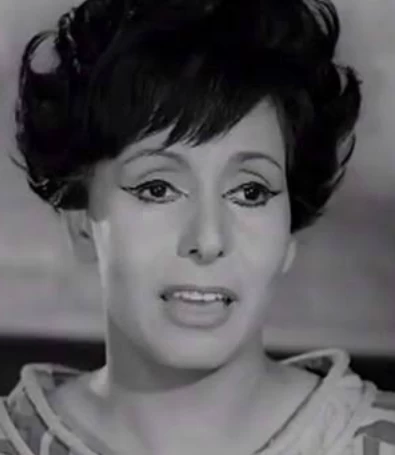
Today marks the anniversary of the passing of Egyptian actress Kouser El-Assal, who left a lasting legacy in the Arab film industry. Born in November 1939, El-Assal began her career in the mid-1960s, starting with theater, which helped hone her craft. She then transitioned to cinema and television, becoming known for her portrayals of elegant women, devoted wives, and aristocratic characters. Her calm and profound performances captured audiences' attention, setting her apart from her contemporaries.
El-Assal's most iconic role was in the TV series "Lan A'ish Fi Jilbab Abi" (I Won't Live in My Father's Disguise), where she played the character of Driya, the wife of Minister Mustafa Abdel Motaleb. This role cemented her status as a talented actress, even though she rarely played leading roles. Her filmography includes nearly 50 works across cinema, television, and theater. Notable films include "Shay' Min Al-Khof" (Something from Fear), "Nahn La Nazra' Al-Shouk" (We Do Not Plant Thorns), and "Anf Wa Thalath 'Aynoon" (A Nose and Three Eyes).
El-Assal's contributions to Egyptian cinema and television are still celebrated today. Her performances in TV series like "Awarak Al-Ward" (Leaves of Roses) and "Bawabat Al-Halwani" (The Gate of Halwani) have left a lasting impact on audiences. El-Assal's legacy extends beyond her on-screen presence, as she embodied the qualities of a cultured and refined artist. Her passing in 2013 was met with an outpouring of tributes from the Egyptian film community.
Behind the scenes, El-Assal's personal life was marked by a beautiful and enduring love story with actor Mohamed Wafik. Wafik, her cousin, had harbored feelings for her since childhood, but fate led her to marry actor Abdel Moneim Ibrahim. After years, Wafik's dream came true, and they married, living in harmony for nearly two decades. Following her passing, Wafik donated their home as a charitable endowment and requested to be buried beside her, a wish that was fulfilled after his own passing.
El-Assal's film career spanned several decades, during which she worked alongside prominent Egyptian actors and directors. Her collaborations with renowned filmmakers contributed to her growth as an artist and helped shape her distinctive style. El-Assal's ability to convey depth and nuance through her performances earned her a loyal following among audiences.
The Egyptian film industry continues to honor El-Assal's memory, with many regarding her as a trailblazer for future generations of actresses. Her legacy serves as a testament to the power of talent, dedication, and perseverance in the face of adversity. As the anniversary of her passing approaches, fans and colleagues alike remember her remarkable contributions to Egyptian cinema.
In the years following her passing, El-Assal's impact on Arab cinema has only grown more profound. Her body of work remains a source of inspiration for aspiring actors and filmmakers, and her influence can be seen in many contemporary artists. As Egypt and the Arab world continue to evolve, El-Assal's timeless performances remain an integral part of the region's cultural heritage.
Key points
- Kouser El-Assal left a lasting legacy in Egyptian cinema, with a filmography spanning nearly 50 works across cinema, television, and theater.
- El-Assal's iconic role in "Lan A'ish Fi Jilbab Abi" cemented her status as a talented actress, despite rarely playing leading roles.
- El-Assal's personal life was marked by a beautiful and enduring love story with actor Mohamed Wafik, whom she eventually married after years of unrequited love.