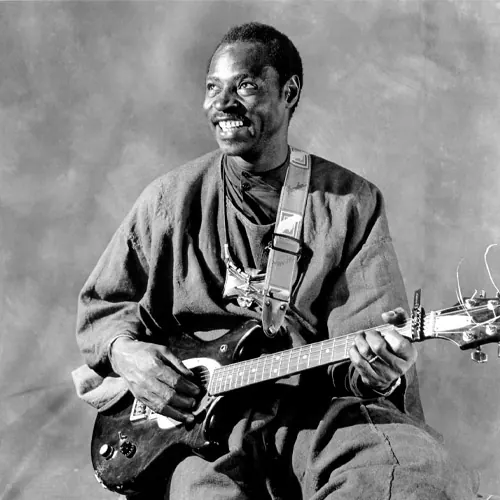
Born in 1939 in the Timbuktu region of Mali, Aly Farka Touré was a musical prodigy who never received formal training. Instead, he learned by observing local musicians, including griots, and immersing himself in traditional Peul, Songhai, Tamashek, and Bambara music. His early guitar was self-made, crafted from a single string stretched over a handmade resonator. This humble beginning laid the foundation for his distinctive sound, which would later merge Malian traditions with American blues.
Touré's music career gained momentum in the 1980s when he signed with British label World Circuit. His breakthrough came in 1994 with the album "Talking Timbuktu," recorded with American guitarist Ry Cooder. The album earned him a Grammy Award and international recognition. Touré's subsequent collaborations, including "In the Heart of the Moon" with Toumani Diabaté, further solidified his reputation as a master musician. He won a second Grammy Award posthumously for this album.
Despite his global fame, Touré remained committed to his roots. He identified primarily as a farmer and made significant contributions to his community. In 2004, he was elected mayor of his hometown, a position he held until his passing in 2006. Notably, he refused a salary for his mayoral duties. Touré also invested in local infrastructure, funding the construction of a central power plant to electrify his village.
Touré's legacy extends far beyond his impressive discography. He is celebrated for his role in bridging cultural divides and showcasing the rich musical heritage of Mali. His influence can be seen in the work of numerous artists who have followed in his footsteps. As a virtuoso guitarist and singer, Touré's music continues to inspire new generations of musicians and fans alike.
Throughout his career, Touré was known for his humility and dedication to his craft. He shunned the spotlight, preferring to focus on his music rather than seeking fame. This approach earned him the respect of his peers and critics alike. Touré's passing in March 2006 was met with widespread tributes, a testament to the impact he had on the music world.
In the years following his death, Touré's music has continued to gain new listeners. His album "Savane," released posthumously in 2006, is widely regarded as one of his finest works. As a pioneer of the desert blues genre, Touré's influence can be heard in a range of musical styles, from African folk to contemporary blues and rock.
Today, Aly Farka Touré's legacy serves as a reminder of the power of music to transcend borders and cultural boundaries. His remarkable story, from self-taught musician to international star, continues to inspire artists and music lovers around the world. As a testament to his enduring impact, Touré's music remains a vital part of Mali's rich cultural heritage.
Key points
- Aly Farka Touré was a self-taught guitarist and singer from Mali who blended traditional Malian music with American blues.
- He won two Grammy Awards, one for "Talking Timbuktu" and another posthumously for "In the Heart of the Moon."
- Touré was a dedicated community leader who served as mayor of his hometown and invested in local infrastructure projects.