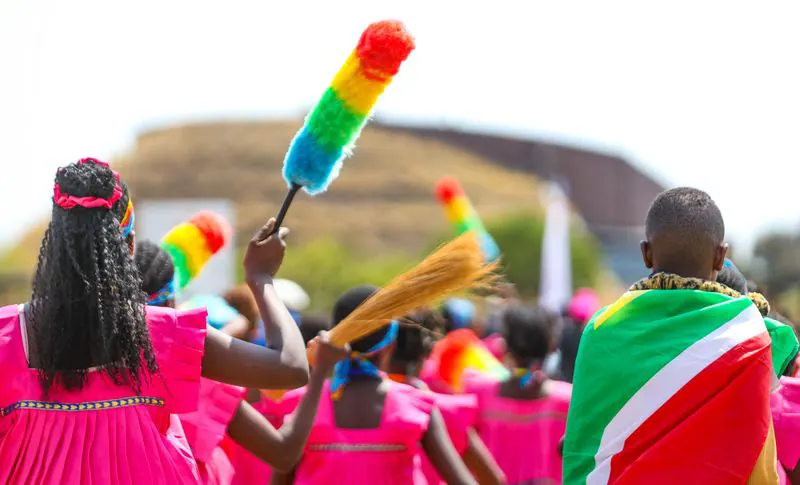
As South Africa commemorates Heritage Day, the nation is reexamining its cultural heritage and history, moving beyond myths and fairy tales. The term "rainbow nation," coined by Archbishop Desmond Tutu in 1994, once united a divided country but now seems quaint and naive. Today, South Africans are seeking a more realistic and factual origin story. The Madlanga Commission of Inquiry has exposed crime and corruption in law enforcement, the justice system, and politics, revealing a nation collectively united against these issues.
Heritage Month celebrations in South Africa typically feature traditional clothing and the braai, a collective charring of meat. However, the country has made significant progress in restoring dignity and recognition to communities, individuals, and events that have shaped its painful heritage and history. Recent events, such as the repatriation of Khoi and San remains from Scotland and the return of sacred cultural artifacts from Switzerland, demonstrate the importance of truth, respect, and acknowledgment of wrongdoing in preserving the past and building a future.
The South African Heritage Resources Agency (Sahra) plays a crucial role in preserving the country's history and heritage, receiving R74-million from the Department of Sport, Arts and Culture in 2026/27. Sahra's work extends beyond buildings and memorials, as it custodian of a contested past. The agency's efforts aim to protect and promote national heritage, ensuring that the country's complex history is accurately represented and respected.
Before 1995, 24 September was celebrated as Shaka Day in KwaZulu-Natal, honoring the legendary warrior king who united the Zulu nation. Today, the Zulu royal household is a subject of public interest, with King Misuzulu kaZwelithini making headlines for his personal life. The incident highlights that heritage is inherently human and often intersects with everyday life, revealing the complexities of South Africa's cultural identity.
The legacy of apartheid and colonialism continues to influence South Africa's cultural landscape. In Pretoria, the city's streets were once marked by Afrikaner heroes, but many have been renamed or removed, reflecting the country's shifting values. The transformation of Strijdom Square into Lilian Ngoyi Square and the preservation of historic buildings like Church Square demonstrate the ongoing effort to reevaluate and recontextualize the nation's heritage.
As South Africa continues to navigate its complex history, the importance of accurate representation and respectful preservation of heritage sites and cultural artifacts becomes increasingly evident. The country's 11 languages, including sign language, and its diverse cultural affiliations make it a unique and fascinating nation. By acknowledging and learning from its past, South Africa can build a more inclusive and equitable future.
Ultimately, South Africa's reimagined heritage will be shaped by its people's willingness to engage with their complex history and cultural identity. As the nation moves forward, it is essential to prioritize truth, respect, and acknowledgment of wrongdoing, ensuring that the country's heritage is preserved and celebrated in a way that is authentic and inclusive.
Key points
- The term "rainbow nation" is no longer sufficient to describe South Africa's complex cultural identity.
- The South African Heritage Resources Agency plays a crucial role in preserving the country's history and heritage.
- Recent events, such as the repatriation of Khoi and San remains and the return of sacred cultural artifacts, demonstrate the importance of truth, respect, and acknowledgment of wrongdoing in preserving the past and building a future.