A recent account from a recovering addict in Rehoboth has raised concerns about the scale of Namibia's drug crisis. The individual, who is part of a community where smoking crack cocaine has allegedly become commonplace, suggests that addiction has become normalised in parts of Rehoboth. This has significant implications for community leaders, law enforcement agencies, and policymakers. The situation in Rehoboth points to a complex ecosystem where drugs are not only being sold and consumed but also sustaining networks of dealers, customers, and suppliers.
The repeated arrests of suspected dealers, including Naomi Fisch, have made headlines, but they also raise questions about the effectiveness of this approach. The arrest of individual dealers does not address the underlying issues driving the drug trade. Questions remain about who takes over the market, who supplies the drugs, and who protects the trade. These are concerns that cannot be answered by counting arrests alone. A more comprehensive approach is needed to tackle the root causes of the crisis.
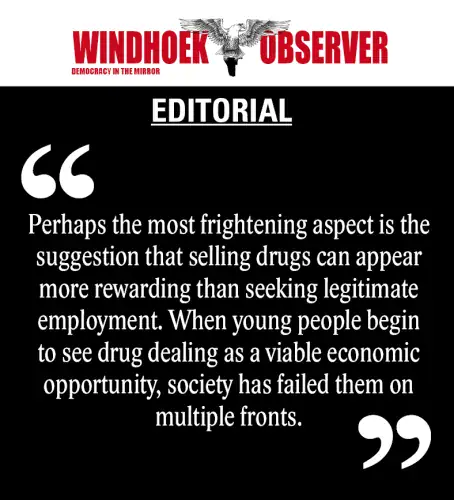
According to Daniel, a recovering addict and former gang member, there are an estimated 5 000 addicts in Rehoboth, although this figure has not been independently verified. His account provides insight into the mechanics of the illicit economy, including how individuals move from street-level selling to establishing their own operations. The situation is concerning, with young people potentially seeing drug dealing as a viable economic opportunity. This highlights a broader societal failure to provide opportunities and support.
The drug trade in Rehoboth appears to offer some individuals money, recognition, influence, and a sense of belonging. This is particularly troubling as it suggests a deeper breakdown in the social fabric. When criminal networks provide the identity, acceptance, and economic opportunity that legitimate institutions fail to offer, the consequences extend far beyond drug consumption. Addressing this crisis will require a multifaceted approach that goes beyond law enforcement.
The police must investigate beyond individual suspects and look into interconnected networks operating in Rehoboth. This includes following the money, identifying suppliers, establishing distribution channels, and determining whether anyone is facilitating or protecting the trade. Allegations of organised cooperation and protection must be thoroughly investigated. A comprehensive response will also require the Ministry of Health, local authorities, schools, churches, and community organisations to confront the demand side of the crisis.
Addiction is not defeated through arrests alone; rehabilitation, prevention, counselling, and reintegration must become central components of the response. Rehoboth should serve as a warning to the rest of Namibia, highlighting that no community is immune to the drug crisis. No town can police its way out of an addiction crisis without addressing the underlying conditions that sustain it. The scale of the problem demands immediate attention and action.
The question is no longer whether Rehoboth has a drug problem but whether those entrusted with protecting the community have the courage, resources, and determination to dismantle the business behind it. Arresting dealers is necessary, but breaking the market is imperative. Saving the addicts is non-negotiable. A concerted effort is required to address the drug crisis in Rehoboth and prevent it from spreading to other parts of Namibia.
Key points
- The Namibian authorities must adopt a comprehensive approach to address the drug crisis in Rehoboth, including rehabilitation, prevention, and community engagement.
Reporting sources
- Rehoboth’s drug crisis: Arrests are not enough · Windhoek Observer