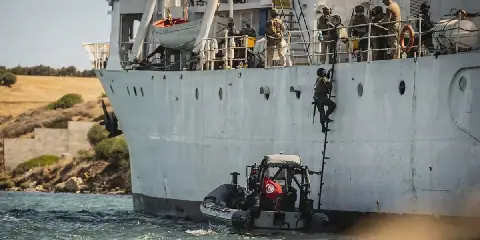
Escalating tensions in the Middle East are increasingly affecting Saudi Arabia, one of the world's largest oil exporters. The ongoing U.S.-Iran conflict disrupts shipping through the Strait of Hormuz, while growing hostilities between Yemen's Houthi group and Saudi Arabia threaten Riyadh's oil export routes through the Red Sea. This has put mounting pressure on Saudi Arabia's oil sector. According to the International Energy Agency (IEA), about 20 million barrels per day of crude oil and petroleum products passed through the Strait of Hormuz in 2025.
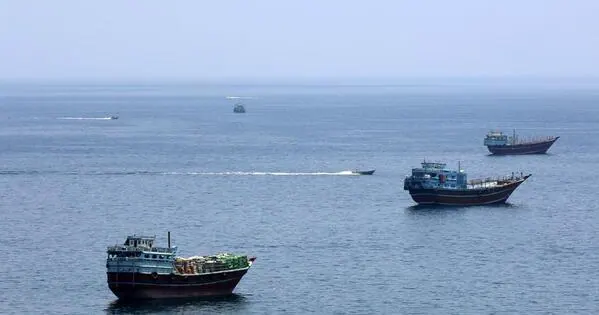
The Strait of Hormuz, a vital route for Saudi Arabia's oil exports, remains far from normal after Iran restricted traffic through the strait following joint U.S.-Israel strikes in February. Recent data from maritime analytics firm Kpler shows that only a handful of commodity-carrying vessels pass through the waterway daily, with no Very Large Crude Carriers and Liquefied Natural Gas tankers on multiple days. To mitigate this, Saudi Arabia has explored alternative export routes, including the East-West Pipeline, which transports oil to Yanbu Port on the Red Sea coast for shipment through the Red Sea.
However, Saudi Arabia's western route for oil exports has also come under constraints due to intensified conflict with Yemen's Houthi movement. The Houthis announced a maritime ban on Saudi vessels transiting the Bab al-Mandab Strait on July 20 and claimed attacks on Saudi vessels. As the conflict escalated, the Houthis launched attacks on targets inside Saudi Arabia, including oil facilities. The Saudi Ministry of Energy reported that the East-West pipeline had come under multiple attacks, causing injuries, and was subsequently shut down as a precaution.
Analysts note that the pipeline had previously served as a strategic "safety valve" for Saudi Arabia but has become a vulnerable point in the oil supply chain. As of September 16, Saudi authorities had not announced an official timetable for restarting the pipeline. U.S. officials suggest that flows could resume within days, while Reuters reported that full repairs might take five to six weeks. Goldman Sachs said market estimates for the repair period ranged from a relatively quick recovery to about eight weeks.
The impact of such attacks is not only on physical oil trading but also on confidence in global oil markets. Hamad Hussain, senior climate and commodities economist at Capital Economics, said renewed Houthi attacks on Saudi Arabia could alter investors' assessments of the conflict's severity and duration. The inventory "buffer" that has helped the global crude market absorb supply shocks is being eroded, shifting market attention to when the entire supply chain can return to stability.
IEA data showed that global observed oil inventories fell by another 95 million barrels in August, with a cumulative decline of 507 million barrels since the end of February. This is equivalent to an average draw of roughly 2.8 million barrels per day. Adam Ritchie, chief economist at Shell Trading, said that since the escalation of the Middle East conflict, the global market had lost about 1.6 billion barrels of crude oil and condensates, as well as roughly 36 million metric tons of liquefied natural gas supplies.
Rising transportation costs are adding to the pressure, with cargo insurance costs for some vessels transiting the Strait of Hormuz rising to 5 to 6 percent of cargo value, and additional war-risk premiums reaching as high as 10 percent. Anders Opedal, chief executive officer of Norwegian energy company Equinor, said that if Middle Eastern supplies remain disrupted for an extended period, tighter energy markets and sharp price volatility could persist longer.
Key points
- Escalating Middle East tensions threaten Saudi Arabia's oil exports through Strait of Hormuz and Red Sea routes.
- Attacks on Saudi Arabia's oil facilities and pipelines have impacted global oil markets and confidence.
- Disruptions to Saudi oil exports could lead to tighter energy markets and sharp price volatility.