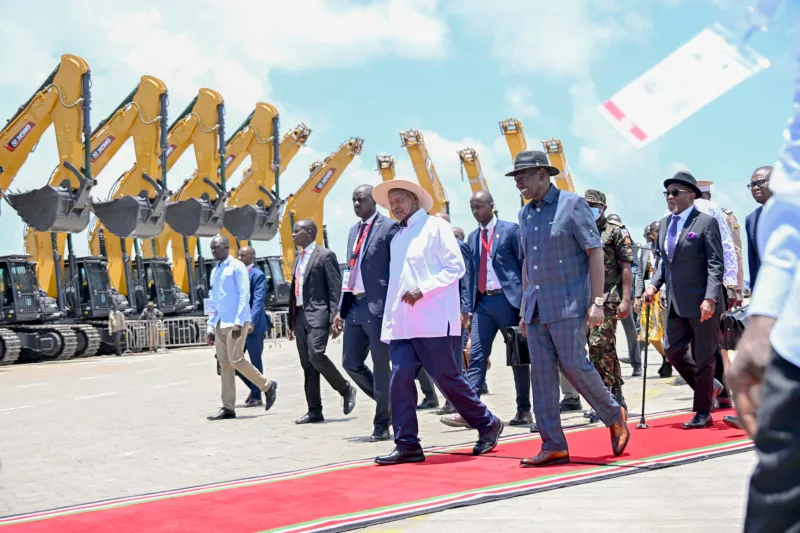
On Wednesday, high-profile leaders from across Africa attended the groundbreaking ceremony of the $16 billion Dangote East Africa Petroleum Refinery in Lamu, Kenya. The project, championed by Nigerian industrialist Aliko Dangote, is expected to revolutionise the region's energy landscape. With a capacity to process 700,000 barrels of crude oil a day, the refinery will supply petroleum products to Kenya and other markets across East and Central Africa. The ceremony was attended by Ugandan President Yoweri Museveni, Ethiopian Prime Minister Abiy Ahmed, and former Nigerian President Olusegun Obasanjo, among others.
President Museveni welcomed the investment, citing Africa's urgent need to process its own natural resources rather than exporting raw materials and importing finished products. He criticised the trend of African countries exporting raw commodities only to import finished products, losing millions of dollars in the process. Museveni emphasised the necessity of political integration for the success of such commercial investments and job creation efforts. He suggested that East Africans could buy shares in the project, enabling them to earn a profit while the project is sited in Kenya.
The Lamu facility is expected to process crude oil drawn from regional producers, including Uganda and South Sudan, and supply refined products to neighbouring countries. Ethiopian Prime Minister Abiy Ahmed praised the project, situated along the Lamu Port–South Sudan–Ethiopia Transport (Lapsset) Corridor. Abiy observed that the region's economies have remained exposed to global market shocks due to reliance on imported fuel. The Lamu refinery offers a way to alter that balance by bringing refined fuel closer to African markets and adding significant capacity to the continent.
The Ethiopian Prime Minister's attendance underscored Addis Ababa's strategic interest in the project, given its reliance on imported petroleum products. Abiy said the benefits would extend beyond fuel supply, as ancillary economic activities would develop around the refinery. For Ethiopia, an additional regional source will diversify its supply options and unlock new opportunities for trade and investment. The facility is expected to supply refined fuel to Ethiopia and other landlocked countries once operational.
President Savi de Tové of Togo commended the groundbreaking, describing it as living proof of Pan-Africanism. The facility will produce petrol, diesel, and aviation fuel for regional markets. Dangote Group chairman Aliko Dangote said the Lamu refinery would assist African nations in reducing their reliance on foreign refined petroleum. He emphasised that the project demonstrates what African capital can accomplish within the continent, stating, "Africa must industrialise Africa."
President William Ruto said the project will solidify Kenya's position as a regional energy and manufacturing hub. The President has championed the refinery as part of his administration's strategy to attract large-scale private capital, expand manufacturing, and promote local value addition. Estimated to cost approximately Sh2.2 trillion ($16 billion), the project is expected to generate thousands of jobs during its construction and operational phases.
The launch ceremony attracted official delegations from across the continent, including Rwanda, Burundi, South Sudan, and Tanzania. Once operational, the refinery is designed to shield the region from international market volatility and shipping overheads by establishing a local source of refined petroleum. The facility will be integrated into the broader Lamu Port and Lapsset infrastructure network, designed to link Kenya's northern coast to Ethiopia and South Sudan.
Key points
- The Dangote refinery is expected to process 700,000 barrels of crude oil a day and supply petroleum products to Kenya and other markets across East and Central Africa.
- The project is estimated to cost approximately Sh2.2 trillion ($16 billion) and is expected to generate thousands of jobs during its construction and operational phases.
- The refinery is designed to shield the region from international market volatility and shipping overheads by establishing a local source of refined petroleum.