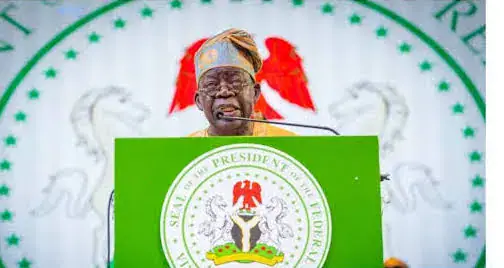
President Bola Tinubu has stated that his administration's economic reforms are driving down Nigeria's borrowing costs and strengthening investor confidence. He emphasized that the country must take advantage of its improving financial standing to fund critical infrastructure, create jobs, and achieve its ambition of becoming a $1 trillion economy by 2030. Tinubu's comments come amid mounting criticism from opposition leaders over the Federal Government's borrowing plans.
Tinubu defended the government's borrowing plans, arguing that the true measure of public debt should be the infrastructure delivered, economic value created, and opportunities provided for future generations. He projected that the Lagos-Calabar Coastal Highway alone would generate 250,000 direct and indirect jobs. The President released an essay titled, "From Reforms to Delivery: Our Infrastructure Investment and Growth Strategy," which outlined his administration's economic plans.
According to Tinubu, the economic reforms introduced since May 2023 have strengthened Nigeria's public finances, improved its standing in international financial markets, and created opportunities to secure long-term financing on more favorable terms. He stated that confidence has a price, and Nigeria's cost of borrowing is going down, with the country risk premium drastically decreasing. International credit rating agencies, index providers, regulators, and investors have recognized these improvements.
Tinubu identified the Lagos-Calabar Coastal Highway, Sokoto-Badagry Superhighway, Trans-Sahara Superhighway, electricity grid upgrades, and the modernization of major commercial ports in Lagos as strategic investments. These projects are expected to connect economic regions, reduce transportation and logistics costs, stimulate industrial production, and attract private capital. The President said the Lagos-Calabar Coastal Highway could reduce logistics costs along its corridor by 15 to 20 percent.
The President projected that the Lagos-Calabar Coastal Highway would generate approximately 100,000 direct jobs in construction and engineering, alongside more than 150,000 indirect employment opportunities. He stated that the government is deliberately shifting public borrowing away from meeting short-term fiscal pressures towards financing infrastructure and other investments capable of generating economic returns and creating employment.
Tinubu linked the infrastructure investment strategy to the administration's broader economic reforms, including the removal of petrol subsidy, unification of the foreign exchange market, tax reforms, and measures to contain inflation. He cited real Gross Domestic Product growth of 4.43 percent in the second quarter of 2026 and a decline in headline inflation to 14.63 percent in September. Gross external reserves have risen to $55.1 billion as of October 9, 2026.
Tinubu outlined the next phase of the Federal Executive Council's economic strategy, which includes improving food affordability and energy price stability, strengthening budget harmonization and fiscal discipline, and completing high-impact projects. He emphasized that borrowing must be responsible and tied to investments that deliver measurable economic benefits. The President acknowledged that the ultimate test of his administration's economic policies would be the number of projects completed, jobs created, and improvements recorded in citizens' living standards.
Key points
- President Bola Tinubu says Nigeria's economic reforms are driving down borrowing costs and strengthening investor confidence.
- The Lagos-Calabar Coastal Highway is expected to generate 250,000 direct and indirect jobs and contribute up to two percent to Nigeria's Gross Domestic Product.
- Tinubu's administration aims to achieve a $1 trillion economy by 2030 through sustained investment in infrastructure and economic reforms.