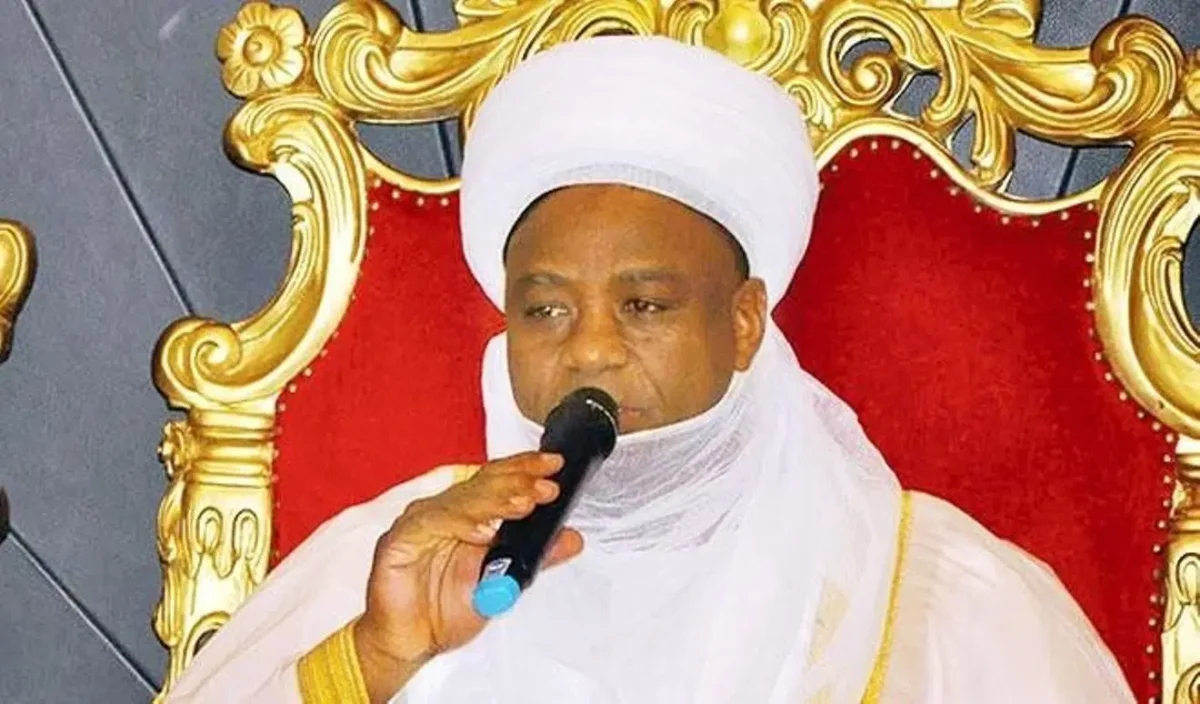
The Nigerian Supreme Council for Islamic Affairs (NSCIA) has urged the government to reform Nigeria's security architecture, citing the need for a comprehensive overhaul. In a communique issued after its general assembly in Abuja, the council emphasized that the current security challenges affect all Nigerians, regardless of faith. The Sultan of Sokoto and NSCIA President-General, Alhaji Muhammad Sa'ad Abubakar, and Secretary General, Professor Is-haq Oloyede, signed the communique on Wednesday.
The NSCIA supported state police, anchored on professionalism, constitutional safeguards, impartiality, accountability, and sustainable funding. The council reiterated its stance that there is no Christian genocide in Nigeria, emphasizing that insecurity affects all Nigerians. It noted that any reform of the security architecture must respect fundamental rights and ensure effective coordination between federal and state security institutions. The council's position comes amid ongoing debates about Nigeria's security challenges.
The NSCIA acknowledged the government's efforts to revamp the economy and urged the Federal Government to reduce the cost of transportation and food items to alleviate hardship faced by ordinary Nigerians. The council also emphasized the importance of civic responsibility and institutional development, tasking Muslims to be role models by putting in their best in their places of work and contributing to nation-building.
On civic engagement, the NSCIA encouraged Muslims to obtain their National Identity Numbers (NINs) and Permanent Voter Cards (PVCs) and participate in the process of selecting Nigerian leaders at all levels. The council condemned attempts by individuals and groups to suppress and normalize attacks against Muslims in Igboland, asserting that Islam has been in the region for several decades.
The NSCIA's general assembly called upon government agencies to respect the right of Muslim female students, NYSC members, and female personnel in security agencies and other workplaces to use hijab as a fundamental human right. The council encouraged Muslim societies and organizations to build economic independence through lawful investments and effective administration of Zakat and Waqf for sustainable poverty reduction.
The assembly urged Muslim leaders to prioritize quality education that integrates sound Islamic knowledge with Science, Technology, Engineering, Arts, and Mathematics to secure the future of the Ummah. The council exhorted parents and community leaders to pay greater attention to the moral guidance of the youth, who are increasingly exposed to adverse foreign influences.
The NSCIA's recommendations aim to promote national development, security, and unity. The council's suggestions will be presented to the government, and their implementation will be monitored. The NSCIA's efforts reflect the organization's commitment to promoting the welfare of Nigerians and addressing the country's challenges.
Key points
- NSCIA urges government to reform Nigeria's security architecture
- Council tasks government to reduce cost of transportation and food items
- NSCIA emphasizes importance of civic responsibility and institutional development