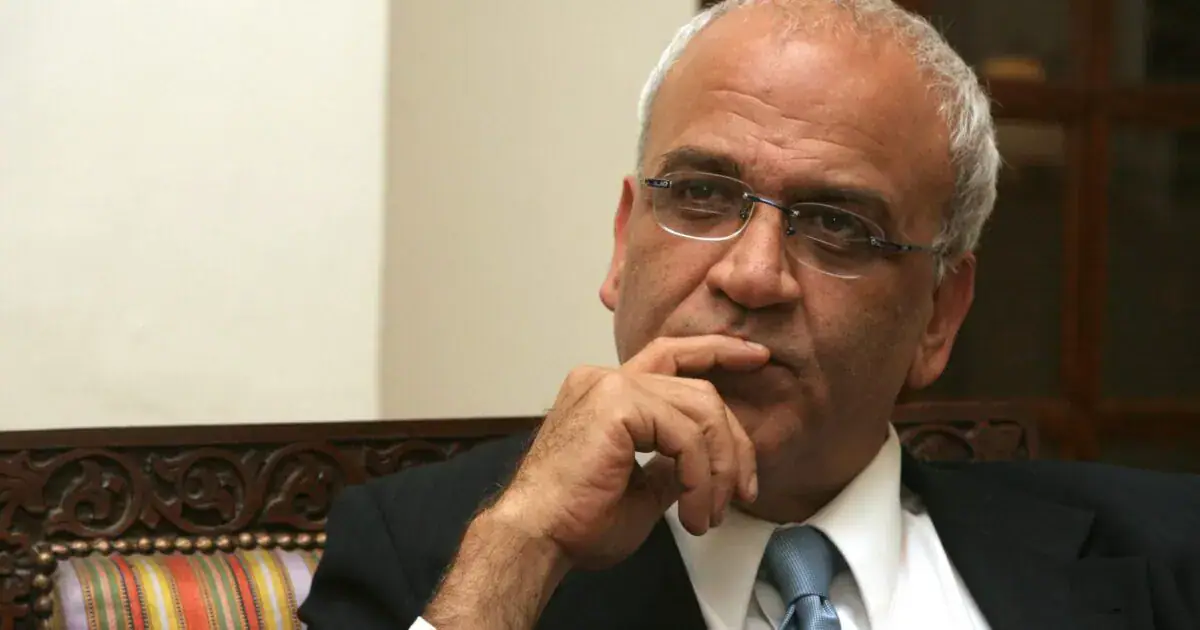
Nine years ago, Jason Greenblatt, the former White House Middle East envoy, had a significant conversation with Saeb Erekat, the chief Palestinian negotiator, which turned out to be their last. The meeting took place in a rental apartment in Virginia, where Erekat was recovering from a lung transplant. Greenblatt had come to know Erekat during his first year as President Donald Trump's Middle East envoy. The two discussed their families, and Erekat had ensured a kosher meal was prepared for Greenblatt.
During their conversation, Greenblatt informed Erekat that the US was moving to close the Palestinian mission in Washington due to Palestinian Authority President Mahmoud Abbas's call on the International Criminal Court to investigate Israeli officials. Erekat expressed concerns, stating that if Trump closed the mission, Greenblatt would go home a failure. Greenblatt attributed the failure to Erekat's leadership if they continued to turn away from openings for peace. This conversation occurred in November 2017, and the Palestinian mission was eventually closed in September 2018.
Saeb Erekat passed away in 2020 due to COVID-19 complications, two months after the Abraham Accords were signed. He had denounced the accords, calling the agreement between Israel and the United Arab Emirates "an Arab dagger, a poisonous dagger, in my back." Greenblatt often wonders whether Erekat would have changed his stance on the accords given more time. Recently, Greenblatt met a member of Erekat's family, who showed him pictures of their children and expressed hopes for their future, much like Erekat had done.
Greenblatt reflects on the current state of the Middle East, which he believes is more volatile and dangerous than it was during his conversation with Erekat. Despite this, he notes that Israel and some Gulf states have thrived in ways he could not have imagined. The Abraham Accords demonstrated what could be achieved when leaders seized an opportunity. Greenblatt emphasizes the importance of listening and staying engaged, even when faced with resistance, as breakthroughs can arise from continued dialogue.
Greenblatt draws parallels between his experience with Erekat and the current polarized state of America, as evident in the recent midterm elections. He intends to continue engaging with people who disagree with him, rather than writing them off. Greenblatt believes that listening and seeking common ground do not require surrendering one's convictions or principles. He remains committed to exploring openings for peace, even if agreement is not immediate or expected.
The article highlights the complexities and challenges of achieving peace in the Middle East. Greenblatt's experience working with various stakeholders, including Americans, Israelis, Palestinians, and Europeans, has taught him the value of persistence and open communication. He encourages continued efforts to find common ground, despite the difficulties and disagreements that may arise.
Greenblatt concludes by emphasizing the importance of working towards a future that is safe and full of possibility for all, including Palestinian and Israeli grandchildren. He remains committed to sharing his insights and experiences, as expressed in his book, In the Path of Abraham: How Donald Trump Made Peace in the Middle East – and How to Stop Joe Biden From Unmaking It.
Key points
- Jason Greenblatt reflects on his last conversation with Saeb Erekat and its relevance to current Middle East peace efforts.