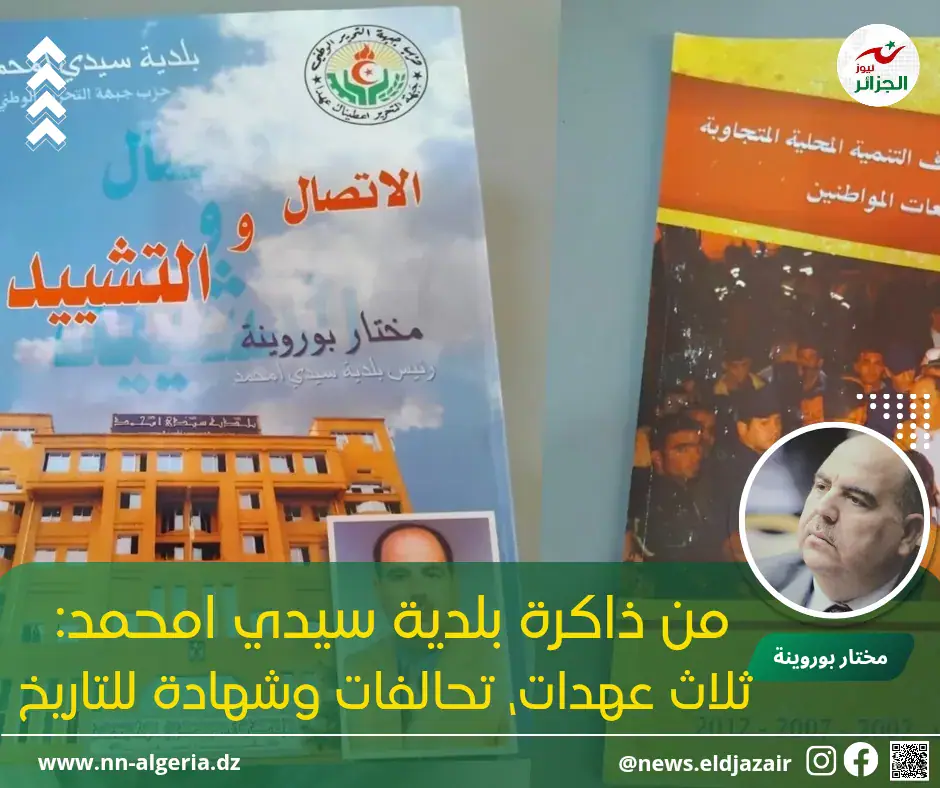
As the local elections campaign in Algeria gets underway, I find myself reflecting on my experience as head of Sidi Amhed municipality, located in the heart of Algiers. This reflection is not driven by nostalgia for the responsibility or a desire to reopen past disputes, but rather by a conviction that electoral and administrative experiences should be documented and their outcomes read, discussed, and evaluated. Local elections are not just about competing for seats and positions, but also about reviewing programs, comparing promises to results, and drawing lessons from previous experiences.
My experience in Sidi Amhed municipality spanned three terms, during which I witnessed significant developments and challenges. I was first elected as head of the municipality and served two terms, before being replaced in the third term due to political alliances that I consider to be orchestrated by those with vested interests. Despite this, I continued to contribute to the municipality as a member of the council. This experience allowed me to see the local administration from different perspectives and understand the nature of relationships between elected officials and the impact of political alliances on council dynamics.
During my tenure as head of the municipality, I sought to balance my responsibilities as an elected official and representative of the state, while maintaining communication, cooperation, and integration with various stakeholders. This was achieved through a pluralistic council that was committed and open, which helped to unlock stalled files, accelerate procedures, monitor projects, and serve the interests of citizens. I also believe that writing and documentation are essential parts of this experience, as they provide a means of recording ideas and visions that were attempted during my time in office.
One of the significant events that I recall from my experience was the 2003 earthquake, which presented numerous challenges related to the safety of residents, damaged buildings, and the need for temporary shelter and rehousing. In response, we developed an administrative and technical plan to address these issues, which included identifying buildings at risk of collapse and providing support to affected families. This experience highlighted the importance of preparedness and effective response in times of crisis.
In addition to responding to crises, our municipality also implemented various projects focused on urban development, infrastructure, and public facilities. These projects included the construction of a new municipal building, renovation of existing facilities, and development of public spaces, markets, and sports facilities. Our approach was guided by a vision that local development should not only focus on creating new infrastructure but also on revitalizing existing facilities and improving daily services.
Some of the notable projects implemented during my tenure included the development of the First of May fountain and surrounding areas, Liberty of the Press square, and Youssef Bouchakour square. We also renovated several markets, including Farhat Bousaad, Ali Malah, and Reda Houhou, while ensuring that traders' rights were respected. Furthermore, we invested in sports infrastructure, including the construction of the Issat Idir complex, which featured a water basin, children's play area, and municipal stadium.
As I reflect on my experience as head of Sidi Amhed municipality, I am proud of the progress we made in various areas, including education, culture, and community development. We worked to improve school infrastructure, provided support for students, and promoted cultural activities. Our efforts also focused on enhancing community services, including waste management, road maintenance, and public lighting. Through these initiatives, we aimed to improve the quality of life for residents and create a more vibrant and sustainable community.
Key points
- The importance of documenting and reflecting on local administrative experiences to inform future development and improve governance.
- Effective local governance requires a balance between responding to crises and implementing long-term development projects.
- Community engagement and participation are essential for successful local development initiatives.