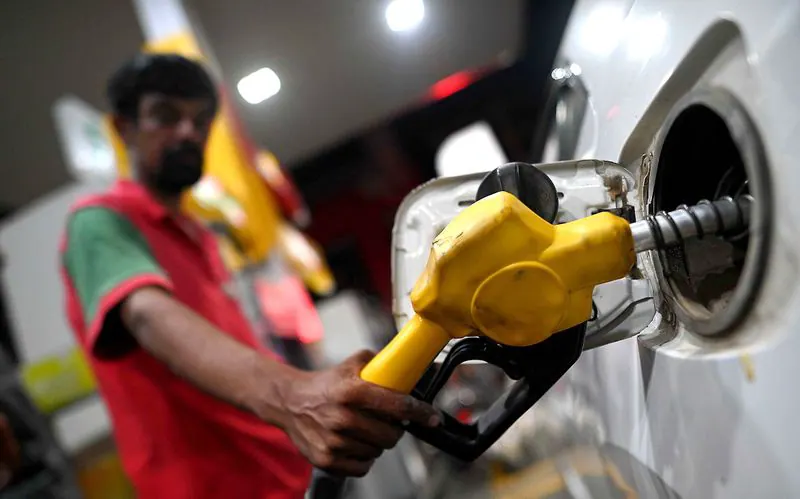
The recent fuel price increase in South Africa has been attributed to the ongoing conflict in the Red Sea, where Houthi attacks have disrupted oil supplies. The country's reliance on imported finished products, particularly diesel, has made it vulnerable to global market fluctuations. According to a fuel station owner in Khayelitsha, Cape Town, smaller businesses are being severely affected by the price hikes, with some being forced to pay never-before-seen premiums to secure supplies.
The Houthi attacks on Saudi oil infrastructure and maritime transit corridors have had a significant impact on fuel prices worldwide. The attacks have resulted in direct physical supply disruptions, astronomical shipping and insurance surcharges, and an explosion in the refining margin for finished fuels such as diesel. Saudi Arabia's attempts to bypass the vulnerable Strait of Hormuz by piping crude across the desert via the Petroline to Red Sea ports have been temporarily thwarted by drone strikes on pumping stations.
The disruptions have hit finished fuel product importers harder than those with refining capacity. The difference between the price of finished fuel and crude oil, known as the crack spread, has increased significantly over the past few weeks. The diesel crack spread has exploded from a historical average of $20 per barrel to $110 per barrel, resulting in a tripling of the total price of delivered diesel.
The impact of the disruptions is being felt across the globe, with widespread inflationary pressure being triggered across consumer goods, food, and freight. The price surge has been particularly significant for countries such as South Africa, which relies heavily on imported diesel. The country's fuel providers are paying premium prices to secure supplies, which is being passed on to consumers.
The current situation has raised questions about who benefits from the ongoing supply disruptions in the Middle East. While it is clear that US interests are being served well through the continuing supply disruption, much of this benefit is being nullified by the energy crisis in Venezuela. The price of sour oil out of a US-controlled territory has reached parity with a Brent barrel from Saudi Arabia, which is a significant development.
The impact of the disruptions on global oil supplies is also being felt in Venezuela, where crude exports have dipped to 1.08 million barrels per day. However, flows to the US have jumped to 629,000 barrels per day, representing 58% of total shipments. This has resulted in a significant narrowing of Venezuela's customer base, with India and Europe receiving significantly fewer barrels.
As the global oil crisis continues, it remains to be seen how the situation will unfold. However, one thing is clear: the disruptions in the Red Sea are having a significant impact on fuel prices worldwide, and countries such as South Africa are being severely affected. The situation is being closely monitored by industry experts, who are warning of further price hikes in the coming months.
Key points
- The Houthi attacks on Saudi oil infrastructure and maritime transit corridors have resulted in significant disruptions to global oil supplies.
- The disruptions have hit finished fuel product importers harder than those with refining capacity, resulting in a significant increase in the crack spread.
- The current situation has raised questions about who benefits from the ongoing supply disruptions in the Middle East, with US interests being served well through the continuing supply disruption.