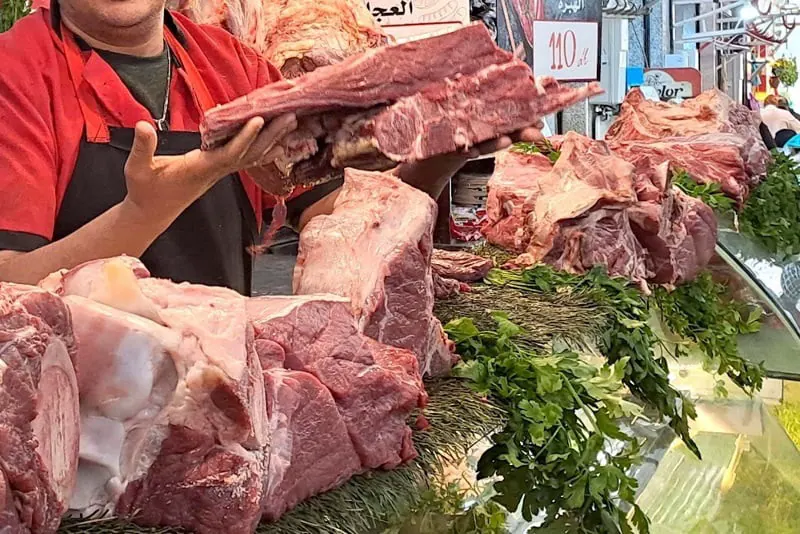
Red meat prices in Morocco have surged, exceeding 150 dirhams per kilogram in several cities, including major urban centers. This increase has significant implications for Moroccan households, which are struggling to cope with rising living costs. The price hike has made red meat a luxury for many families, who are being forced to reassess their purchasing habits and prioritize essential expenses.
The cost of red meat, particularly lamb, has approached 200 dirhams per kilogram in major cities. This has led to a decline in consumer purchasing power, with many households opting to buy smaller quantities or forego red meat altogether. The situation is further complicated by variations in prices across different regions and even within the same city, making it challenging for consumers to find affordable options.
The impact of rising red meat prices is being felt across various segments of society. Low- and middle-income households are disproportionately affected, as they struggle to allocate funds for essential expenses, including food, transportation, education, and housing. The situation has also affected butchers, who face a difficult equation: rising costs for acquiring livestock and meat, coupled with declining consumer purchasing power.
Industry experts attribute the price increase to various factors, including supply and demand dynamics, livestock breeding and feed costs, transportation expenses, and distribution margins. They emphasize that addressing the issue requires a comprehensive approach that considers the entire production and distribution chain, rather than just focusing on monitoring sales prices.
The Moroccan government faces pressure to ensure a stable supply of red meat and maintain a balance between supply and demand. As the staple food for many Moroccans, red meat plays a critical role in the country's culinary culture. However, with prices continuing to rise, households with limited or moderate incomes are forced to make difficult choices, prioritizing essential expenses over discretionary spending.
In popular neighborhoods, the effects of price increases are more pronounced, with consumers opting for smaller quantities of meat or purchasing lower-priced cuts. Others have reduced their meat consumption frequency or explore cheaper alternatives. These coping mechanisms underscore the need for a sustainable solution to stabilize red meat prices and ensure affordable access to this essential food item.
As the situation continues to unfold, stakeholders are calling for a collaborative approach to address the root causes of the price hike and ensure a stable supply of red meat. This includes initiatives to support local farmers, improve livestock breeding and feed efficiency, and streamline distribution channels to reduce costs and increase accessibility.
Key points
- Red meat prices in Morocco have exceeded 150 dirhams per kilogram, affecting household budgets and consumer purchasing power.
- The price increase is attributed to various factors, including supply and demand dynamics, livestock breeding and feed costs, and distribution margins.
- The situation requires a comprehensive approach to address the root causes of the price hike and ensure a stable supply of red meat.