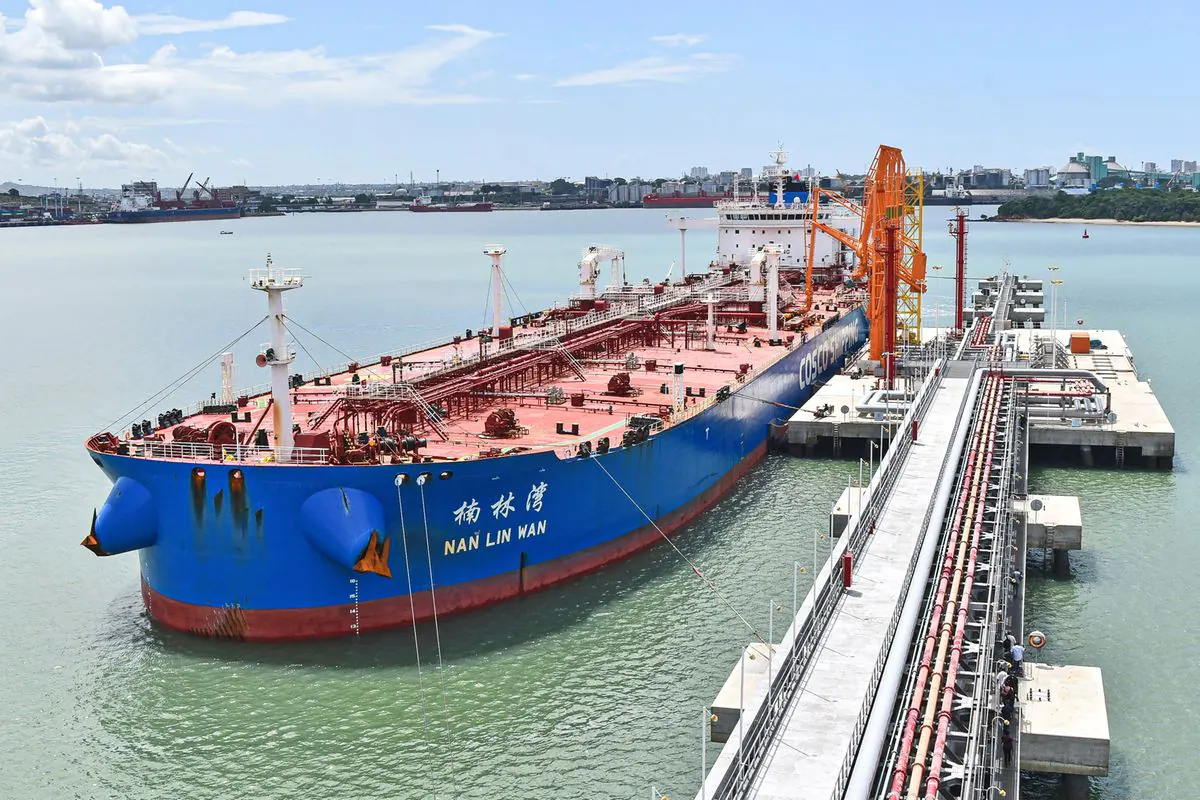
Kenya is bracing for increased fuel prices and household energy bills as record-high crude oil tanker freight rates persist. The country's reliance on seaborne imports for petroleum products means any surge in tanker freight rates is passed on to households and factories. The cost of hiring oil tankers, known as maritime freight and charter rates, is a critical driver of Kenya's pump prices.
Oil tanker freight rates for mid-sized vessel categories, such as Aframax or Suezmax, have surged to historic highs in September 2026. This increase is attributed to lower fleet efficiency due to longer voyages and severe disruption of seaborne trade due to the US-Israel war against Iran. Ship-to-ship transfers also keep vessels occupied for longer, contributing to the rate hike.
The Aframax or Suezmax tankers, which carry 60,000 tonnes of product, are the vessels that deliver products at the Mombasa port. Market data by Clarkson Research shows that one-year freight rates for Suezmaxes have risen above $100,000 per day, compared with an average of around $38,000 in 2025. Aframax rates have reached around $70,000 per day.
The surge in freight rates has seen the average earnings for Suezmaxes and Aframaxes rising to more than $300,000 and $150,000 per day, respectively. According to an executive of an oil marketing firm, this increase would definitely impact product pricing locally, as freight and marine insurance charges form part of the landed cost, which is a significant part of the final price calculations.
The petroleum pricing formula by the Energy and Petroleum Authority shows that the total landed cost of imported petroleum products accounts for 48 percent of the final fuel prices. Other components of pump prices include value-added tax, taxes and levies, and oil marketer's wholesale profit margin. The price of a litre of fuel set by Epra includes various costs such as primary and secondary storage, inventory financing, and pipeline and road transport.
In the latest monthly pricing cycle to October 14, 2026, Epra set the retail price of a litre of diesel and petrol in Nairobi at Sh217.86 and Sh214.03, respectively. A cross-subsidy of Sh13.14 per litre of kerosene kept the price unchanged at Sh191.38. Without the cross-subsidy, a litre of kerosene would have increased by Sh13.14 per litre to Sh204.52.
The pressure from soaring international crude prices and Middle East supply disruptions has already impacted the landed cost of fuel in Kenya this year. Diesel posted the biggest rise in landed costs at 11 percent to $957.05 per cubic metre last month, while kerosene rose 9.71 percent to $1,003.87 per cubic metre. The landed costs of petrol dropped 7.87 percent last month to $874.26 per cubic metre.
Key points
- Soaring oil tanker freight rates signal fresh pressure on Kenya's fuel prices.
- The surge in freight rates is attributed to lower fleet efficiency and disruption of seaborne trade due to the US-Israel war against Iran.
- The increase in freight rates would impact product pricing locally, as freight and marine insurance charges form part of the landed cost.