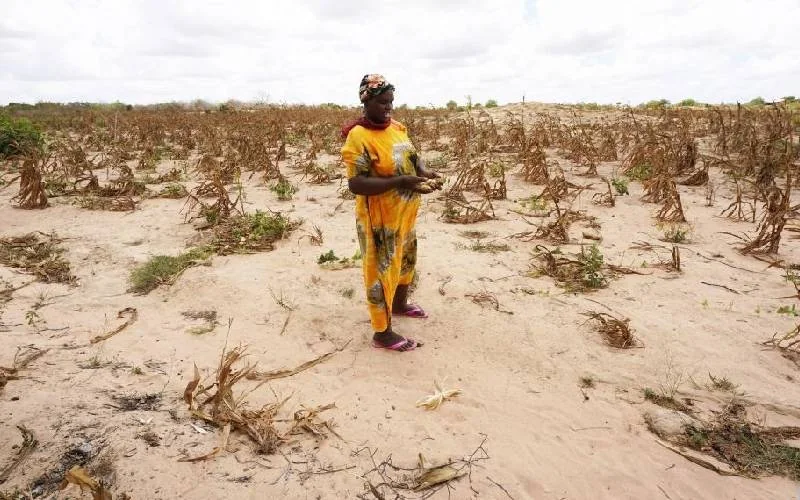
A recent report by GEOGLAM warns of a significant decline in harvests across East Africa, with Kenya being one of the countries most affected. The report attributes the decline to an unusually long drought and record-high temperatures that disrupted the June-September growing season. Large parts of the region, including Kenya's western maize belt, are expected to experience harvests up to 36% below average.
The GEOGLAM Crop Monitor described the June-to-September rainfall in northern and western East Africa as "exceptionally poor". The monitor noted significant deficits of 100 mm to more than 300 mm in parts of north-eastern Uganda, western and North Rift Kenya, and central, eastern and northern Ethiopia. This poor rainfall, combined with high temperatures, is expected to drive below-average yields across many regions.
In Kenya, harvesting is currently underway in major producing zones such as the western region. However, erratic rains and heat have damaged crop prospects, especially for maize in key counties. The Kenya ADAPT project, produced with the Ministry of Agriculture, forecasts that yields could fall up to 36% below average in some western counties. This forecast is based on the GEOCIF crop-yield model.
The report also highlights concerns for pastoral communities throughout the region. Reduced pasture and surface-water availability are expected to have a significant impact on these communities. The situation is further complicated by the fact that many areas have recorded their driest conditions on record.
While the outlook remains bleak for the current season, GEOGLAM projects above-normal rainfall between October and December. This is driven by El Niño and a positive Indian Ocean Dipole, which could replenish water sources. However, this increased rainfall also heightens the risk of flooding in parts of Kenya and neighboring countries.
The impact of the drought and heat on Kenya's agricultural sector is significant. The country's western region is a major producer of maize, and the decline in yields is expected to have a ripple effect on food security. The Kenyan government and international organizations are likely to face increased pressure to provide support to affected communities.
The situation in Kenya is a microcosm of the broader challenges facing East Africa. The region is highly vulnerable to climate-related shocks, and the current drought and heat are likely to have long-term consequences for food security and economic development. As the region looks ahead to the next growing season, there is a need for sustained support and investment in climate-resilient agriculture.
Key points
- Kenya's western maize belt is expected to experience harvests up to 36% below average due to drought and extreme heat.
- The drought and heat have damaged crop prospects, especially for maize in key counties.
- Above-normal rainfall is projected between October and December, driven by El Niño and a positive Indian Ocean Dipole.