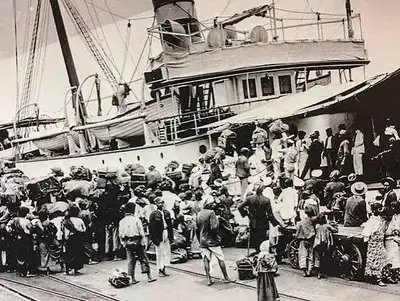
As Indian Arrival Day marks 166 years since the SS Truro landed at Port Natal, the legacy of the indenture system continues to shape South Africa's cultural and political landscape. The indenture system, which began in 1860, brought labourers from India to work on sugarcane fields in Durban. These labourers were stripped of their identity, with their names replaced by numbers, reducing them to mere statistics devoid of humanity, history, or backstories.
The experiences of the indentured were harrowing, with brutal conditions such as starvation, flogging, and sexual abuse. Professors Ashwin Desai and Goolam Vahed's book, Inside Indian Indenture: A South African Story, 1860-1914, presents facts and case studies on the conditions endured by the settlers. The book highlights the struggles of the indentured, including the loss of freedom and the coercion and false promises made by arkatis, or recruitment agents.
Researchers have uncovered stories of kidnapping claims and the lack of recourse for those in servitude. Scholar Selvan Naidoo writes that arkatis forced recruits onto ships, while Uma Dhupelia-Mesthrie researched kidnapping claims investigated in Indian and Natal. The promise of wealth and plenty was a cynical ploy, with low wages and hefty fines binding the settlers into servitude.
Despite the punitive circumstances, the story of indenture in Natal is one of triumph. The indentured and their descendants rose above their harsh conditions, valuing education, building schools, and fighting oppression. Their greatest legacy is their wealth of stories, which continues to inspire their descendants 166 years later. These stories are told through various mediums, including oral storytelling, social media, and literature.
South African descendants, including writers Joanne Joseph, Aziz Hassim, and Ronnie Govender, have captured the tales of those who crossed the kala pani, or black water, to toil on Durban's sugarcane fields. Their writing highlights the intergenerational trauma and unique harvest that mushroomed from the weeds of colonialism and apartheid. The stories also showcase the richness and pathos of the 1860 settlers.
The 1860 Heritage Centre, led by Selvan Naidoo and Krish Gokool, has initiated a resurgence in the search for identity and belonging. The High Commission of India in Pretoria has extended the registration facility for issuance of Overseas Citizenship of India (OCI) cards to the descendants of Indian origin immigrants who arrived in South Africa as migrants, indentured labourers, and traders.
The legacy of indenture continues to inspire over one million diaspora, with Indian Arrival Day celebrating Natal narratives that rewrite history globally. The stories of the indentured and their descendants serve as a testament to their resilience and determination, providing a blueprint for future generations to rise above their circumstances and achieve their aspirations.
Key points
- The indenture system stripped labourers of their identity, replacing their names with numbers, and subjected them to brutal conditions such as starvation, flogging, and sexual abuse.
- Despite the punitive circumstances, the story of indenture in Natal is one of triumph, with the indentured and their descendants rising above their harsh conditions and achieving their aspirations.
- The legacy of indenture continues to inspire over one million diaspora, with Indian Arrival Day celebrating Natal narratives that rewrite history globally.
Reporting sources
- From numbers to names: How indenture stories reclaim identity · Mail & Guardian