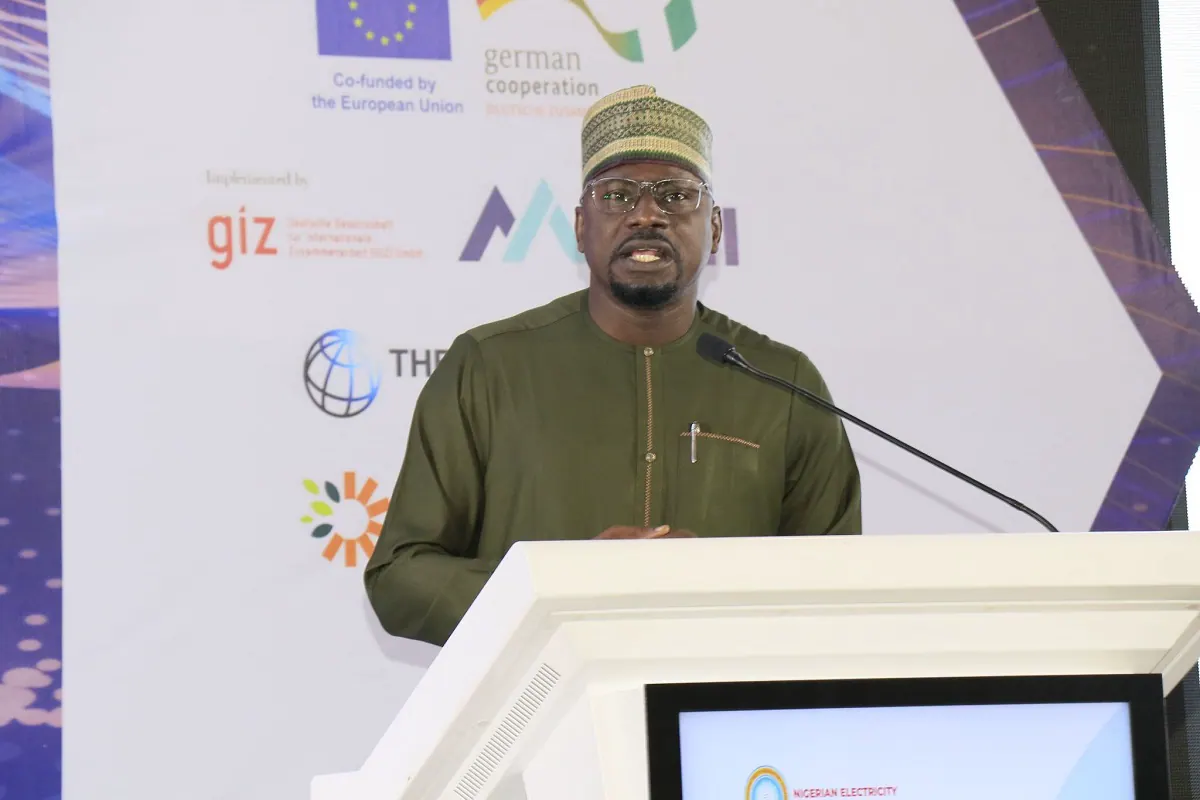
The Rural Electrification Agency (REA) has called for stronger coordination among government agencies, state governments, development partners, private operators, and other stakeholders to prevent duplication and accelerate electricity access across Nigeria. REA Managing Director, Dr. Abubakar Aliyu, made the call at the official relaunch of the Off-Grid Stakeholder Coordination and Partnership Forum in Abuja. Aliyu emphasized the need for better coordination to ensure limited resources are deployed effectively.
An analysis of the 2024 and 2025 Federal Government budgets using artificial intelligence revealed that several government institutions are implementing power-related projects, including some not traditionally viewed as major players in the power sector. This highlights the extent of fragmentation across government interventions. Aliyu warned that without coordination, the country will struggle to achieve its electricity access goals.
The REA has encountered instances where projects implemented under different programs overlapped at the same locations, reducing the efficiency of available funding and making it difficult to identify communities still requiring electricity interventions. Aliyu called for a centralized platform containing sector data to allow stakeholders to identify existing projects, coordinate new interventions, and direct resources towards underserved areas.
The Minister of Power, Chief Joseph Tegbe, represented by his Chief of Staff, Doyin Adelabu, identified fragmentation as a major obstacle to effective electricity delivery. Tegbe said the Federal Government is establishing a standing Off-Grid Coordination Secretariat to track commitments and risks, convene issue-based working groups, and generate shared market intelligence.
The Federal Ministry of Power will continue to provide policy direction through the National Electrification Strategy and Implementation Plan while supporting the development of state electricity markets under the Electricity Act. The government aims to connect 17 million additional Nigerians and generate about 465 megawatts of renewable energy capacity through the Distributed Access through Renewable Energy Scale-Up program.
The forum, relaunched under a new coordination framework, aims to bring together stakeholders to address gaps, bottlenecks, and track commitments. The Heinrich Böll Stiftung Nigeria representative, Ikenna-Donald Ofoegbu, urged stakeholders to focus on productive use of electricity, innovative financing, sustainability, and local capacity development, rather than just the number of electricity connections delivered.
Nigeria is participating in the broader Mission 300 initiative, which aims to connect 300 million Africans to electricity by 2030. The country has already made progress, with over 7.5 million Nigerians gaining electricity access through more than 200 solar hybrid mini-grids and about 1.8 million solar home system connections.
Key points
- The Rural Electrification Agency is calling for stronger coordination among stakeholders to prevent duplication and accelerate electricity access across Nigeria.
- The Federal Government is establishing an Off-Grid Coordination Secretariat to track commitments and risks, and generate shared market intelligence.
- Nigeria aims to connect 17 million additional people to electricity and generate 465 megawatts of renewable energy capacity through the Distributed Access through Renewable Energy Scale-Up program.