Hubert Tshiswaka Masoka, a lawyer and human rights defender, has expressed concerns over the Congolese political class's reliance on foreign intervention to resolve the country's crises. In reaction to a recent conference of the opposition in Rome, Italy, Tshiswaka questioned the choice of holding such a meeting abroad, highlighting the difficulties of the Democratic Republic of Congo in constructing an autonomous political space. He identified three structural phenomena: concentration of power, dependence on foreign actors, and the use of force in the conquest or conservation of power.
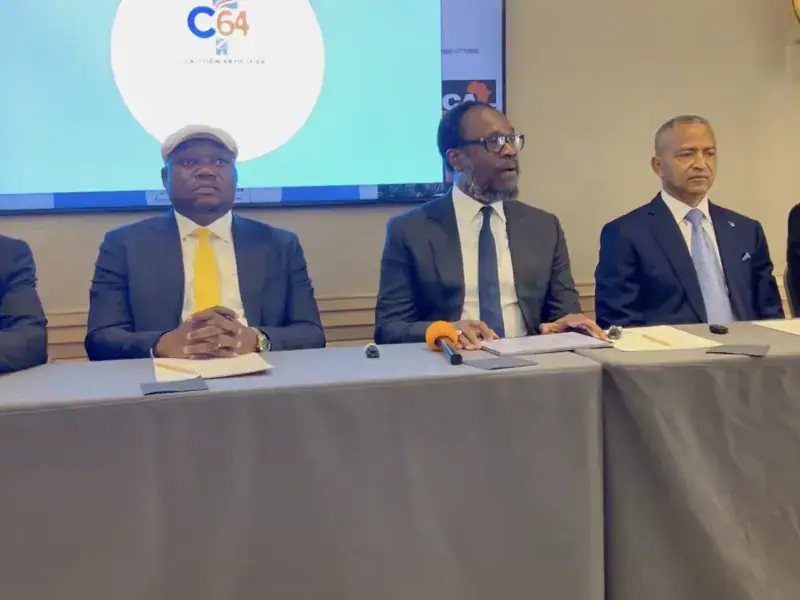
The conference in Rome, organized from October 25 to 27, brought together several opposition figures, including Martin Fayulu, Moïse Katumbi, and Delly Sesanga. They reaffirmed their opposition to any modification of the Constitution that could undermine the limitation of presidential mandates and called for a national dialogue. Tshiswaka's criticism is based on the fact that such meetings are often held abroad, illustrating the Congolese political class's difficulties in placing citizens and national institutions at the center of crisis resolution.
Tshiswaka denounced what he calls "absolutism," characterized by a strong concentration of executive power and weak mechanisms of citizen control. He described a vertical organization of power, where counter-powers struggle to exercise their prerogatives. According to him, this situation has persisted under different presidencies, from Laurent-Désiré Kabila to Félix Tshisekedi. He also highlighted the dependence of political and judicial institutions on clientelism and centralized control of economic resources.
The second axis of Tshiswaka's analysis concerns what he calls "externality," or the tendency of internal political dynamics to depend on foreign influence or arbitration. He argued that Congolese elites often seek legitimacy from international partners and foreign investors rather than from the population. This situation is linked to the country's economic dependence and the strategic importance of its natural resources, such as cobalt, copper, and lithium.
Tshiswaka cited several episodes in Congolese history, including the Brussels Round Table, the Kigali and Kampala meetings, and the Lusaka and Sun City agreements. He believes that this succession of meetings abroad reveals a persistent difficulty in finding domestic compromises. He also extended his criticism to the dependence of certain elites on foreign healthcare, education, and leisure, associating it with a broader phenomenon of social and economic extraversion.
The third phenomenon denounced by Tshiswaka is the militarization of Congolese political life. He argued that armed rebellions have often constituted avenues to political institutions since the 1990s. He cited examples such as the AFDL, RCD, and M23, and criticized the mechanisms of political and military integration that have allowed some armed groups to convert their nuisance capacity into positions of power.
Tshiswaka's analysis raises a central question: to what extent can the DRC defend its political sovereignty if national actors struggle to build internal mechanisms for conflict negotiation and resolution? His critique highlights the need for the Congolese political class to break with the practice of relying on foreigners to resolve crises and to focus on building a more autonomous and inclusive political space.
Key points
- Hubert Tshiswaka criticizes the Congolese political class for relying on foreign intervention to resolve crises.
- Tshiswaka identifies three structural phenomena: concentration of power, dependence on foreign actors, and the use of force in the conquest or conservation of power.
- The DRC's reliance on foreign arbitration and intervention undermines its sovereignty and ability to build internal mechanisms for conflict resolution.