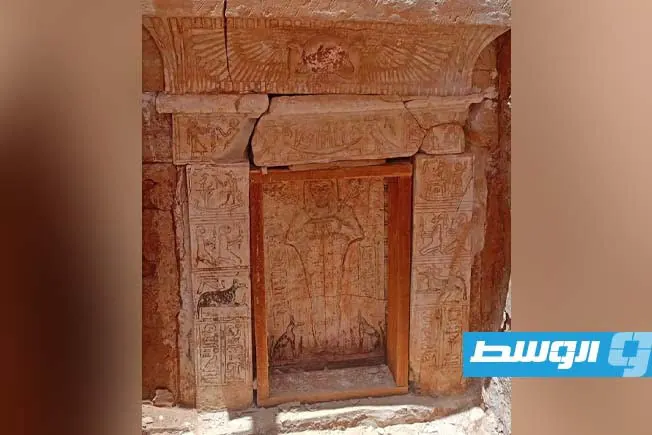
A rare Roman-era pyramid tomb has been discovered in the Dakhla Oasis, Egypt, by an Egyptian archaeological mission. The tomb, located in the Bir al-Shaghala area, dates back to the Roman era and features a unique architectural design. The tomb was built for a man and his wife, and its discovery provides valuable insights into the lives of the people who lived in the oasis during that time. The tomb's architecture and artifacts reflect a blend of Egyptian and Roman influences.
The tomb's architecture is characterized by a 14-step staircase leading to the main entrance, which is adorned with hieroglyphics. The entrance is topped with a cornice featuring a winged sun and two uraei, symbols of ancient Egyptian royalty. The tomb's interior features a rectangular hall with a vaulted ceiling, which contains two burial chambers. The chambers are decorated with paintings and inscriptions that provide information about the tomb's occupants.
One of the most significant discoveries made during the excavation is a stone tablet inscribed with a Greek poem. The poem, which dates back to the 3rd or 4th century AD, is a eulogy for a man named Pesixtis, who may have been a judge. The tablet provides evidence of the cultural exchange between Egypt and Greece during the Roman era. The excavation also uncovered a range of artifacts, including pottery, a bronze coin featuring the Roman Emperor Constantine, and a stone altar.
The Dakhla Oasis is an important archaeological site, with many tombs and monuments dating back to the Roman era. The oasis was an important center of culture and trade during that time, and its archaeological sites provide valuable insights into the lives of the people who lived there. The discovery of the pyramid tomb is a significant addition to the site's archaeological record and provides further evidence of the cultural and architectural achievements of the people who lived in the oasis.
The tomb's discovery is the result of an ongoing excavation project that began in 2002. The project, which is conducted by the Egyptian Ministry of Tourism and Antiquities, aims to explore the archaeological sites of the Dakhla Oasis and to uncover its hidden treasures. The discovery of the pyramid tomb is a major breakthrough for the project and provides a significant contribution to the field of Egyptology.
The Egyptian Ministry of Tourism and Antiquities has announced that the tomb will be opened to the public in the near future. The ministry hopes that the discovery will attract more tourists to the Dakhla Oasis and contribute to the local economy. The discovery of the pyramid tomb is a significant cultural and archaeological find, and it is expected to shed new light on the history of the Roman era in Egypt.
The discovery of the pyramid tomb in the Dakhla Oasis is a major archaeological find that provides valuable insights into the lives of the people who lived in the oasis during the Roman era. The tomb's unique architecture and artifacts reflect a blend of Egyptian and Roman influences, and its discovery is a significant addition to the site's archaeological record. The tomb is expected to be opened to the public in the near future, and it is hoped that it will attract more tourists to the area.
Key points
- The discovery of a rare Roman-era pyramid tomb in Egypt's Dakhla Oasis provides valuable insights into the lives of the people who lived in the oasis during that time.
- The tomb features a unique architectural design, with a 14-step staircase leading to the main entrance, and a rectangular hall with a vaulted ceiling.
- The excavation uncovered a range of artifacts, including pottery, a bronze coin featuring the Roman Emperor Constantine, and a stone altar.