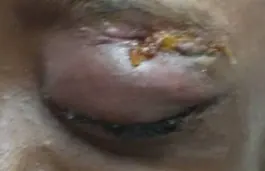
In Côte d'Ivoire, despite efforts to combat tuberculosis, extrapulmonary manifestations, particularly orbital tuberculosis, remain poorly documented. A recent case at Treichville University Hospital involved a 5-year-old child with no significant past medical history. The diagnosis was established based on chronic exophthalmos and signs of tuberculous infiltration. The child's condition was confirmed through histopathological examination of an orbital biopsy, which revealed a Koester's follicle.
The diagnostic process involved further testing, including Xpert testing on gastric drainage fluid and joint pus from the right elbow, which detected Mycobacterium tuberculosis. This confirmed the diagnosis of bacteriologically confirmed multifocal tuberculosis. The child's treatment was initiated with first-line anti-tuberculosis drugs, comprising rifampicin, isoniazid, pyrazinamide, and ethambutol. The treatment regimen was tailored to the child's initial body weight of 20 kg and lasted for one year.
The child's progress has been satisfactory, with multidisciplinary follow-up involving an ophthalmologist, a rheumatologist, and a pulmonologist. The treatment has resulted in weight gain, regression of the exophthalmos, and a negative bacteriological result. This case underscores the importance of considering tuberculosis as a primary diagnosis in endemic African contexts, given its potential to cause exophthalmos.
Orbital tuberculosis is a rare condition, but it should not be overlooked, especially in regions with high tuberculosis prevalence. The condition can manifest in various ways, making its diagnosis challenging. A high index of suspicion and prompt diagnostic testing are crucial for effective management. In this case, the involvement of multiple specialties facilitated a comprehensive approach to the child's care.
The literature on orbital tuberculosis highlights its variability in presentation and the need for early diagnosis. Studies have shown that orbital tuberculosis can occur in both immunocompetent and immunocompromised individuals. The condition's rarity and nonspecific symptoms often lead to delayed diagnosis, emphasizing the need for awareness among healthcare providers.
Research on orbital tuberculosis has been conducted in various settings, including in India and other parts of Africa. These studies have contributed to a better understanding of the condition's clinical manifestations, diagnostic approaches, and management strategies. The case reported in Abidjan adds to this body of knowledge, particularly in the context of Côte d'Ivoire.
The authors of the case report emphasize the importance of a multidisciplinary approach in managing orbital tuberculosis. This approach ensures comprehensive care, addressing not only the ocular manifestations but also the systemic implications of tuberculosis. The child's positive outcome is a testament to the effectiveness of this approach in managing this complex condition.
Key points
- Tuberculosis remains a cause of exophthalmos, albeit rare, and should be considered a primary diagnosis in endemic African contexts.