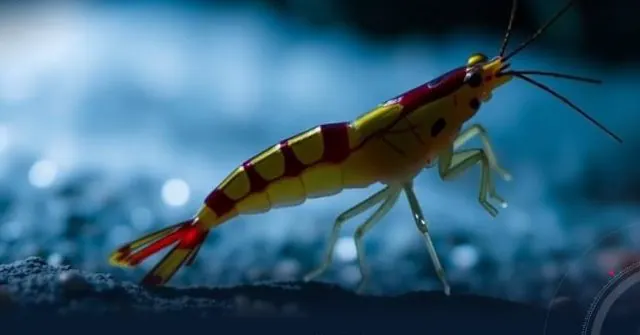
A recent scientific report published by the British website "Bio Engineering" has announced the rediscovery of the rare blind cave shrimp, Typhlocaris lethaea, in the groundwater beneath Benghazi, Libya. This marks the species' first documented sighting in nearly a century and highlights the hidden biodiversity under the city. The shrimp was last seen in Leth Cave in 1920 and was initially observed by Vito Zanan, who sent samples to Italian zoologist Bruno Parisi.
The story of Typhlocaris lethaea began in 1920 when Parisi formally described the species, but it virtually disappeared from the scientific record afterward. A modern molecular review failed to find any samples, and the International Union for Conservation of Nature (IUCN) classified the Libyan species as "data deficient," leaving open the possibility of extinction. However, cave explorations by Italian researchers in 2007 and 2009, and later by researchers from Benghazi University's Department of Earth Sciences, have led to the rediscovery of the species.
Field surveys conducted in 2023 and 2024 recorded the species in two caves in the Kuwayfiya area, expanding its known range by 9 kilometers. This suggests Benghazi's underground water network is more interconnected and biologically rich than previously believed. The species was found in unexpected locations, including Al-Khadim Cave, approximately 15 kilometers northeast of Benghazi, marking its first recorded sighting in a completely new cave system in over 100 years.
Researchers collected two female shrimp, each measuring 5 centimeters, using a dip net and preserved them in ethanol for further study. The team measured water conditions: an average temperature of 22°C, air temperature of 21°C, pH of 7.67, and salinity of 4.72 parts per thousand. All shrimp sightings occurred in pitch-dark parts of the caves, resembling conditions from Parisi's original discovery.
The discovery shows that Typhlocaris lethaea is not restricted to one fragile pool, but may be more common in the Kuwayfiya cave system than previously thought. Researchers say the broader distribution decreases the apparent risk of extinction and underscores hydrological connections. The presence of the same shrimp species in distant caves suggests the underground waterways are interconnected, as the shrimp cannot cross land.
The report emphasizes that Typhlocaris lethaea is a living indicator of the aquifer's health. While these shrimp are classified as endangered and listed on the IUCN Red List, the caves where they live remain legally unprotected. Some caves already face threats from human activities, groundwater pumping, and pollution—pressures that could cause rapid habitat loss for this rare species.
Researchers stress the urgent need to involve local stakeholders in protecting these unique cave ecosystems and their biological communities. The greatest threat to a species that survived a century hidden beneath Benghazi may not be disappearance, but the increasing human impact above. Typhlocaris lethaea offers both a warning and a rare second chance to protect Libya's hidden subterranean heritage.
Key points
- The rediscovery of Typhlocaris lethaea highlights the hidden biodiversity under Benghazi and the need to protect its unique cave ecosystems.
- The species' broader distribution decreases its apparent risk of extinction and underscores the hydrological connections between the caves.
- The report emphasizes the urgent need to involve local stakeholders in protecting these unique cave ecosystems and their biological communities.