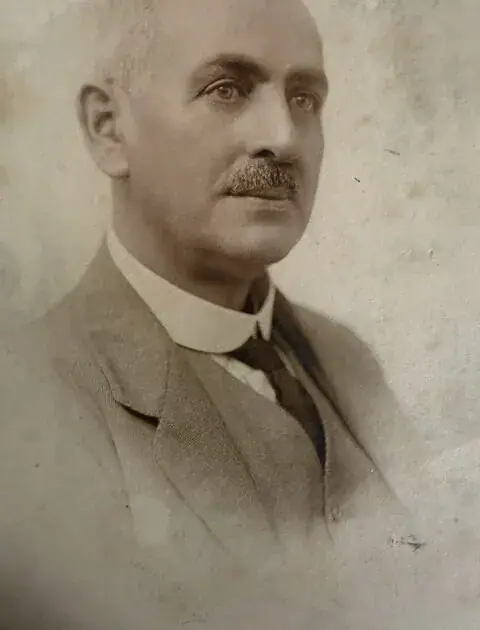
In the 1930s, as conditions for Jews in Nazi Germany rapidly deteriorated, Leo Raphaely became deeply involved in helping refugees reach safety in South Africa. He wrote to his cousin in Berlin, asking her to spread the word about opportunities for Jews in South Africa. This message would become crucial in helping hundreds of German Jewish refugees settle in the country. Raphaely's efforts were instrumental in providing a lifeline to those fleeing persecution.
Raphaely's commitment to helping other Jews had begun decades earlier. His father, Max, founded the Chevrah Kadisha in Johannesburg and became its first president in 1888. By the age of 19, Raphaely was involved in communal work, meeting newly arrived Jewish immigrants and helping them find accommodation. He also prepared bodies for burial, which likely shaped his later efforts to help Jews fleeing Europe. This early involvement instilled in him a sense of responsibility towards his community.
As antisemitism grew in South Africa during the 1930s, Raphaely recognised the danger facing German Jews and the opportunity provided by South Africa's immigration laws. Under these laws, German Jewish immigrants could enter the country using financial guarantees rather than having to provide the money themselves. Raphaely became deeply involved in organising and securing these financial guarantees, personally signing hundreds and persuading other community members to do the same.
The SS Stuttgart, which arrived in Cape Town on 27 October 1936, was one of the ships that benefited from Raphaely's efforts. The ship carried hundreds of German Jewish refugees, who were able to enter South Africa thanks to the financial guarantees organised by Raphaely. However, the South African government's announcement that financial guarantees would no longer be accepted from 1 November 1936 created an urgent race to get refugees into the country before the deadline.
Raphaely's involvement in helping refugees was not without risk. He could have faced serious financial difficulty if he had been called upon to honour all the guarantees he signed. However, his sense of responsibility towards other Jews and his determination to help them drove him to take that risk. According to his granddaughter Carolyn, Raphaely's willingness to help others was second nature to him.
The impact of Raphaely's efforts can still be seen today. In 1961, German Jewish refugees who had arrived in South Africa between 1933 and 1936 organised a jubilee dinner in Cape Town to recognise Raphaely and his wife Judith's efforts. They presented a cheque for R10 000 to establish a bursary fund for Jewish students in their honour. Although the funds were subsequently absorbed into other accounts, Raphaely's grandchildren re-established the bursary in 2015.
Raphaely's legacy continues to inspire future generations. His story, pieced together by his granddaughter Carolyn through family documents, memoirs, and historical research, serves as a testament to the power of individual action in the face of adversity. As Carolyn noted, Raphaely's sense of duty, responsibility, and obligation to help others defined his personality and guided his actions throughout his life.
Key points
- Leo Raphaely's efforts helped hundreds of German Jewish refugees settle in South Africa during the 1930s.
- Raphaely personally signed hundreds of financial guarantees required for immigrants and organised many more.
- The bursary fund established in Raphaely's honour in 2015 continues to support Jewish students.