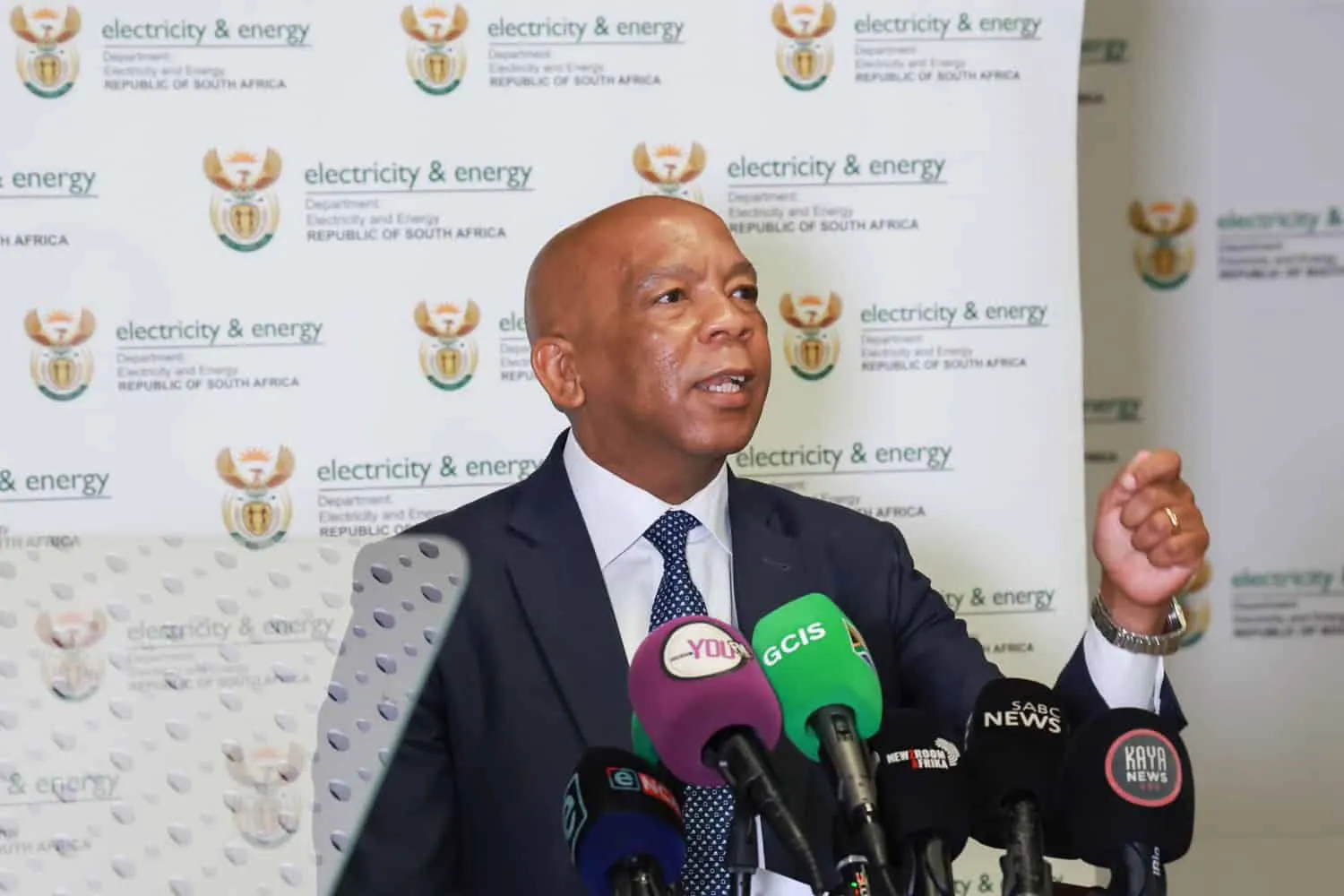
Electricity and Energy Minister Kgosientsho Ramokgopa has unveiled a bold new vision for Eskom, South Africa's power utility, which involves moving beyond its traditional role as a vertically integrated power utility. Ramokgopa's "Eskom 2.0" vision aims to transform the utility into a central driver of South Africa's reindustrialisation. This new era for Eskom follows over a century of operating under the Eskom 1.0 model. The minister emphasized that the utility's role must evolve as the electricity sector becomes more liberalised and new players enter the market.
A major part of the proposed transformation will be investment in electricity infrastructure. Ramokgopa mentioned plans for concessions for transmission, reforms to distribution, and expanding Eskom's presence into the rest of southern Africa. The utility is expected to play a central role in a planned 14,500km expansion of the transmission network, estimated to cost R440 billion. This expansion is considered a major infrastructure programme.
The minister reiterated plans for 5.2 gigawatts of new nuclear generation capacity, alongside a further 10GW through a nuclear industrialisation programme. Ramokgopa stated that Eskom will be at the centre of this build programme, which aims to drive industrialisation. The minister plans to share details on the rollout of the nuclear build programme with the general public.
Ramokgopa emphasized that the changing electricity market requires Eskom to adopt new technologies and approaches. He mentioned that artificial intelligence will become a significant part of the utility's work. The minister also stated that there will be no more bailouts for Eskom and no future double-digit tariff increases.
One of the biggest challenges facing the new Eskom model is municipal debt. Ramokgopa stated that municipalities owe Eskom close to R450 billion, which poses a significant threat to the country's energy market and his reform agenda. Eskom board chairperson Mteto Nyathi mentioned that the utility will continue using Distribution Agency Agreements (DAAs) to put pressure on municipalities to settle their debts.
Despite the municipal debt crisis, Ramokgopa said the restructuring should improve access to free basic electricity for households that qualify. Changes to the indigent register and distribution mechanisms are needed to ensure the benefit reaches intended recipients. A R21 billion allocation is available for poor households to receive free basic electricity.
Ramokgopa acknowledged that transforming Eskom will be complex, but said the changes are necessary as South Africa moves towards a more diverse electricity market. The minister aims to use energy infrastructure as a foundation for economic growth and industrialisation. Mteto Nyathi will receive a three-year extension as Eskom board chairperson.
Key points
- Eskom to adopt new technologies, including artificial intelligence
- Municipalities owe Eskom close to R450 billion in debt
- Restructuring aims to improve access to free basic electricity for households