South Africa's frosty bilateral relations with Russia have raised concerns among freedom fighters who recall the Soviet Union's support during apartheid. The country's growing closeness to the West, particularly the US, has created a chasm between Pretoria and Moscow. This shift is notable given Russia's historical support for the African National Congress (ANC) and other liberation movements during the apartheid era. The Soviet Union provided military training and weapons to ANC freedom fighters, including Nelson Mandela.
Russia's support for South Africa's liberation movements was not limited to military aid. Two of South Africa's iconic political figures, Moses Kotane and John Beaver Marks, were treated in Russian hospitals and received hero's funerals outside Moscow. Their graves were maintained as heritage sites at the Novodevichy cemetery. In 2015, their remains were repatriated and reburied in South Africa following family requests. This historical context underpinned bilateral relations between Pretoria and Moscow, reflecting a comradely history.
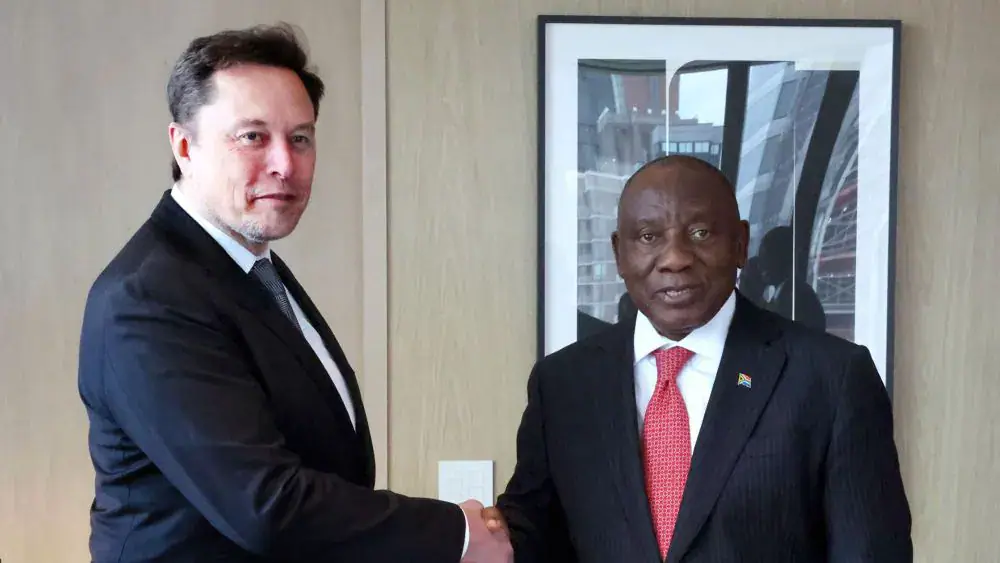
Despite these ties, Russia has not pressured Pretoria to choose between Moscow and the West. However, South Africa's pursuit of closer ties with Washington and the West has strained relations with Russia. Recently, President Ramaphosa visited the US to attract investment in AI data centres, a new imperative for development in the 21st century. The visit coincided with Ramaphosa's counterpart, Donald Trump, being abroad, first in Manila and later in Shenzhen, China.
Ramaphosa's visit to the US was not his first. In 2018, he was publicly reprimanded by Trump in the White House over false claims of a "white genocide". Despite this, Ramaphosa returned to the US accompanied by a large contingent, underscoring the value the Presidency attaches to the trip. In October, Ramaphosa declined an invitation from Russian President Vladimir Putin to attend the Russia-Africa summit in Moscow, citing electioneering in the lead-up to the Local Government Elections.
Ramaphosa's decision to decline the invitation and send an administrator instead may be seen as a snub. This is not an isolated incident, as South Africa also undertook to arrest Putin if he attended the 15th BRICS Summit in Johannesburg in August 2023, following an International Criminal Court warrant of arrest. These actions demonstrate a trend of Pretoria's shifting foreign policy interest away from Russia to the West. Since Russia's war with Ukraine broke out, Pretoria has steadily moved away from Moscow to align with Western sanctions.
The shift in South Africa's foreign policy is further demonstrated by Ramaphosa's meeting with Ukrainian President Volodymyr Zelensky at the Union Buildings in April 2025. This was the first official visit by a Ukrainian head of state to South Africa in 33 years. The move underscores South Africa's growing closeness to the West and distancing from Russia. Some argue that this shift is not in South Africa's national interest, as it may compromise its sovereignty and historic ties with Russia.
As South Africa navigates its foreign policy, there are concerns that the country may be compromising its sovereignty and historic ties. The article's author, Abbey Makoe, argues that South Africa should be the masters of its own destiny and not allow external pressures to dictate its alliances. The trend of South Africa's growing closeness to the West and distancing from Russia raises questions about the implications for the country's foreign policy and national interest.
Key points
- South Africa's President Cyril Ramaphosa is strengthening ties with the US, straining historic relations with Russia.