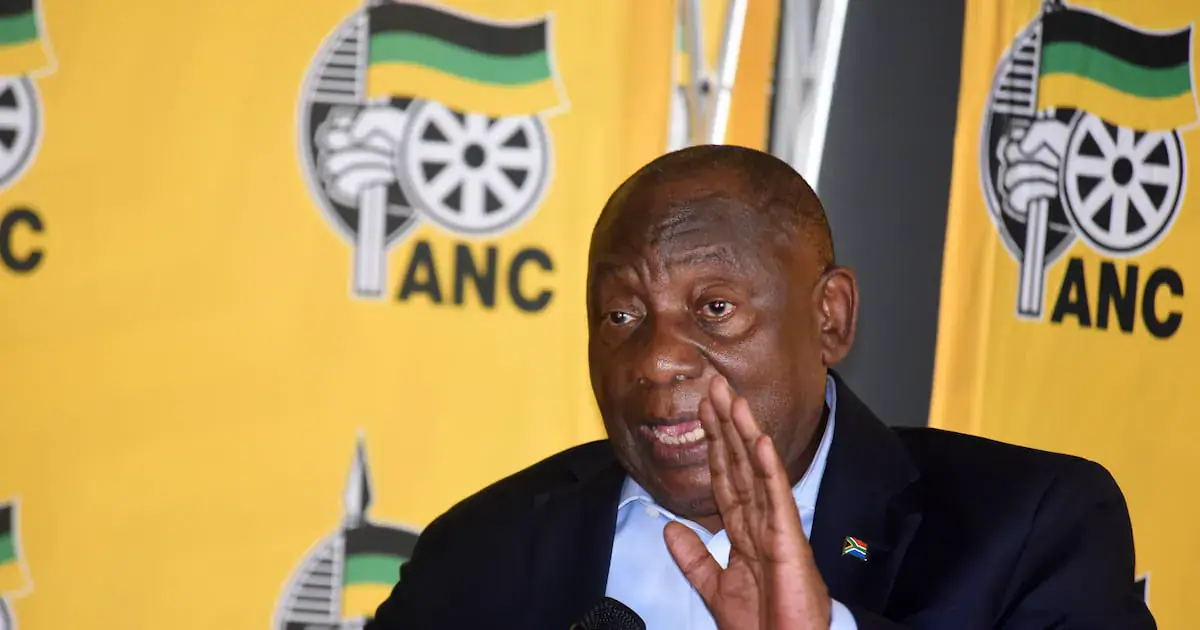
South African President Cyril Ramaphosa has not been summoned to appear before Justice Sisi Khampepe's Truth and Reconciliation Commission (TRC) cases inquiry. Ramaphosa submitted an affidavit explaining why he did not establish an inquiry into allegations of political interference in the investigation or prosecution of apartheid-era atrocities. The request for the inquiry was endorsed by the late Desmond Tutu. Imtiaz Ahmed Cajee, nephew of murdered anti-apartheid activist Ahmed Timol, testified at the TRC cases inquiry and alleged Ramaphosa ignored pleas from apartheid atrocity victims and their families.
The TRC is investigating allegations of political interference that led to the suppression of apartheid-era cases. Documents show that in February 2019, former TRC commissioners Yasmin Sooka and Adv Dumisa Ntsebeza wrote to Ramaphosa, urging him to establish a commission to investigate the "shameful story of terrible neglect" and claims of political influence in the failure to prosecute apartheid-era cases. The letter was endorsed by TRC chair Tutu. Ramaphosa's affidavit stated that his office received the letter but did not establish an inquiry, citing plans by the department of justice and former National Prosecuting Authority (NPA) head Shamila Batohi to address prosecution delays.
Ramaphosa established the commission in May 2025, three decades after the TRC concluded its work and referred about 300 cases for prosecution to the NPA, with only a few cases before court. Ramaphosa argued that the allegation by Cajee of ignoring pleas does not form part of the commission's terms of reference. He added that he is not under a constitutional, statutory, or other legal obligation to establish a commission. Ramaphosa stated that he did not accede to requests to establish a commission because the NPA and justice ministry were committed to addressing complaints of prosecution delays and suspected political interference.
TRC cases inquiry spokesperson Lionel Adendorf confirmed that Ramaphosa has not been invited to appear before the commission. Ramaphosa submitted an affidavit, and the evidence leaders do not think there is a need for him to testify. The allegations investigated by the commission centre on the tenures of former president Thabo Mbeki and Jacob Zuma's ANC leadership, who face claims of attending secret talks with former South African Defence Force (SADF) generals and police generals aimed at avoiding prosecutions for apartheid human rights violation crimes.
Mbeki denied the allegations. Former president FW de Klerk's foundation claimed in 2021 that there was "an informal agreement between the ANC leadership and former operatives of the pre-1994 government, the NPA suspended its prosecutions of apartheid-era crimes". Ramaphosa rebutted this claim, stating that he is not aware of such an agreement. Ramaphosa addressed why he did not respond to letters flagging prosecution issues, saying that not responding does not mean that nothing was done to address the concerns.
Ramaphosa stated that action was taken by the NPA to resolve the prosecution dilemma of TRC cases when he took over as president. Even before Shamila Batohi took over, the justice ministry had inquired from her predecessors why TRC prosecutions were taking so long. Ramaphosa was informed and aware that the justice ministry had inquired of the NPA about delays in prosecutions after the first letter by former TRC commissioners.
The TRC cases inquiry continues to investigate allegations of political interference in the prosecution of apartheid-era cases. Ramaphosa emphasized that if he had tried to influence the NPA in prioritizing TRC or other cases, or intervened to speed up prosecutions, it would be seen as executive interference with the prosecutorial independence and work of the NPA. The commission's findings and recommendations are expected to shed light on the extent of political interference in the prosecution of apartheid-era crimes.
Key points
- President Cyril Ramaphosa has not been summoned to appear before the Truth and Reconciliation Commission (TRC) cases inquiry.
- Ramaphosa submitted an affidavit explaining why he did not establish an inquiry into allegations of political interference in the investigation or prosecution of apartheid-era atrocities.
- The TRC is investigating allegations of political interference that led to the suppression of apartheid-era cases.