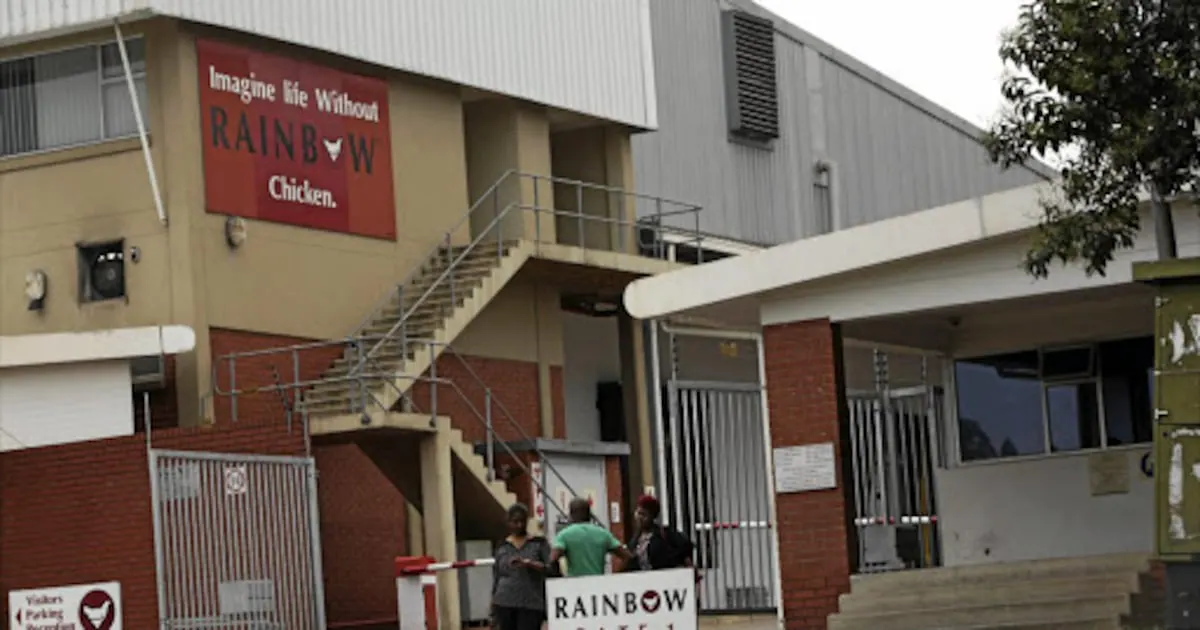
Integrated poultry and animal feed producer Rainbow Chicken has made significant strides in reducing its environmental footprint through its waste-to-value operation. The company's 50% stake in Matzonox has enabled the treatment of wastewater and poultry manure to produce electricity, heat, recycled water, and fertiliser at its Worcester and Rustenburg processing sites. This initiative has resulted in the diversion of approximately 7,900 tonnes of biological waste from municipal systems annually.
Despite the environmental benefits, the project has faced persistent financial and operational challenges. According to Rainbow's latest annual report, the Rustenburg plant, commissioned in 2020 with a 6MW generation capacity, produced 4,684MWh of renewable electricity in the year to end-June, down from 7,545MWh the previous year. The smaller 1.5MW Worcester plant increased its output to 7,104MWh from 6,486MWh. Overall, renewable electricity generation across the two plants fell about 16% year on year to 11,788MWh.
The decline in output is not the only issue plaguing the project. Rainbow has reported sustained historical losses at Matzonox, primarily due to the operation's failure to meet minimum volume and specification requirements set out in the original business case. Higher operating costs, including those related to odour abatement, have added to the pressure. The company's financial statements reveal that significant interest costs in previous years and accelerated tax capital allowances have also contributed to the losses.
In response to the challenges, Rainbow's technology partner, Green Create, is providing specialist technical input, laboratory testing, and on-site trials to improve performance. This has required additional technical, legal, and odour-abatement investment. The project remains crucial to Rainbow's efforts to reduce its dependence on external utilities, with the plants providing part of the electricity used at the Rustenburg and Worcester operations.
The importance of the waste-to-value operation is underscored by Rainbow's identification of water and energy security as its second-biggest risk. The company faces infrastructure constraints and inconsistent municipal services in some areas, including Hammarsdale and Rustenburg. To mitigate these risks, Rainbow is investing in backup generators, water tankers, and reservoirs, which add to costs without necessarily increasing production volumes immediately.
Despite the challenges, Rainbow's overall financial performance improved sharply in the 2026 financial year, with profit attributable to shareholders rising to R1.34bn from R571.2m. The company must now apply the same discipline that has improved its core chicken business to the environmental investment, which is delivering clear operational benefits but has yet to meet the returns originally expected.
The project's success will be closely watched, particularly given the emphasis on responsible treatment of agricultural and industrial waste. As Rainbow continues to navigate the complexities of the waste-to-value operation, it will need to balance the capital-intensive and technically demanding nature of the project with the need to deliver returns on investment. The company's efforts to address the operational and financial challenges will be crucial in determining the project's long-term viability.
Key points
- Rainbow Chicken's waste-to-value operation faces financial and operational challenges despite producing renewable electricity and reducing biological waste.
- The project's historical losses are attributed to failure to meet volume and specification requirements, higher operating costs, and significant interest costs.
- Rainbow is investing in technical improvements and infrastructure to mitigate risks and improve performance.