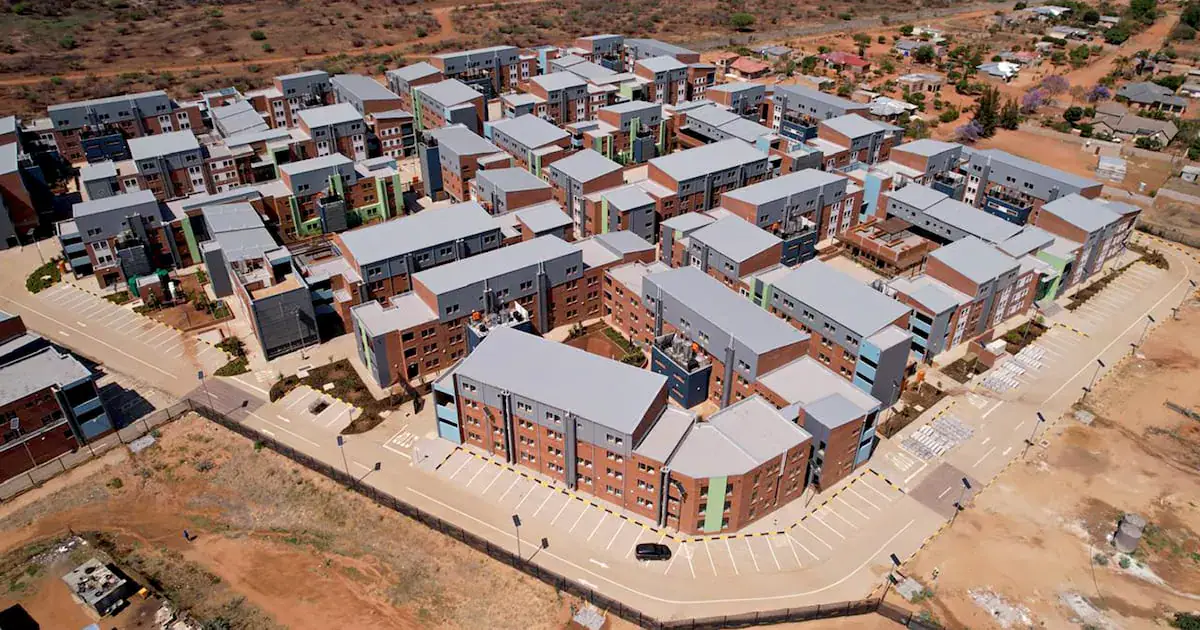
A R1.3bn student housing precinct at the University of Limpopo, intended to provide nearly 3,000 beds, has been locked behind security gates for over a year despite being 98% complete. The project, funded by the Public Investment Corporation, was designed as a flagship public-private partnership. Instead, it has become entangled in a protracted legal battle in the high court in Pretoria.
The delays have resulted in over R100m in lost revenue and have left thousands of students without secure accommodation. A private developer, K-SL Student Hotel, filed an urgent application against the PIC and its underlying public pension funds, seeking an order to release over R44m in overdue payment certificates and professional fees. K-SL director Gregory Mofokeng warned that any contract termination would have dire consequences for the project.
The UniLim development was conceptualized in December 2017 as a social infrastructure initiative to deliver 10,000 student beds across Limpopo province. The project was structured as a joint venture between the PIC and K-SL, with the PIC investing R1.2bn of pension funds for 70% equity and K-SL contributing R600m for the remaining 30%. However, severe delays began when Eskom failed to complete critical power grid and substation upgrades by the scheduled deadline.
Eskom's failure to provide full permanent power completion on time led to unpaid contractor claims accumulating, and by September 2025, site operations entered technical suspension. In April, Raubex issued a formal letter of demand for unpaid interim payment certificates, followed by a 14-day notice of intention to terminate the building agreement. K-SL then launched the urgent application seeking an order to compel the management committee to release overdue payments.
The payment impasse stems from a second variation order requesting R90.5m in additional capital expenditure. The extra funding was needed to cover Eskom-related delay claims, contractual price escalations, and other costs. Approval would push the total UniLim project budget from R1.13bn to R1.36bn, a 21% aggregate escalation. The crisis presents a "double exposure" for public sector pensioners, as the PIC also holds an approximate 30% equity stake in Raubex.
PIC head of properties, Malusi Mthuli, denied allegations of bad faith or obstruction, stating that releasing unverified funds would breach statutory duties under the Public Finance Management Act. Mthuli said the PIC's refusal to sign off on additional capital was grounded in fiduciary prudence. The PIC seeks to protect public funds, which is the responsible and prudent thing to do in the circumstances.
The stalled project poses significant risks to vulnerable students, who may be forced to live in inferior accommodation if the facility remains closed. The applicant's allegations that it seeks to protect the PIC JV Participants' interests were described as misguided by Mthuli. The joint venture is losing approximately R170m annually due to the project not being operational, and the PIC's conduct cannot be countenanced.
Key points
- The R1.3bn student housing project at the University of Limpopo is stalled at 98% completion due to a legal battle between the Public Investment Corporation and a private developer.
- The delays have resulted in over R100m in lost revenue and have left thousands of students without secure accommodation.
- The crisis presents a "double exposure" for public sector pensioners, as the PIC also holds an approximate 30% equity stake in Raubex.
Reporting sources
- # 5 R1.3bn Limpopo student housing in limbo · TimesLIVE