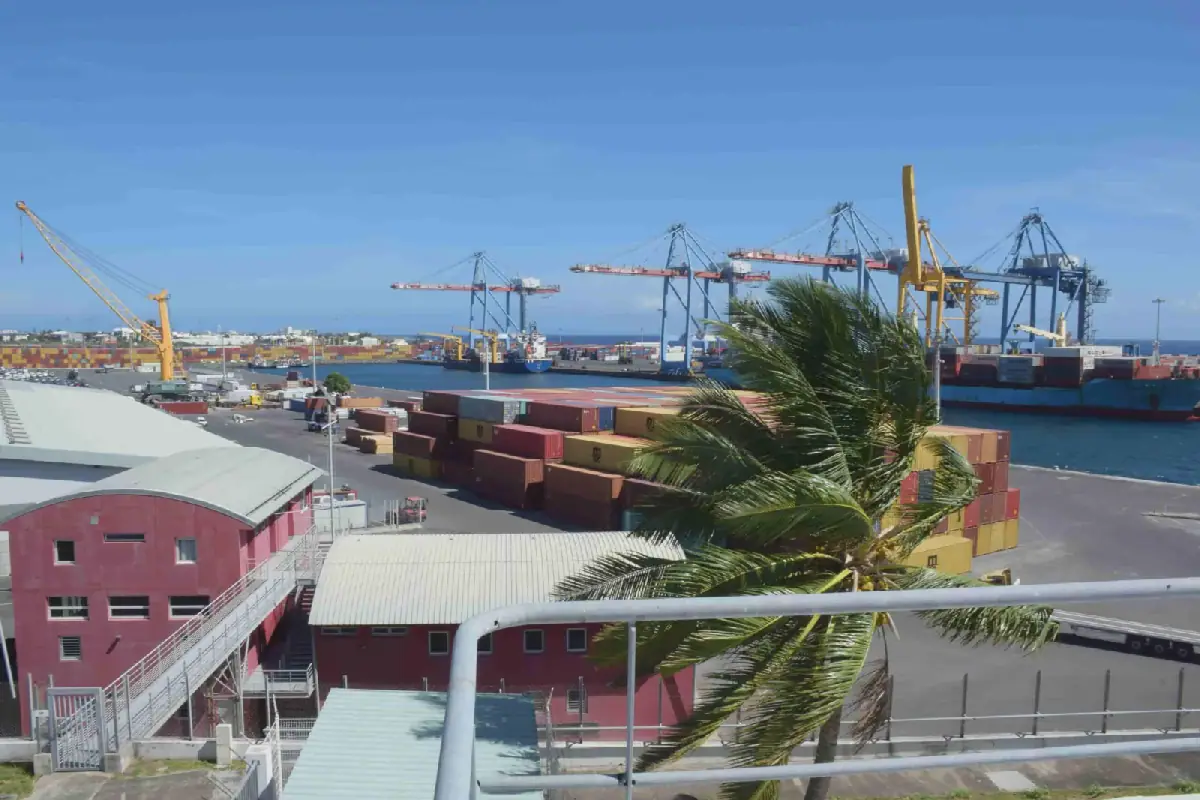
The Réunion Island economy is bracing for impact from two European Union regulations. The first is the Carbon Border Adjustment Mechanism, a carbon tax on imports of products with high greenhouse gas emissions. The second is a regulation aimed at preventing deforestation in third countries. Both have been met with concerns from local economic actors, who warn of potential inflation and loss of competitiveness.
The Carbon Border Adjustment Mechanism will affect imports of cement, clinker, nitrogenous fertilizers, and steel. These products are crucial for Réunion Island's agriculture and construction sectors. According to Antony Lebon, president of the Réunion Island Building and Public Works Federation, the price of ready-to-use concrete is expected to increase by 5%. This will inevitably lead to higher construction costs and a slowdown in the industry.
The deforestation regulation, set to take effect on December 30, will require importers of wood, cocoa, rubber, and beef to certify that their products do not come from deforested areas since 2020. Obtaining these certificates is expected to be complex, costly, and sometimes impossible. The Réunion Island Import and Trade Union estimates that the cost of implementing this measure could reach €2 million for cereal imports.
Local economic actors are calling on the French government to urge the European Union to delay the implementation of these regulations. On November 25, the regional council, along with three consular chambers and several economic organizations, signed a motion requesting a postponement. They argue that the regulations will have a devastating impact on Réunion Island's economy, which is already vulnerable due to its remote location.
Another EU regulation poses a threat to Réunion Island's waste export industry. From May 21, 2027, the export of non-hazardous waste from European territories to non-OECD countries will be prohibited. In 2025, Réunion Island exported over 62,000 tons of metal waste, primarily to India and Pakistan. The ban could disrupt the island's vehicle dismantling industry and lead to an accumulation of waste.
The Réunion Island economic community is urging the European Union to consider the unique challenges faced by ultra-peripheral regions like Réunion Island. They argue that the EU's priority on ecological transition should not come at the expense of these regions' economic viability. Dominique Vienne, president of the Regional Economic, Social and Environmental Council, notes that the EU's decisions are often contradictory and fail to account for the specific needs of these territories.
The situation highlights the need for a more nuanced approach to EU regulations and their impact on ultra-peripheral regions. Local actors are seeking a postponement of the regulations and an adaptation of the rules to accommodate the specific needs of Réunion Island. The outcome remains uncertain, but one thing is clear: the future of Réunion Island's economy hangs in the balance.
Key points
- The EU's carbon tax and deforestation regulations may lead to increased costs and loss of competitiveness for Réunion Island's economy.
- Local economic actors are calling for a postponement of the regulations to mitigate the impact on the island's economy.
- The EU's regulations have sparked concerns about the future of Réunion Island's waste export industry and the island's economic viability.
Reporting sources
- Menaces européennes sur les prix et la production locale · ecoaustral.com