Communities in the QwaQwa region of the Free State, South Africa, are battling severe water and electricity outages that have persisted for over a decade. The crisis is attributed to ageing infrastructure and chronic mismanagement in the Maluti-A-Phofung Local Municipality. Residents face daily struggles, with many forced to trek long distances for water, affecting their ability to access basic services. The outages have become a norm, disrupting everyday life, including learning, working, and accessing government services.
The QwaQwa region, a former apartheid homeland, encompasses the capital, Phuthaditjhaba, and over 90 surrounding villages. Residents like Nthabiseng Tshotetsi, a pregnant mother, face significant challenges. She recently experienced a month-long water outage, and when the water was restored, it was undrinkable. Tshotetsi has to walk 20 minutes to a local church to collect water, which is a strain on her due to her pregnancy. The electricity in her area also frequently goes out, making it difficult to care for her five-year-old daughter.
The water and electricity outages affect not only households but also schools and early childhood development centres. Tshotetsi sends her daughter to school with a bottle of water daily, as the school's water supply is unreliable. A visit to Lehlohonolo Educare Centre revealed that the centre had never had access to electricity due to a lack of connections in the area. Principal Matseleng Moloi spends about R700 on gas monthly and R500 filling a JoJo tank to provide basic services to the 40 children in her care.
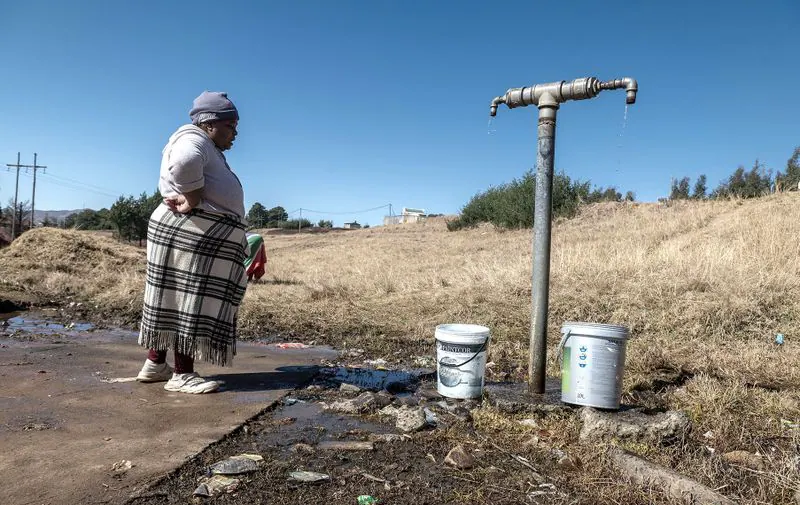
Residents travel long distances to collect water from communal taps, often waiting up to 30 minutes to fill a container. In Thaba Bosiu, Sedibeng, and Monontsha, Daily Maverick observed residents using wheelbarrows to transport water. At Jennett Moloi's home in Mantsubise, an interview was conducted by candlelight due to a prolonged electricity outage. Her children were struggling to complete their homework, and she was concerned about their ability to study without electricity.
The outages have a significant impact on residents' daily lives, including their ability to store food and access clean water. Jennett Moloi fills soft drink bottles with water and places them in the freezer to keep them cool when the power is cut. However, for families with only fridges, keeping groceries fresh is a constant struggle. Isaac Phiri, a resident of Phuthaditjhaba, has a battery-powered lamp with a six-hour lifespan, which is insufficient for his daughter's studying needs.
Residents are also concerned about the financial strain of the outages. Phiri spends R1,000 to refill his JoJo tank when it becomes depleted due to prolonged water outages, which is a challenge for him as a pensioner relying on the R2,400 Older Persons Grant. Maroba Sebonjane, a resident of Pahameng, noted that the water problems in his area and others have continued for over two decades, blaming a combination of ageing infrastructure and mismanagement.
The crisis in QwaQwa highlights the need for urgent intervention to address the ageing infrastructure and mismanagement in the Maluti-A-Phofung Local Municipality. Residents are calling for solutions to the water and electricity outages, which have become a nightmare for them. The situation affects not only their daily lives but also their children's education and access to basic services.
Key points
- Ageing infrastructure and chronic mismanagement are the root causes of the water and electricity outages in QwaQwa.
- Residents face significant challenges, including trekking long distances for water and struggling to access basic services.
- The outages have a substantial impact on residents' daily lives, including their ability to store food, access clean water, and educate their children.