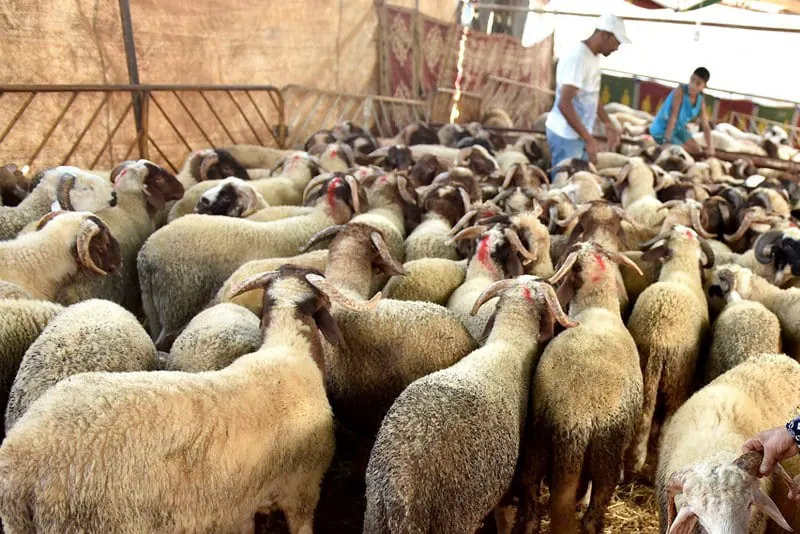
Morocco is grappling with soaring red meat prices, amid criticism of the government's policy failures in addressing the crisis. Despite measures such as suspending customs duties on sheep and meat imports, concerns persist. The National Sheep and Goat Breeders Association (ANOC) has been tasked with implementing programs to improve the sector, but its efforts have been questioned. The program's genetic improvement initiative, aimed at enhancing sheep breeds, has raised concerns over its effectiveness and transparency.
A key aspect of the program involves tracking and monitoring sheep herds, including data collection on animal numbers, identification numbers, and pedigrees. However, sources close to the matter have questioned the accuracy of the data and whether it reflects the actual situation on the ground. The program's reliance on breeders' self-reporting has raised concerns over potential discrepancies. Furthermore, there are questions about the regularity of updates to the database and who is responsible for verifying the information.
The program's focus on selective breeding aims to improve the quality of sheep. However, concerns have been raised over the criteria used to select breeding stock and the process of verifying the parentage of newborn lambs. Additionally, there are questions about the methods used to track the movement of animals and the accuracy of records. The program's reliance on a network of breeders and farmers to report data has raised concerns over potential biases and inaccuracies.
ANOC has emphasized the importance of monitoring the performance of selected animals, including regular measurements of weight and growth rates. However, sources have questioned whether these measurements are being carried out effectively and whether the data is being accurately recorded. There are also concerns over the transparency of the selection process and whether the best animals are being chosen for breeding.
The program's national selection committee is responsible for validating the results of performance monitoring and selecting the best animals for breeding. However, sources have questioned what criteria are used to make these selections and what documentation is required. Additionally, there are concerns over the tracking of animals and whether they have a clear history of selection and breeding.
ANOC has stressed that the program is not just an administrative exercise, but a comprehensive process that involves tracking animals from selection to breeding. However, concerns persist over the effectiveness of the program and whether it is achieving its objectives. The program's reliance on a network of stakeholders, including breeders, farmers, and veterinarians, has raised concerns over potential inconsistencies and inaccuracies.
The Moroccan government has faced criticism over its handling of the red meat sector, with many calling for greater transparency and accountability. The National Sheep and Goat Breeders Association (ANOC) has a critical role to play in improving the sector, but its efforts have been questioned. As the government seeks to address the crisis, it remains to be seen whether the genetic improvement program will be effective in enhancing the quality and quantity of sheep in Morocco.
Key points
- The program's effectiveness and transparency have been questioned by sources close to the matter.
- Concerns have been raised over the accuracy of data and whether it reflects the actual situation on the ground.
- The program's reliance on breeders' self-reporting has raised concerns over potential discrepancies and inaccuracies.