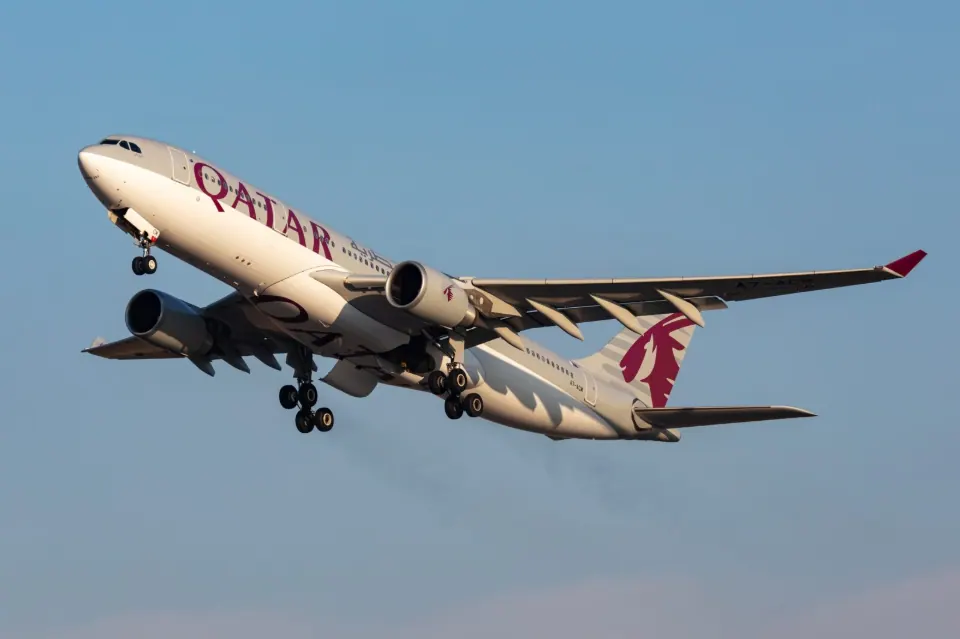
Qatar Airways has grounded all its Airbus A330 passenger planes due to the ongoing conflict in Iran, which has significantly impacted flight operations in the Middle East. To keep its pilots employed and maintain their flying skills, Qatar Airways has temporarily redeployed some of them to RwandAir, according to Reuters, citing sources familiar with the matter. These pilots have experience flying the Airbus A330, which Qatar Airways has grounded.
The move is part of a regular program that allows Qatar Airways employees to continue working while supporting both airlines in their operations. A Qatar Airways spokesperson stated that the redeployed pilots were given the opportunity to work at RwandAir on a voluntary and temporary basis. The exact duration of the pilots' stay at RwandAir has not been disclosed. RwandAir and Qatar Airways have a long-standing partnership, with Qatar Airways holding shares in RwandAir.
The conflict in Iran has led to a significant increase in fuel prices, making it more expensive for airlines to operate older planes like the Airbus A330. The plane type consumes more fuel compared to newer models, making it less economical to operate during this period of high fuel prices. As a result, many airlines have grounded their A330s or reduced their operations. According to Cirium Ascend, the number of A330-200 and A330-300 flights worldwide has decreased by around 12% compared to last year.
Qatar Airways had previously wet-leased four Airbus A330s from Oman Air last year, which were expected to be in service until 2026. However, these planes never entered commercial service before Qatar Airways decided to ground them. One of these planes was purchased by RwandAir earlier this year. The partnership between Qatar Airways and RwandAir extends beyond flight operations, with the two airlines collaborating on various projects.
The Iran conflict has had far-reaching consequences for the aviation industry, with many airlines adjusting their operations to cope with the increased fuel costs and disrupted flights. Qatar Airways has not been immune to these challenges, with its passenger capacity decreasing by 10% in September 2026 compared to the same period last year. However, the airline remains committed to expanding its fleet and operations.
Qatar Airways expects to take delivery of six new planes between October 2026 and December 2027, with 19 additional planes scheduled for delivery over the next few years. The airline has a total of 410 planes on order from Airbus and Boeing, which will support its growth plans until the 2030s. Despite the challenges posed by the Iran conflict, Qatar Airways remains optimistic about its future prospects.
The temporary redeployment of Qatar Airways pilots to RwandAir highlights the adaptability and cooperation between airlines in the face of challenging circumstances. As the aviation industry continues to navigate the complexities of the Iran conflict, airlines are exploring innovative solutions to maintain their operations and minimize disruptions to passengers.
Key points
- Qatar Airways has temporarily redeployed some of its pilots to RwandAir due to the ongoing conflict in Iran, which has disrupted Middle Eastern flights and impacted the airline's operations.
- The conflict in Iran has led to a significant increase in fuel prices, making it more expensive for airlines to operate older planes like the Airbus A330.
- Qatar Airways expects to take delivery of new planes over the next few years, which will support its growth plans until the 2030s.