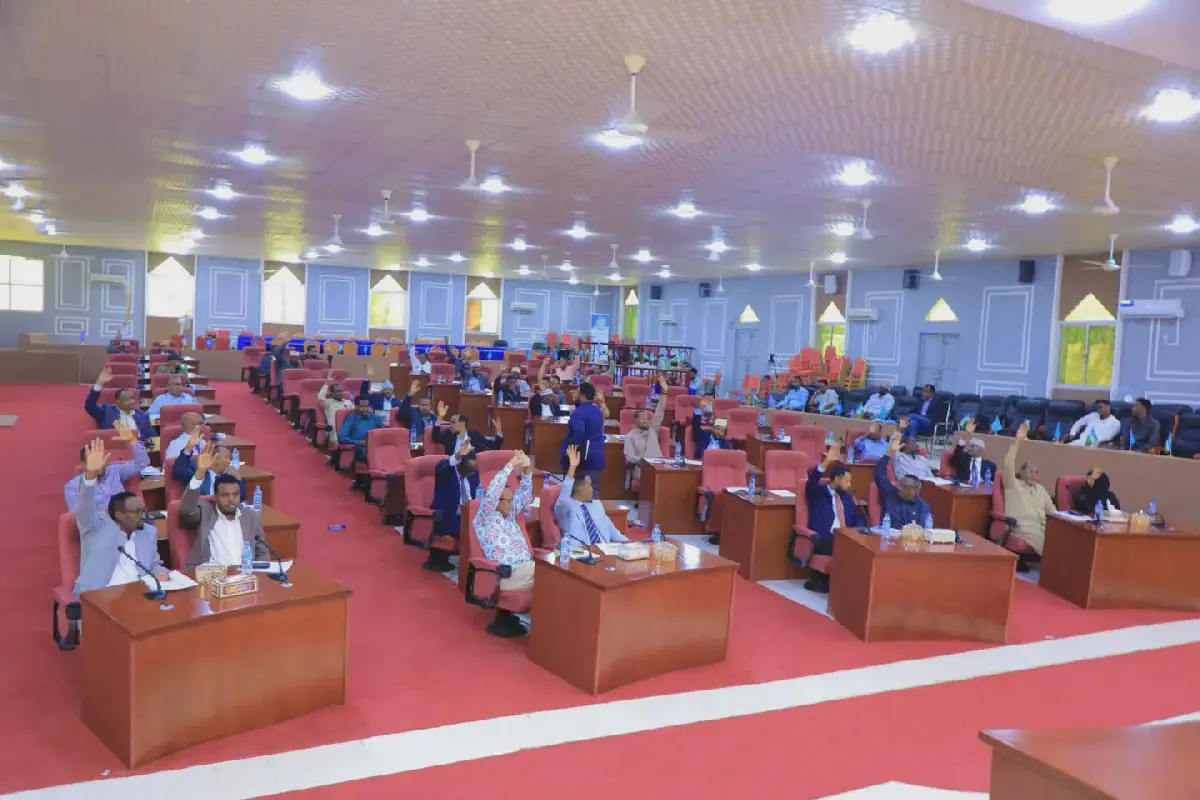
The Puntland Parliament has rejected proposed constitutional amendments submitted by the administration of President Said Abdullahi Deni. The proposals, which aimed to modify nine constitutional articles, mostly related to electoral matters, failed to secure the required number of votes. Forty members of parliament voted in favor, but the proposals needed 44 votes for approval. The rejected amendments were intended to further change a constitution that has been contentious since its 2023 amendments.
The proposed amendments were strongly backed by the Speaker of Parliament, but ultimately did not garner sufficient support. The Council of Puntland Politicians and Intellectuals had warned against amending the Constitution without meaningful consultation with political stakeholders. They called for broad consultations involving all those who contributed to Puntland's establishment in 1998 to discuss the proposed changes.
The rejected proposals concerned provisions that had previously been amended in 2023 but subsequently became obstacles to opening up Puntland's political system to political parties. There were concerns over the executive branch's unchecked powers, and the Council's warning highlighted the need for inclusive discussions. President Deni's administration had sought to address these issues through the proposed amendments.
President Said Abdullahi Deni's current term of office expires in January 2029. He is the first Puntland president to have secured re-election, although his re-election remains politically contentious. His role in handpicking the majority of MPs serving in the 2024-2029 parliamentary term has raised concerns among some stakeholders.
The rejection of the proposed amendments reflects the complex and contentious nature of Puntland's politics. The country's constitutional framework has been a subject of debate, and the parliament's decision highlights the challenges of achieving consensus on key issues. The administration's efforts to reform the constitution have been met with resistance from various stakeholders.
Former Foreign Minister of Somalia, Ahmed Ciise Cawad, has welcomed the parliament's decision to reject the proposed amendments. He expressed support for the move, highlighting the importance of careful consideration and consultation in the constitutional reform process. Cawad's comments reflect the diverse perspectives on the issue and the need for inclusive discussions.
The rejection of the proposed constitutional amendments has significant implications for Puntland's political landscape. The country's leaders will need to revisit the issue and engage in further consultations to achieve a consensus on the constitution. The parliament's decision underscores the importance of stakeholder engagement and careful consideration in the reform process.
Key points
- The Puntland Parliament rejected proposed constitutional amendments due to insufficient votes, with 40 MPs voting in favor of the changes.
- The proposed amendments aimed to modify nine constitutional articles, mostly related to electoral matters, but failed to address concerns over the executive branch's unchecked powers.
- The rejection of the amendments reflects the complex and contentious nature of Puntland's politics, highlighting the challenges of achieving consensus on key issues.
Reporting sources
- Puntland Parliament Rejects Proposed Constitutional Amendments · Puntland Post