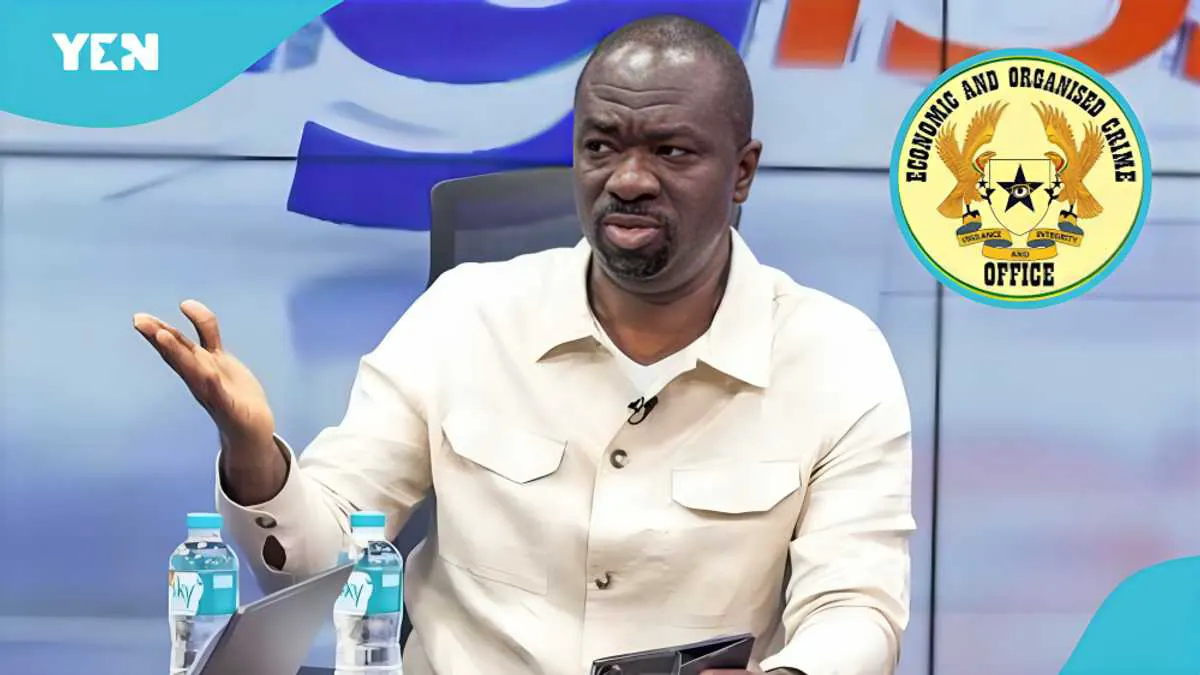
A Ghanaian lawyer has raised concerns about the publication of EOCO's search warrant obtained against Manhyia South MP Nana Agyei Baffour Awuah. Legal practitioner Austin Kwabena Brako-Powers warned that the widespread reporting of the Economic and Organised Crime Office's court-authorised search warrant could end up working against the investigation. He argued that search warrants rely on an element of surprise to ensure relevant documents and materials remain intact and accessible before investigators can examine them.
Brako-Powers expressed concerns that public knowledge of the search warrant could give the MP advance notice, allowing key documents to be concealed or destroyed before investigators act. He questioned the High Court's direction for EOCO to execute the arrest through the Speaker of Parliament, citing potential legal issues. According to Brako-Powers, the law does not automatically require the Speaker's sign-off before investigators can take lawful steps against an MP.
The Accra High Court granted EOCO authority to arrest the MP and seize documents tied to its investigation into alleged unauthorised financial transactions at SIC Life Savings and Loans Company Limited. The allegations include financial loss, dissipation of public funds, and money laundering. EOCO had informed the court that relevant documents risked being concealed, altered, or destroyed if the requested orders were not granted.
The court's directive followed an earlier incident on September 23, when EOCO officers attempted to arrest Baffour Awuah at the Accra High Court, sparking considerable legal debate. The agency said the move came after two invitations issued to the MP in February went unanswered. Baffour Awuah has contested parts of EOCO's account, stating that a representative of his former law firm had engaged with investigators on three separate occasions and provided information that was requested.
On September 30, 2026, Nana Agyei Baffour Awuah presented himself at the offices of the Economic and Organised Crime Office (EOCO) in the company of his legal counsel, Samuel Atta Kyea, and a number of fellow legislators. His appearance came after the Accra High Court issued a warrant authorising EOCO to compel his attendance for questioning. The court's directive followed EOCO's submission that it had exhausted all reasonable avenues to secure the MP's voluntary cooperation.
Brako-Powers acknowledged that constitutional protections and parliamentary privileges must be respected but argued that the law does not require the Speaker's consent before investigators can take lawful steps against an MP. He emphasised that the nature and intention of securing a search warrant are to ensure that documents and other materials in the possession of the Member of Parliament are not jeopardised or concealed.
The lawyer's remarks are particularly pointed given that EOCO itself had highlighted the risk of document concealment or destruction. The case has sparked significant attention, with many questioning the implications of the search warrant and the involvement of the Speaker of Parliament. Key issues include the potential compromise of the investigation due to publicity and the legal implications of the court's directive involving the Speaker.
Key points
- Lawyer Austin Kwabena Brako-Powers warns that public knowledge of the EOCO search warrant could allow key documents to be concealed or destroyed.
- The High Court directed EOCO to execute the arrest through the Speaker of Parliament, which Brako-Powers finds legally problematic.
- Baffour Awuah has contested EOCO's account, stating that his representatives had previously engaged with investigators and provided requested information.