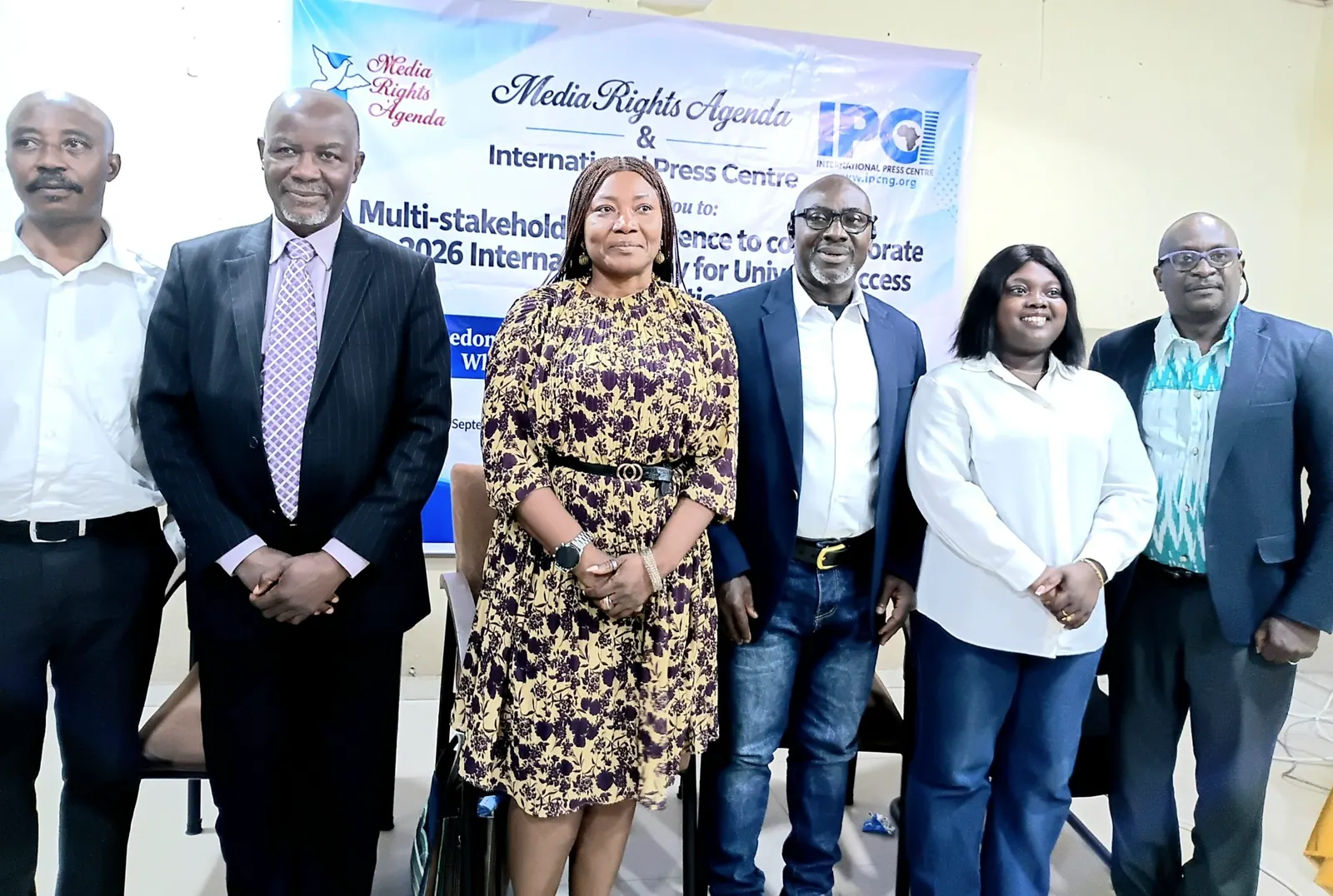
Public institutions in Nigeria have been urged to prioritize proactive disclosure to combat misinformation and disinformation. This call was made at a recent conference in Lagos organized by the Media Rights Agenda (MRA) and the International Press Centre (IPC). The conference was held to commemorate the 2026 International Day for Universal Access to Information (IDUAI). Stakeholders emphasized the need for public institutions to provide credible data to support democratic accountability.
The conference, themed “Freedom of Information in the Age of Disinformation: Why Transparency Matters More Than Ever,” highlighted the challenges posed by systemic secrecy and poor compliance with Nigeria’s Freedom of Information (FOI) Act, 2011. IPC Executive Director, Lanre Arogundade, stressed that fighting fake news requires more than citizen fact-checking. He emphasized that public institutions have a constitutional duty to provide credible data.
Participants at the conference, including journalists, lawyers, and civil society organizations (CSOs), expressed concern that many government agencies routinely deny requests for information without a legal basis. They also noted that some agencies ignore proactive publishing guidelines and delay responses, rendering time-sensitive data useless. These actions undermine public trust and hinder democratic accountability.
The conference also highlighted institutional impunity and a significant gender gap in accessing information. Participants noted that access barriers for women and underserved groups remain largely ignored. To address these challenges, delegates resolved to launch coordinated legal actions against wrongful denials of information. They also called on media houses and CSOs to build coalitions to leverage the FOI Act for investigative reporting and tracking state expenditure.
To ensure compliance with the FOI Act, delegates issued targeted demands to the government. They called on the Attorney-General of the Federation to enforce oversight and issue strict punitive directives against non-compliant institutions. The judiciary was also urged to grant expedited hearings and fast-track judgments in FOI lawsuits. Additionally, public institutions were asked to establish dedicated FOI desks, digitalize record-keeping, and publish open-format information.
The National Orientation Agency (NOA) was tasked with launching public campaigns to educate citizens on their right to information. Delegates concluded that timely access to verifiable official information is essential for good governance. They emphasized that public institutions must prioritize proactive disclosure to combat misinformation and disinformation.
The conference outcomes were seen as crucial for promoting transparency and accountability in Nigeria. By implementing the recommendations, public institutions can help to build trust and ensure that citizens have access to reliable information. This, in turn, can contribute to a more informed and engaged citizenry.
Key points
- Public institutions in Nigeria must prioritize proactive disclosure to combat misinformation and disinformation.
- The implementation of the FOI Act, 2011, is crucial for promoting transparency and accountability in Nigeria.
- Education and awareness campaigns are necessary to inform citizens of their right to information.