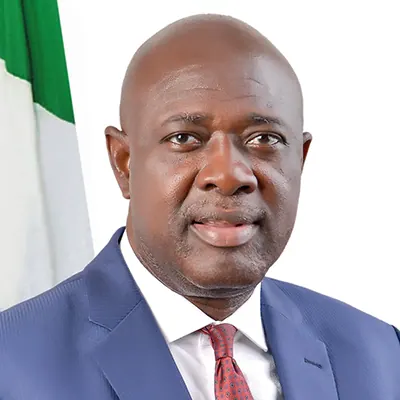
The Minister of State for Petroleum Resources (Oil), Heineken Lokpobiri, has announced that Nigeria's active oil drilling rigs have increased from 14 to over 60 under President Bola Tinubu's administration. This surge has resulted in a significant rise in crude oil production to over 1.7 million barrels per day. Lokpobiri attributed this growth to ongoing reforms in the petroleum industry, which have restored investor confidence and improved regulatory certainty.
Speaking at the inaugural Petroleum Technology Development Fund (PTDF) Journal Summit in Abuja, Lokpobiri highlighted that Nigeria has also attracted over $10 billion in foreign direct investment in recent years. Additionally, indigenous operators now account for more than 50 per cent of the country's crude oil production. The summit, themed "Private Sector Participation in Nigeria's Midstream and Downstream Petroleum Sector: Prospects, Challenges and the Way Forward," brought together government officials, regulators, industry operators, academics, and researchers.
Lokpobiri emphasized that the increase in crude oil production and drilling activity must be matched with adequate infrastructure, efficient transportation and storage systems, expanded refining capacity, and a competitive market. He cited the emergence of the Dangote Petroleum Refinery and the increasing operations of modular refineries, such as Waltersmith and Aradel, as evidence of the potential of private sector investment in the downstream industry.
Despite the progress made, Lokpobiri noted that infrastructure deficits, regulatory uncertainty, logistics challenges, market volatility, exchange-rate movements, and high transportation costs remain significant constraints to investment. He stressed the need for a balance between regulation and the ability of businesses to operate, attract investment, and create jobs.
The Minister of State for Petroleum Resources (Gas), Ekperikpe Ekpo, also spoke at the summit, highlighting the challenges facing the gas sector. Ekpo stated that the federal government cannot develop Nigeria's gas sector alone and that private capital, technical expertise, and innovation are critical to unlocking the country's natural gas resources.
Ekpo identified infrastructure gaps and high financing costs as major challenges confronting private investors in the gas sector. He noted that the Petroleum Industry Act (PIA) has provided a framework for improving regulatory certainty, strengthening institutional governance, and encouraging investment in the midstream and downstream sectors.
The PTDF Journal Summit aims to serve as a platform for research findings and discussions on the prospects and challenges of private sector participation in Nigeria's midstream and downstream petroleum sector. The summit also highlights the achievements of the PTDF, including the sponsorship of over 15,000 scholars so far. The event brought together stakeholders to discuss the way forward for the sector.
Key points
- Nigeria's active oil drilling rigs have increased from 14 to over 60 under President Bola Tinubu's administration.
- The country has attracted over $10 billion in foreign direct investment in recent years.
- The PTDF has sponsored over 15,000 scholars so far.