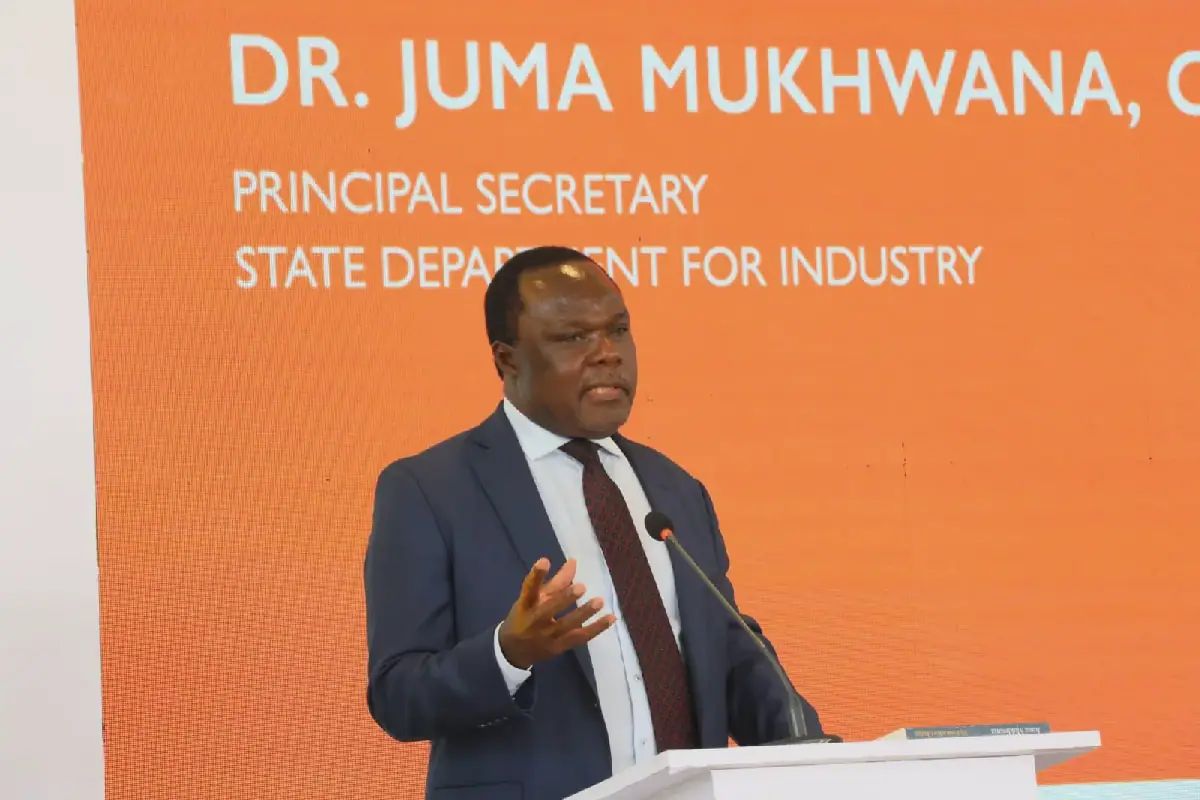
Kenya's milling industry is facing growing pressure from rising demand for maize, prompting the government to call for increased local production. Principal Secretary for the State Department of Industry, Dr. Juma Mukhwana, emphasized the need for the country to invest in expanding maize production to ensure adequate supplies of the staple food and sustain the milling industry. Mukhwana noted that Kenya currently supplements local production with imports from Tanzania, Uganda, and Zambia.
Mukhwana identified irrigation as a key opportunity to increase production, particularly in semi-arid areas of Tana River, Isiolo, and Garissa counties. He encouraged the use of arable land in these regions to produce enough maize for the growing population. Additionally, Mukhwana challenged millers to promote ugali and other maize-based products beyond the African market, citing an opportunity to make them more widely accepted internationally.
The Kenya Millers Fortification Index (KMFI) 2026 Awards, held in Thika, Kiambu County, recognized companies making progress in food fortification, quality assurance, and manufacturing standards. The awards, organized by the Cereal Millers Association (CMA) in partnership with TechnoServe, aim to encourage transparency and continuous improvement through independent verification, training, and peer benchmarking.
CMA Chief Executive Officer Paloma Fernandes emphasized the millers' responsibility to provide safe and nutritious food, stating that quality production should go beyond meeting government regulations. Fernandes also called for stronger monitoring of the sector, citing the challenge of unregistered flour manufacturers that make it difficult to enforce quality and fortification standards.
CMA Board Chairman, Beju Shah, highlighted high production costs, delayed subsidy payments exceeding Sh3.2 billion, and port delays as some of the challenges affecting millers. The Annual KMFI Awards have grown in participation, from five companies in the inaugural edition to 35 this year, demonstrating an increase in industry engagement.
TechnoServe Global Programme Director for Millers for Nutrition, Rizwan Yusufali, noted that the index encourages transparency and continuous improvement, ultimately contributing to improved food safety and consumer confidence. Food fortification involves adding essential nutrients to maize and wheat flour to address nutritional deficiencies, particularly among children and mothers.
The government's efforts to increase maize production and improve food fortification standards aim to address the country's nutritional needs and reduce reliance on imports. Key initiatives include investing in irrigation and promoting maize-based products internationally. The milling industry plays a crucial role in ensuring adequate supplies of safe and nutritious food for the growing population.
Key points
- The Kenyan government is calling for increased local maize production to reduce reliance on imports from neighbouring countries.
- Irrigation is seen as a key opportunity to increase maize production, particularly in semi-arid areas.
- The milling industry faces challenges, including high production costs and delayed subsidy payments.